Cranial cruciate ligament disease is one of the most common orthopedic conditions encountered in dogs, and TPLO (Tibial Plateau Leveling Osteotomy) is now considered one of the gold-standard surgical techniques for managing this condition — a procedure that involves cutting and repositioning the tibial plateau to stabilise the stifle joint without relying on the ruptured ligament.
However, the postoperative recovery period may sometimes involve unexpected complications requiring accurate reassessment of locomotion and adaptation of the rehabilitation protocol.
In this clinical case presented by Dr. Stella Helena Sakata Patané, a veterinarian specialized in veterinary physiotherapy and animal rehabilitation in Brazil, we explore how objective gait analysis using Tendiboots™ Canine helped monitor the functional recovery of a dog following a postoperative TPLO complication.
Case Presentation: Churchill, a 4-Year-Old English Bulldog
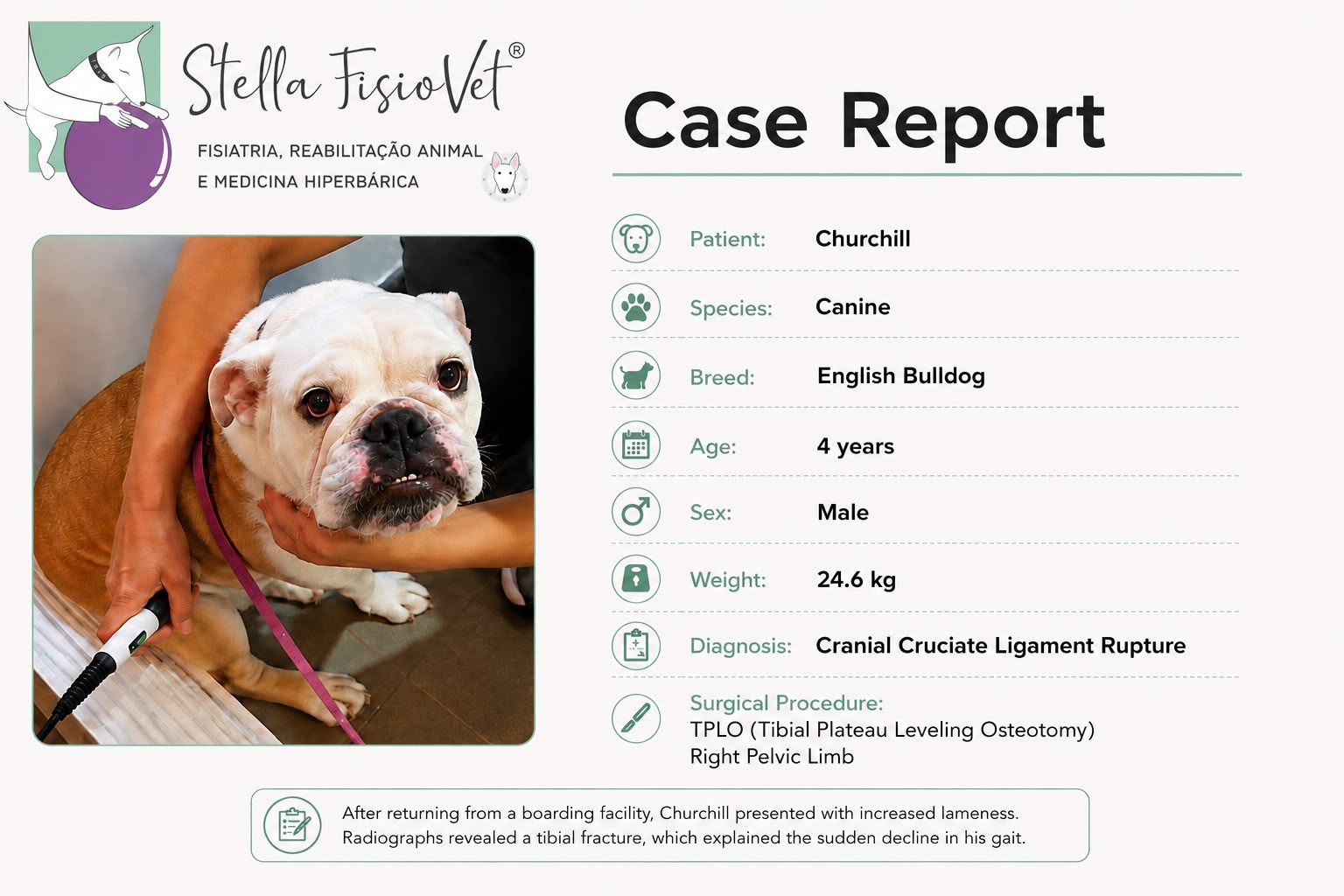
Churchill is a 4-year-old male English Bulldog diagnosed with cranial cruciate ligament disease affecting the right pelvic limb.
A TPLO (Tibial Plateau Leveling Osteotomy) was performed to stabilize the affected stifle joint.
The initial postoperative progression was encouraging:
- Recovery was progressing as expected;
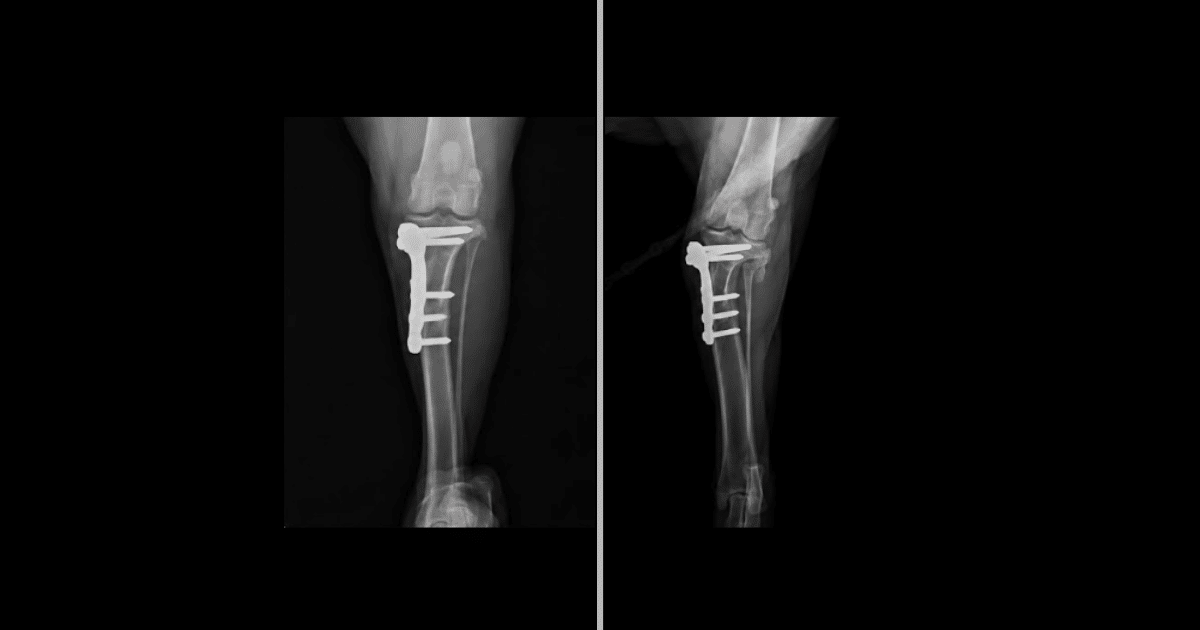
- Follow-up radiographs confirmed appropriate implant positioning;
- Surgical stabilization was considered satisfactory.
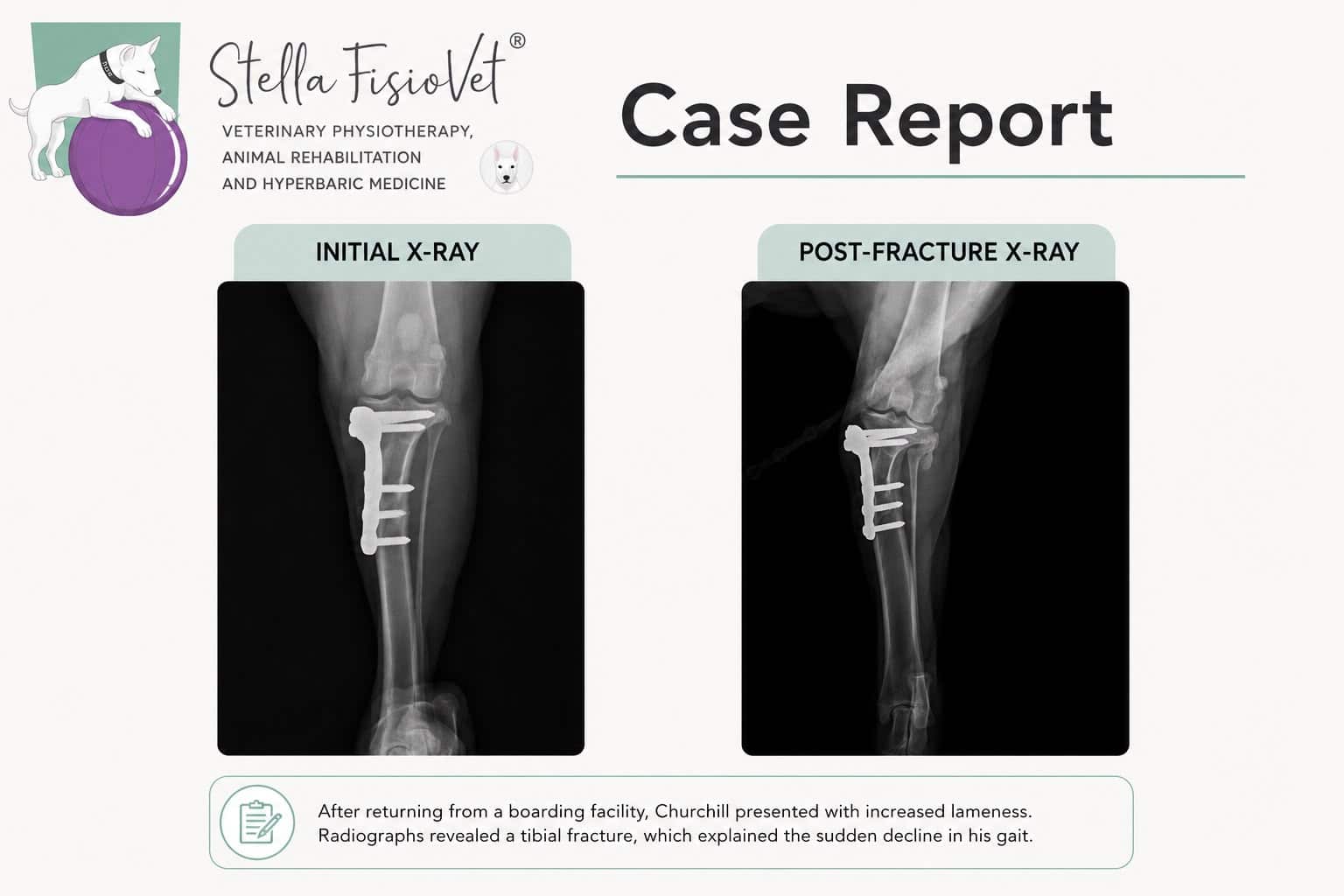
However, after staying at a boarding facility, Churchill returned home with a sudden increase in lameness and a significant decrease in weight-bearing ability on the operated limb.
A new radiographic evaluation was therefore performed.
Identification of a Postoperative Complication
The second radiographic assessment revealed a tibial fracture affecting the operated limb, explaining the sudden deterioration in Churchill’s gait and functional ability.
This unexpected complication required close monitoring and a tailored rehabilitation approach to support functional recovery.
Postoperative complications following orthopaedic surgery are more frequent than often assumed — as also documented in our case study on bilateral tibial crest surgery and implant failure in a Rottweiler, where objective gait data similarly revealed functional deficits invisible to clinical observation alone.
Implementation of a Rehabilitation Protocol and Objective Monitoring
To accurately assess Churchill’s locomotion and monitor his recovery throughout rehabilitation, a gait analysis was performed using the Tendiboots™ Canine system.
The rehabilitation protocol included:
- High-intensity laser therapy using the M-VET (Asalaser) system;
- Controlled and progressive therapeutic exercises;
- Regular locomotion monitoring to adapt the rehabilitation plan.
The objective was to obtain quantitative data to complement clinical examination and accurately measure functional improvement over time.
This value extends beyond post-surgical cases: in dogs with intermittent or compensatory lameness — such as the agility Border Collie where visual assessment failed to identify the affected limb — objective gait data proved equally decisive in directing treatment.
Tendiboots™: Objectively Measuring Functional Recovery
The first Tendiboots™ assessment highlighted a significant gait asymmetry and reduced function of the affected limb.
Only five days later, a repeat evaluation demonstrated substantial improvement in several locomotion parameters:
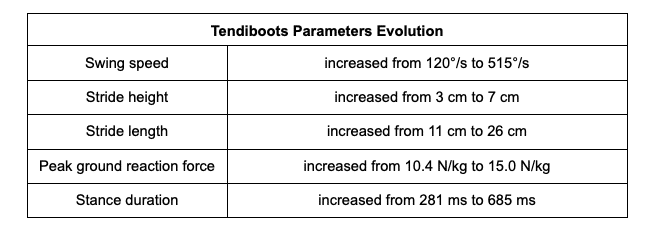
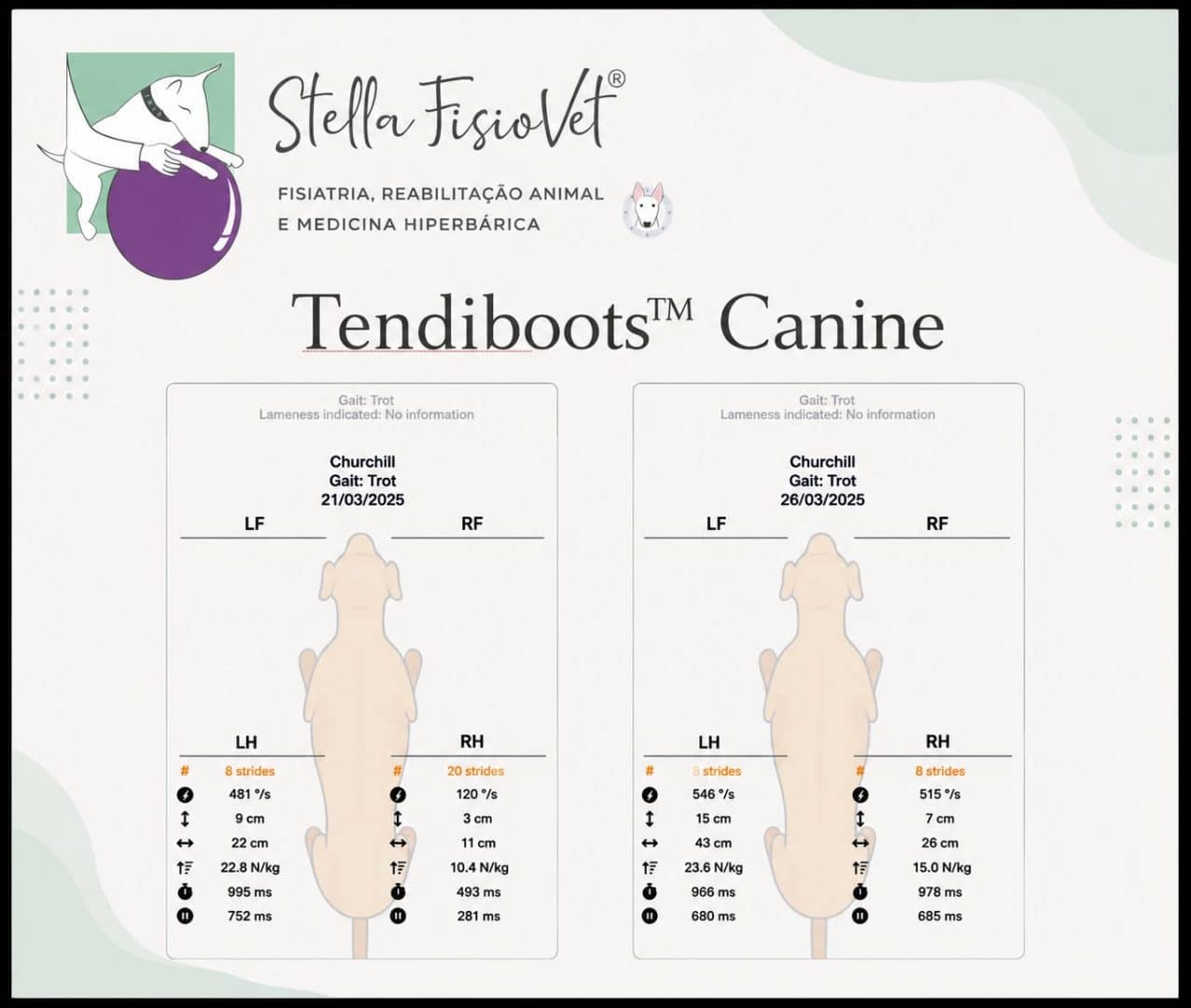
These objective measurements correlated with the clinical improvement observed during gait assessment.
The Importance of Objective Gait Analysis in Veterinary Rehabilitation
This case highlights the value of integrating objective measurement tools into veterinary rehabilitation.
Following an unexpected postoperative complication, Tendiboots™ Canine provided valuable insights by allowing clinicians to:
- Quantify functional deficits with precision;
- Monitor recovery throughout rehabilitation sessions;
- Objectively document improvements achieved through therapy;
- Support clinical decision-making with measurable data.
In veterinary rehabilitation, objective gait analysis goes beyond visual assessment alone, providing practitioners with accurate, reproducible, and evidence-based information to evaluate patient progress.
About the Author

Dr. Stella Helena Sakata Patané has worked exclusively in veterinary physiotherapy and animal rehabilitation since 2001.
She is the founder of Stella FisioVet, located in São Paulo, Brazil, a center specialized in veterinary physiotherapy, animal rehabilitation, and hyperbaric medicine.
She currently serves as President of ANFIVET (Brazilian National Association of Veterinary Physiotherapy and Rehabilitation).
With extensive clinical experience in orthopedic and postoperative rehabilitation cases, Dr. Stella contributes to the development of rehabilitation approaches based on objective measurements to improve patient care and recovery outcomes.
Discover Dr. Sakata’s experience with Tendiboots through short videos 👇