



Intermittent lameness in canine athletes is one of the most challenging presentations in sports medicine. When the lameness is subtle, inconsistent, or difficult to localize, even experienced clinicians may struggle to determine which limb is affected, delaying appropriate treatment.
In this clinical case, co-written with Paula Teal, we explore how Tendiboots™ Canine Gait Analysis helped identify objective gait abnormalities in a 7-year-old Border Collie competing in agility. By providing quantitative gait data, the system enabled targeted rehabilitation and contributed to a successful return to activity without recurrence of lameness.
The challenge: an intermittent lameness difficult to localize
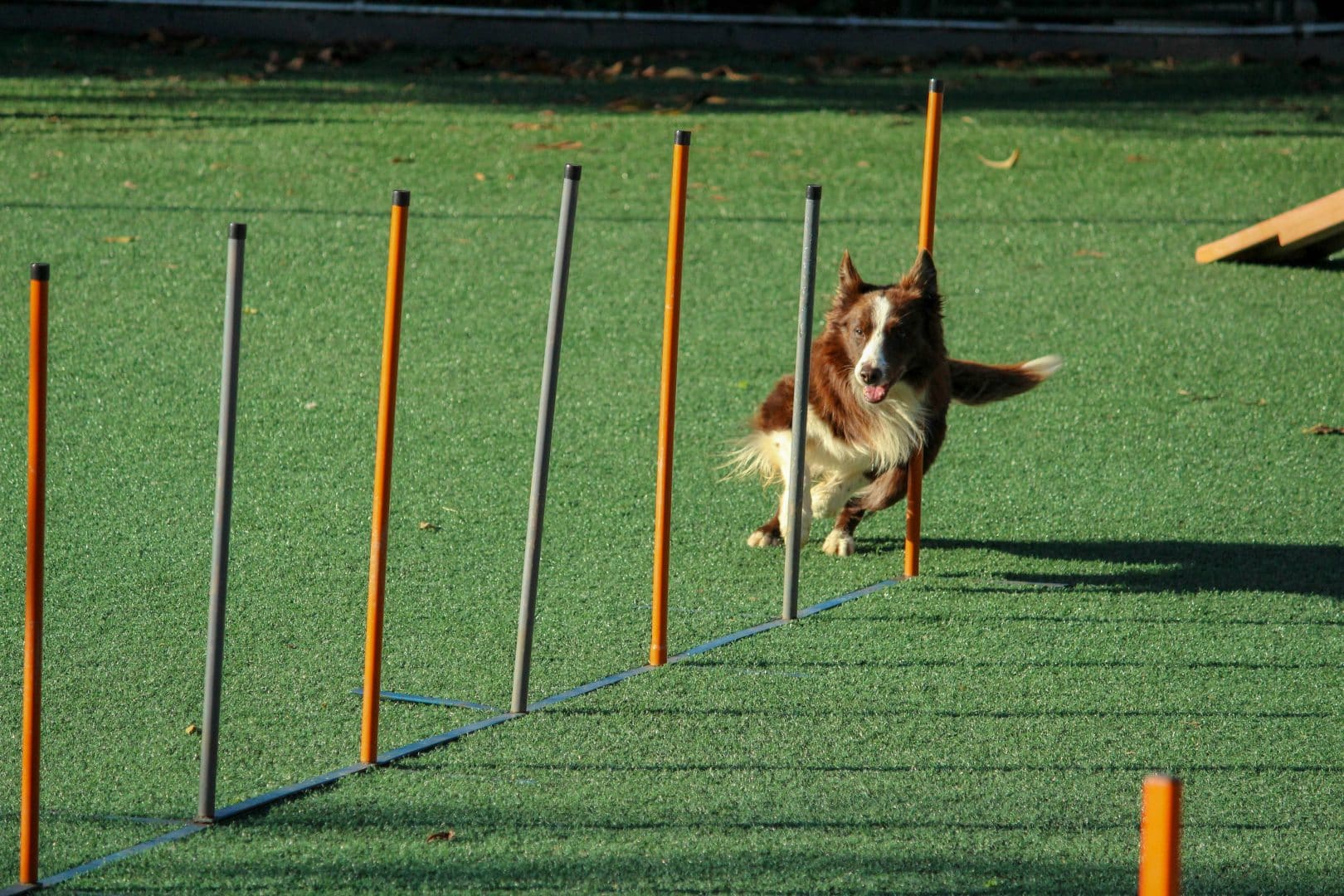
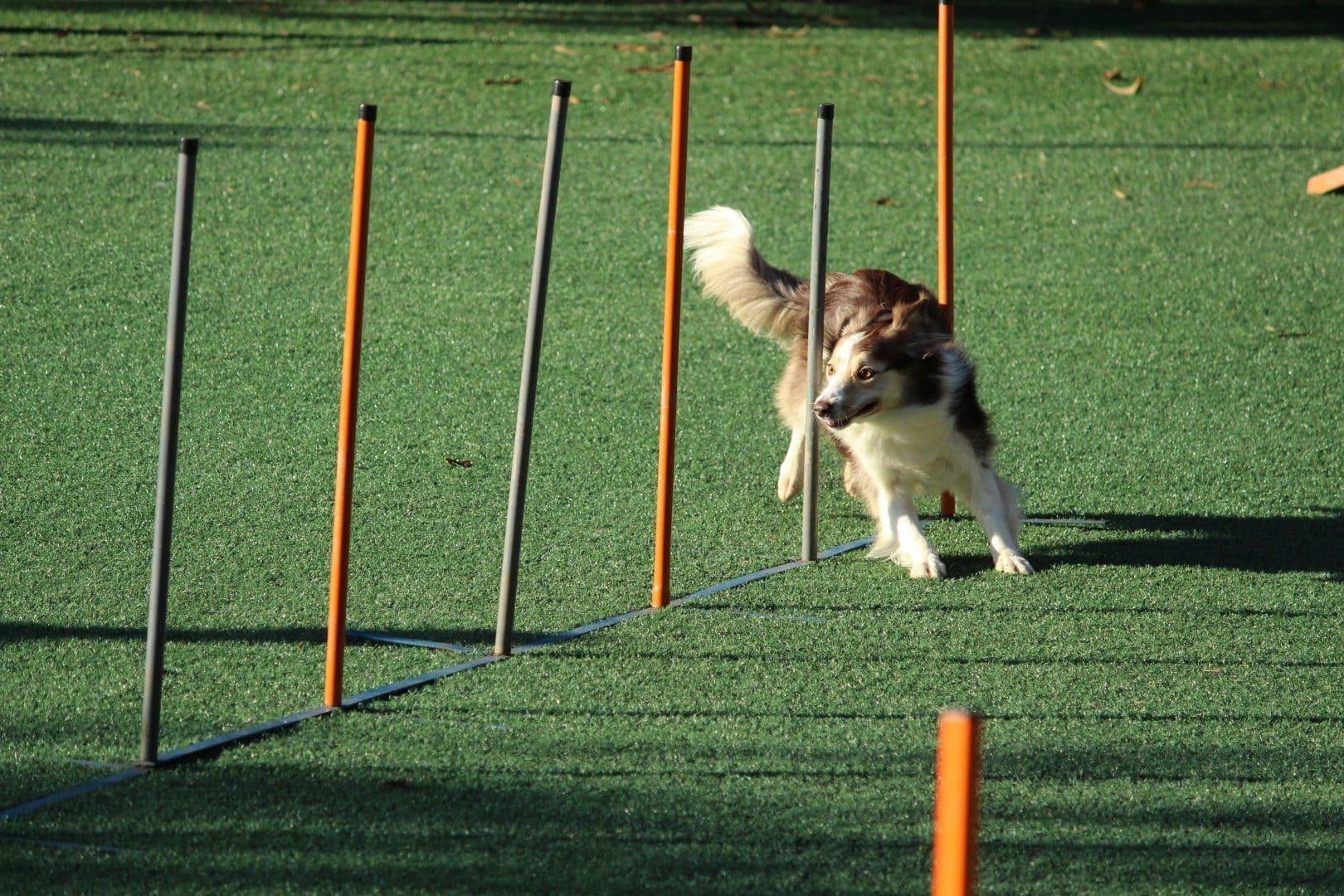
A 7-year-old Border Collie actively competing in agility was referred for investigation of an intermittent lameness.
Despite several examinations, clinicians had been unable to agree on which limb was actually lame. Because the lameness appeared intermittently and compensation mechanisms were likely involved, subjective gait assessment alone was insufficient to confidently direct treatment.
“Vets and other professionals were unable to determine which limb the dog was lame on with a difference of opinion as to whether it was hind or forelimb, left or right.” Paula Teal
Rather than relying solely on visual assessment, objective gait analysis was performed to identify subtle asymmetries and guide rehabilitation.
Objective gait analysis revealed compensatory patterns
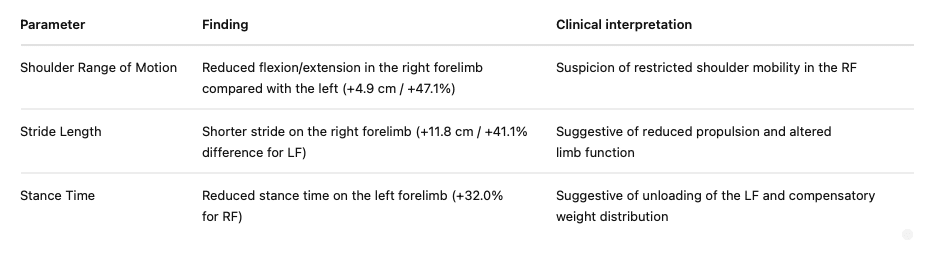
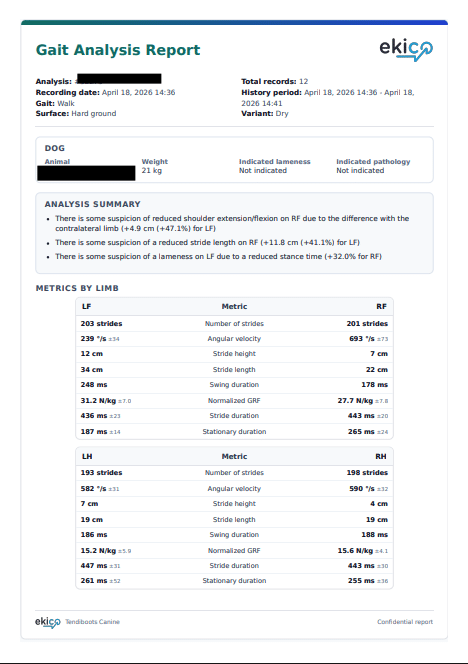
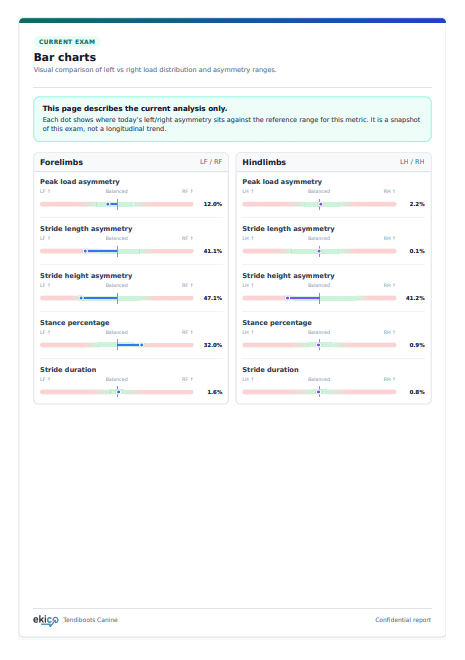
The Tendiboots™ analysis highlighted several asymmetries affecting both forelimbs.
Rather than identifying a single “lame leg”, the analysis demonstrated that both forelimbs were involved, with restricted mobility affecting the right forelimb and compensatory loading changes occurring on the left.
This objective information provided a clear direction for treatment.
A targeted rehabilitation plan
Based on the gait analysis findings, therapy focused on restoring shoulder mobility and encouraging symmetrical limb loading.
The rehabilitation programme included:
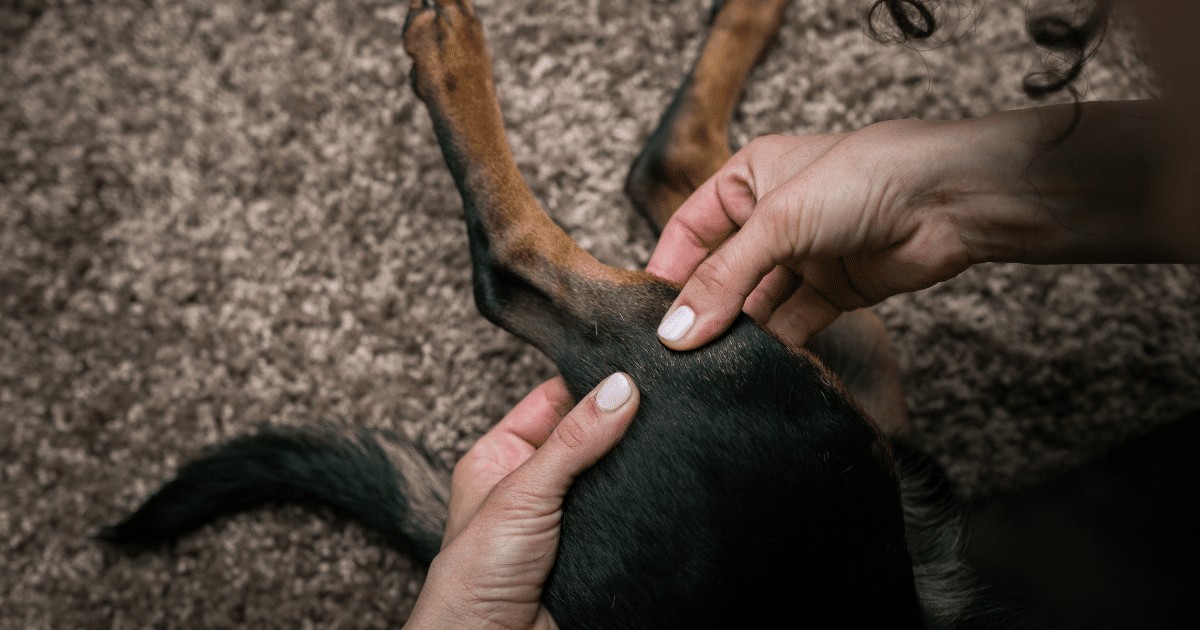
* Osteopathic techniques to improve joint mobility.
* Clinical massage to reduce muscular tension and compensatory restrictions.
* Cavaletti exercises to encourage controlled shoulder flexion and extension.
* Slow lead walking to promote symmetrical gait patterns.
* A gradual, structured return to exercise.
Particular attention was paid to progressive exercise progression, as the owner reported that previous episodes had often been followed by returning to agility training too quickly, before complete recovery.
Outcome
Following rehabilitation, the dog’s lameness has not returned to date.
By objectively identifying the functional deficits, Tendiboots™ enabled therapy to be directed towards the underlying biomechanical problem rather than simply treating visible lameness.
For canine athletes, where even small gait asymmetries can significantly affect performance and increase injury risk, objective assessment can provide valuable clinical guidance and confidence in rehabilitation planning.
Why objective gait analysis matters
Cases of intermittent or subtle lameness frequently involve compensation, making visual assessment alone challenging.
Objective gait analysis helps clinicians:
* Detect asymmetries that may not be visible to the naked eye.
* Differentiate primary dysfunction from compensatory adaptations.
* Monitor rehabilitation progress over time.
* Provide owners with objective reports that improve understanding and compliance.
* Support evidence-based clinical decision-making.
For sports dogs especially, this information allows rehabilitation programmes to be tailored with greater precision while helping reduce the risk of recurrence.
Find more clinical experience shared by Paula Teal
Paula Teal’s
Testimonial
Discospondylitis & Wobbler’s syndrome in dog
About the co-author
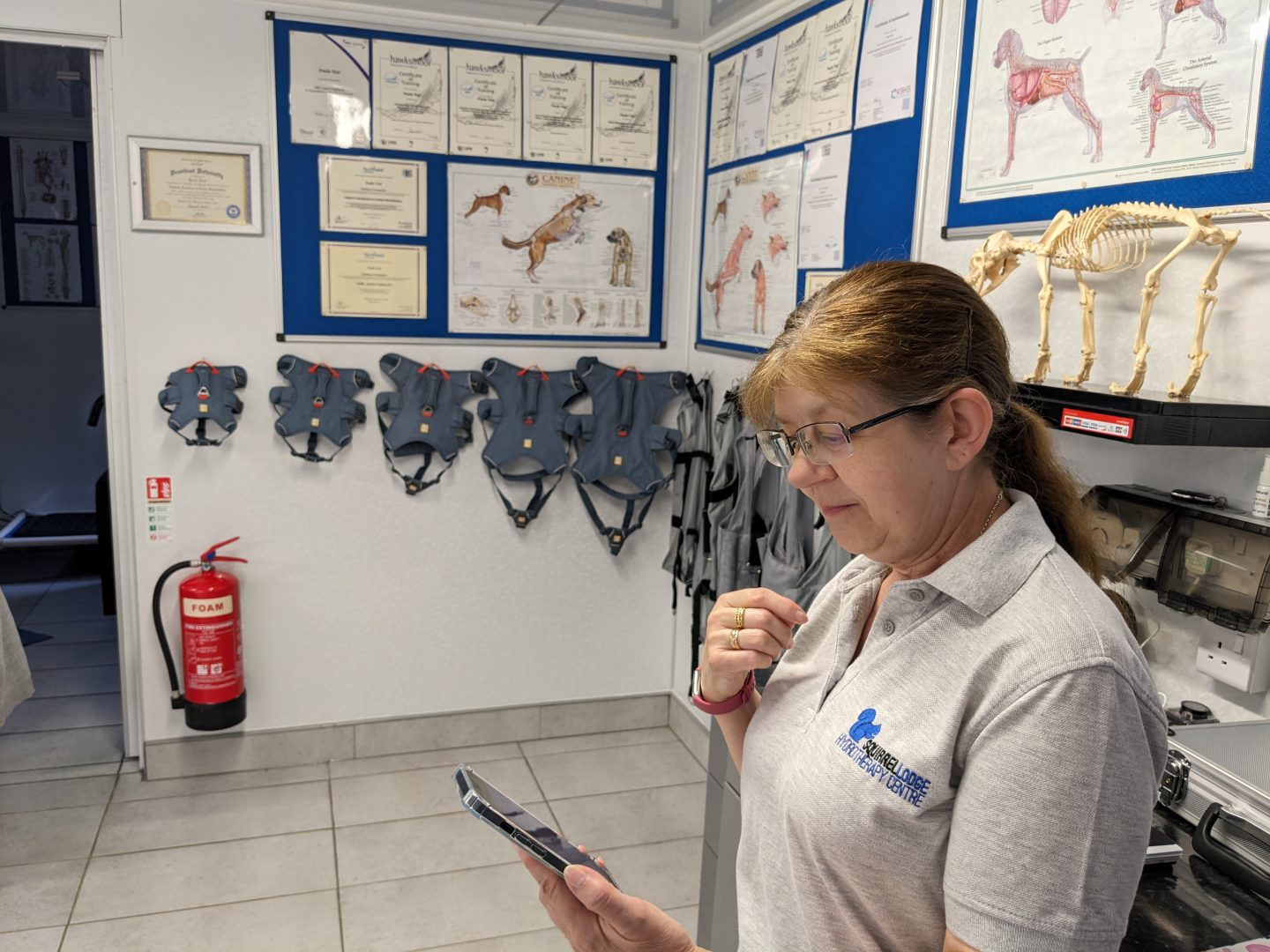
Paula Teal is the founder and director of Squirrel Lodge Centre, a specialist canine rehabilitation and fitness centre based in Lincolnshire, UK. She is a qualified Canine Rehabilitation Practitioner and Fitness Trainer, with a particular interest in supporting dogs recovering from injury or surgery, managing chronic conditions, and optimising the performance of sporting dogs.
Through Squirrel Lodge Centre, Paula provides a multidisciplinary approach combining rehabilitation exercises, manual therapies, and objective gait analysis to develop tailored programmes adapted to each dog’s individual needs. She works closely with veterinary professionals to support diagnosis, rehabilitation planning, and long-term monitoring of canine patients.
With extensive experience in canine locomotion and rehabilitation, Paula integrates objective gait assessment into her clinical practice to complement her observations and provide accurate data to owners and veterinary teams.