After surgery for a cranial cruciate ligament injury, monitoring gait recovery helps clinicians understand how a dog is using the operated limb. Clinical observation remains essential; quantitative gait analysis provides additional reference points to document recovery and support communication between professionals.
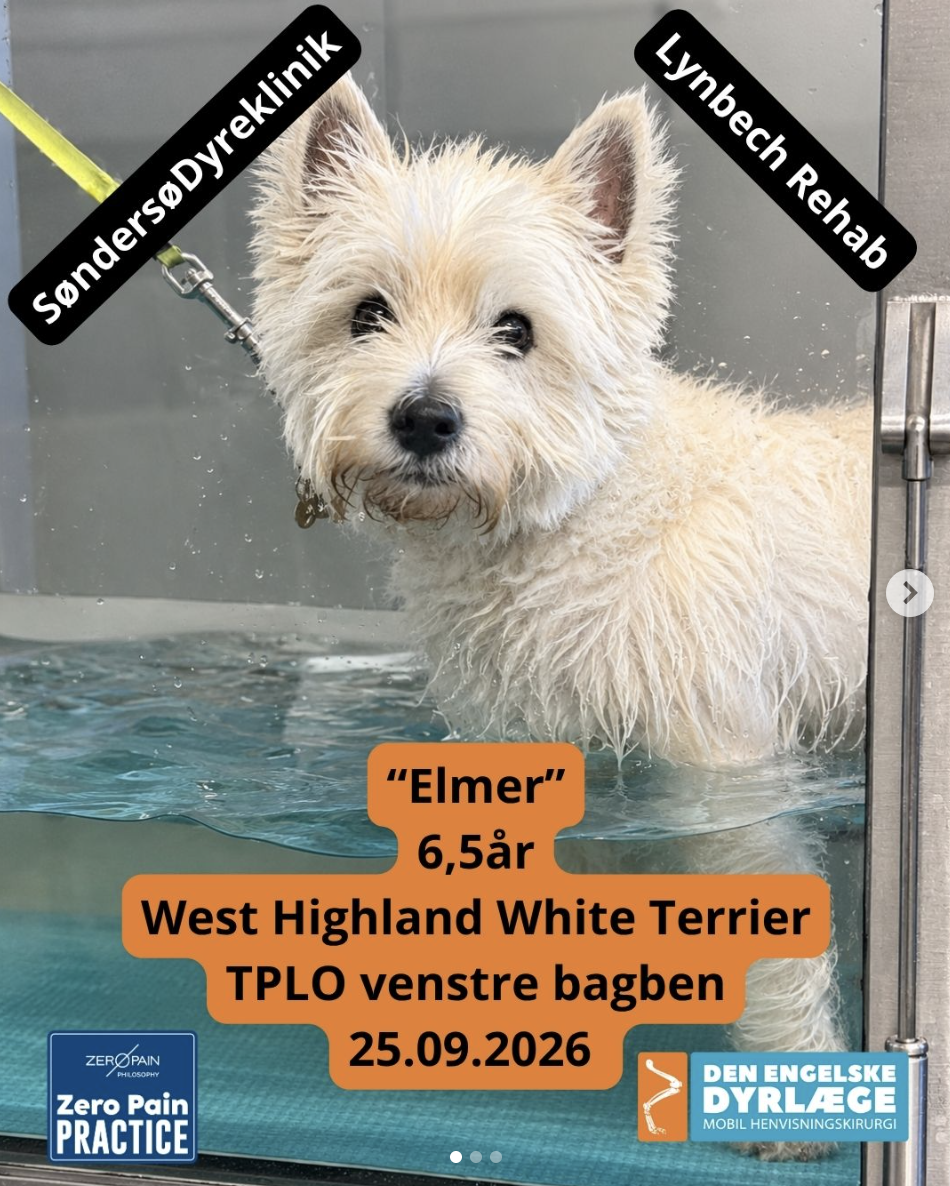
In Denmark, Elmer’s journey illustrates how these approaches complement one another. This six-and-a-half-year-old West Highland White Terrier is receiving care that combines surgery, rehabilitation and gait analysis with Tendiboots™ Canine. His case was shared by Den Engelske Dyrlæge on Instagram.
Discover how Tendiboots™ can support rehabilitation follow-up after TPLO.
A cranial cruciate ligament injury affecting the left hind limb
Elmer had sustained a cranial cruciate ligament injury in his left knee. Initial conservative management, combining rest and pain relief, had not brought the expected improvement. A TPLO was then performed.
The cranial cruciate ligament helps stabilise the knee. When it is injured, a dog may show lameness, pain and reduced use of the affected limb.
TPLO, or tibial plateau levelling osteotomy, changes the geometry of the upper tibia to improve knee stability during weight-bearing. Recovery then requires a period of healing and a controlled return to activity. Learn more about TPLO and cranial cruciate ligament injuries — ACVS.
After TPLO surgery: supporting the return to movement
Elmer’s surgery went as planned. He was then referred to Anette at Lynbech Rehab to continue his rehabilitation with underwater treadmill sessions and physiotherapy exercises.
This stage raises a practical question for clinicians: how is the dog using the affected limb as recovery progresses?
Persistent visible lameness deserves a closer assessment. Movement amplitude, timing and differences between limbs provide complementary insights into gait. Measurements can therefore enrich the clinical assessment and provide a record of the dog’s movement at a given point in time.
Tendiboots™ to complement clinical observation
Anette incorporated Tendiboots™ Canine into Elmer’s follow-up care, then shared the results with the veterinarian who had performed the surgery.
The sensors, placed on the limbs, collect a range of parameters as the dog moves. Stride length and height, the duration of gait phases and impact force help document differences in gait. Results are available in the app and can be presented in a report. Discover Tendiboots™ Canine.
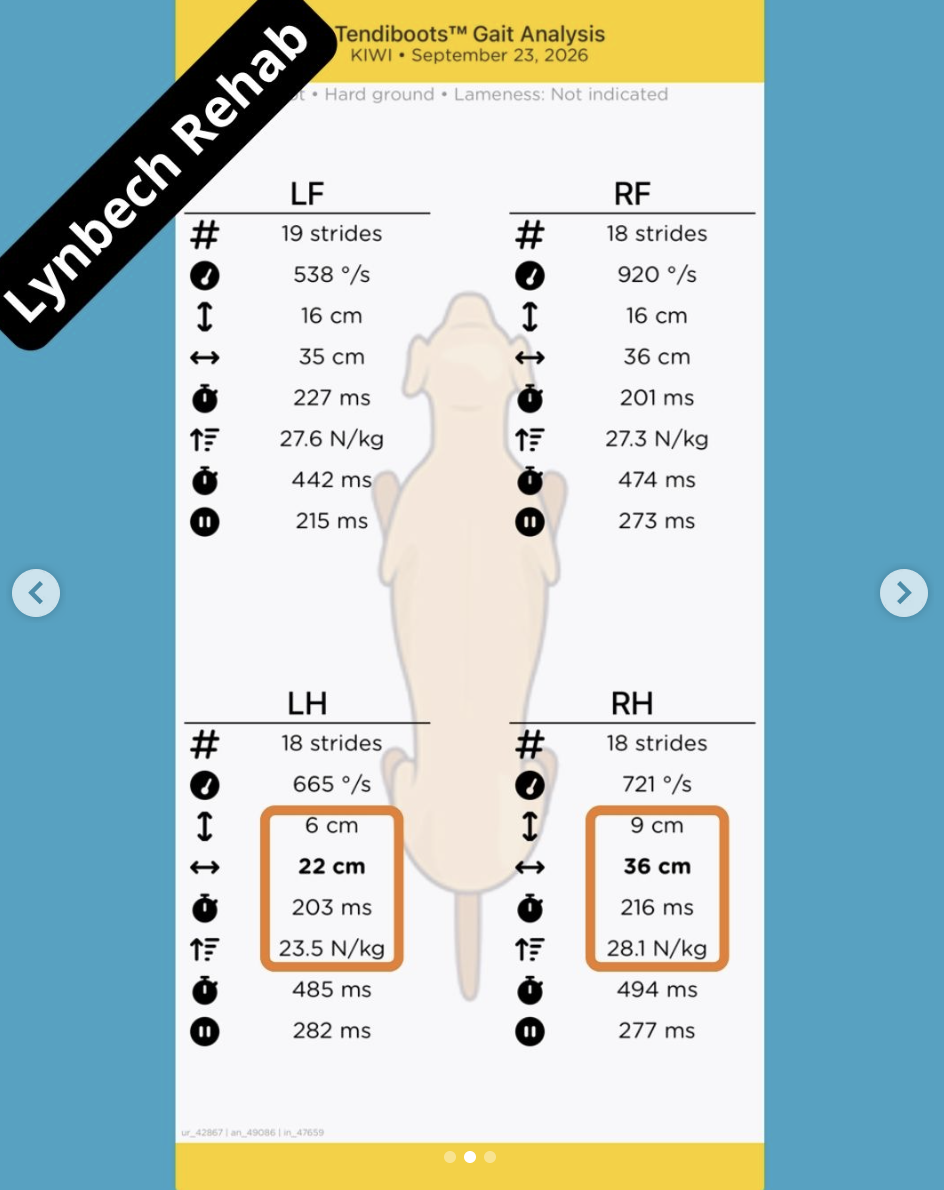
In his account, the veterinarian describes encouraging progress, although lameness is still present. The value of monitoring lies precisely in bringing these two observations together: recovery is ongoing, and measurable information helps characterise it.
The recordings also provide reference points for future assessments. They are interpreted alongside the overall clinical examination and postoperative follow-up.
Data that supports collaboration
One of the notable aspects of this case is the sharing of results between Anette and the operating veterinarian. The gait report provides a common basis for discussing Elmer’s follow-up care.
This gives gait analysis a very practical role: supporting the exchange of information between professionals involved at different stages of the care pathway.
For Ekico, this experience from practice illustrates a concrete application of Tendiboots™: documenting gait and making observations easier to share, in support of coordinated follow-up care.
The professionals behind Elmer’s care
Veterinarian Damian Strudwick, founder of Den Engelske Dyrlæge, provides a mobile surgical referral service in Denmark. He works with partner clinics to perform procedures on their premises.
Anette Lynbech, a veterinary nurse and the owner of Lynbech Rehab, is overseeing Elmer’s rehabilitation. She is also listed among practitioners holding the CCRP qualification in canine rehabilitation.
Their collaboration, together with the clinic that hosted the surgery and Elmer’s owners, highlights each participant’s role in maintaining continuity of care.