Following a fracture, how can practitioners assess the way a dog uses the affected limb throughout rehabilitation? Alongside visual gait assessment, objective analysis provides measurable reference points for tracking changes in loading and movement.
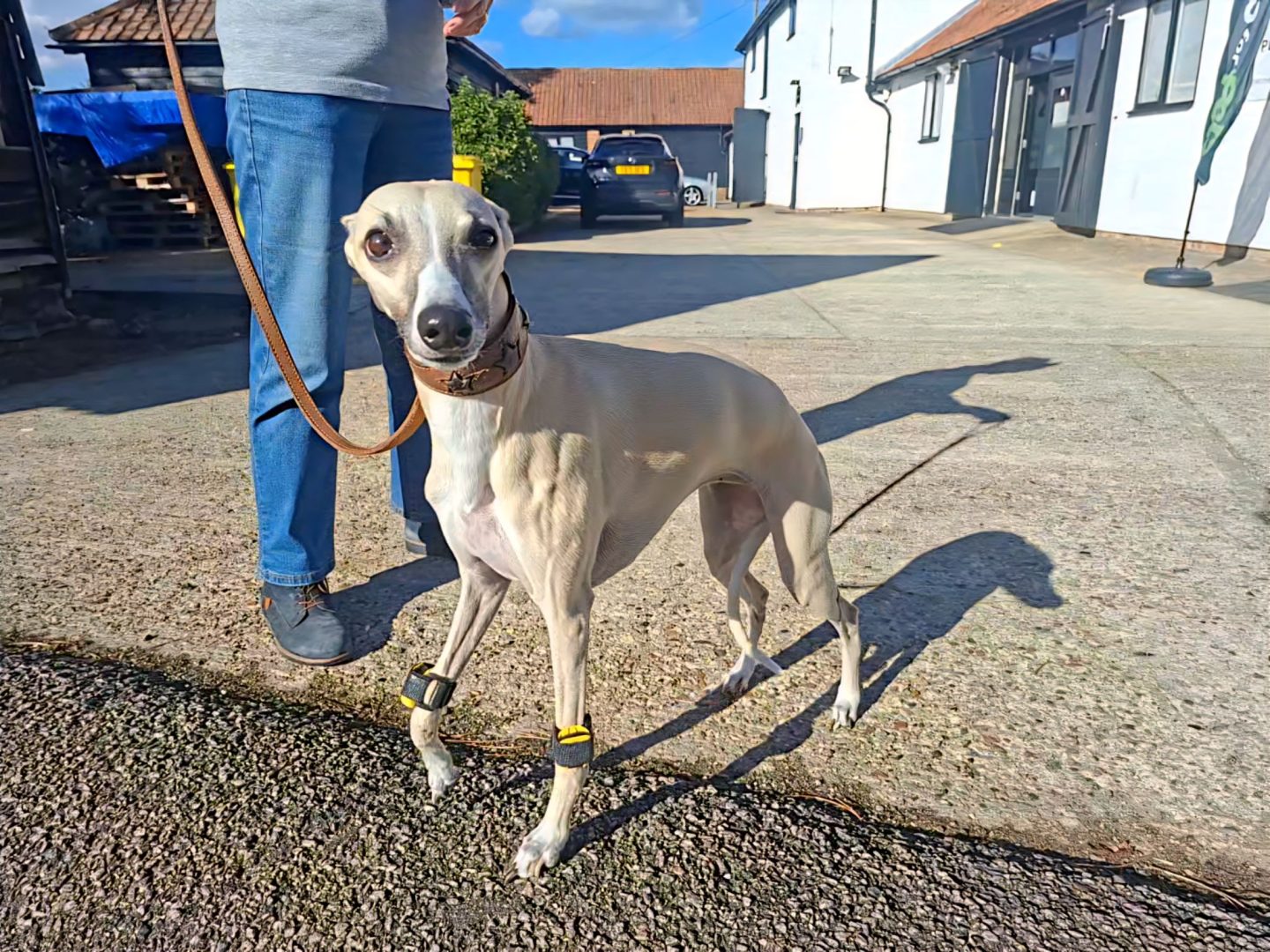
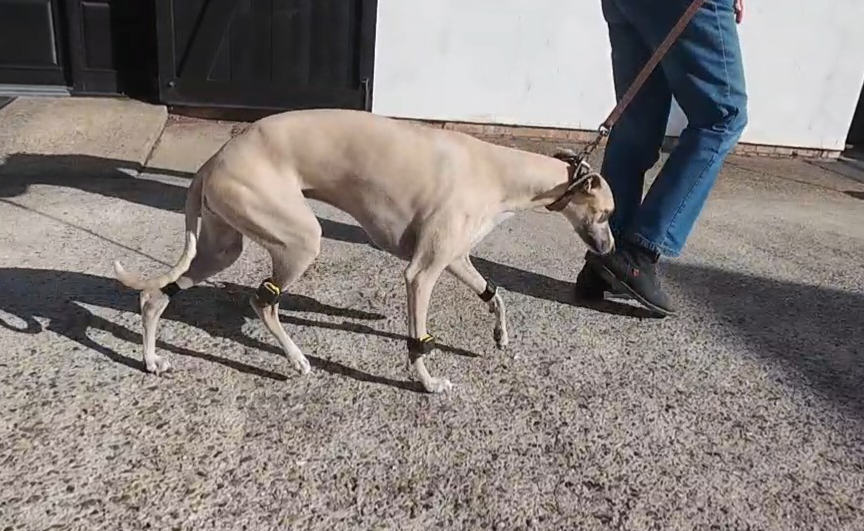
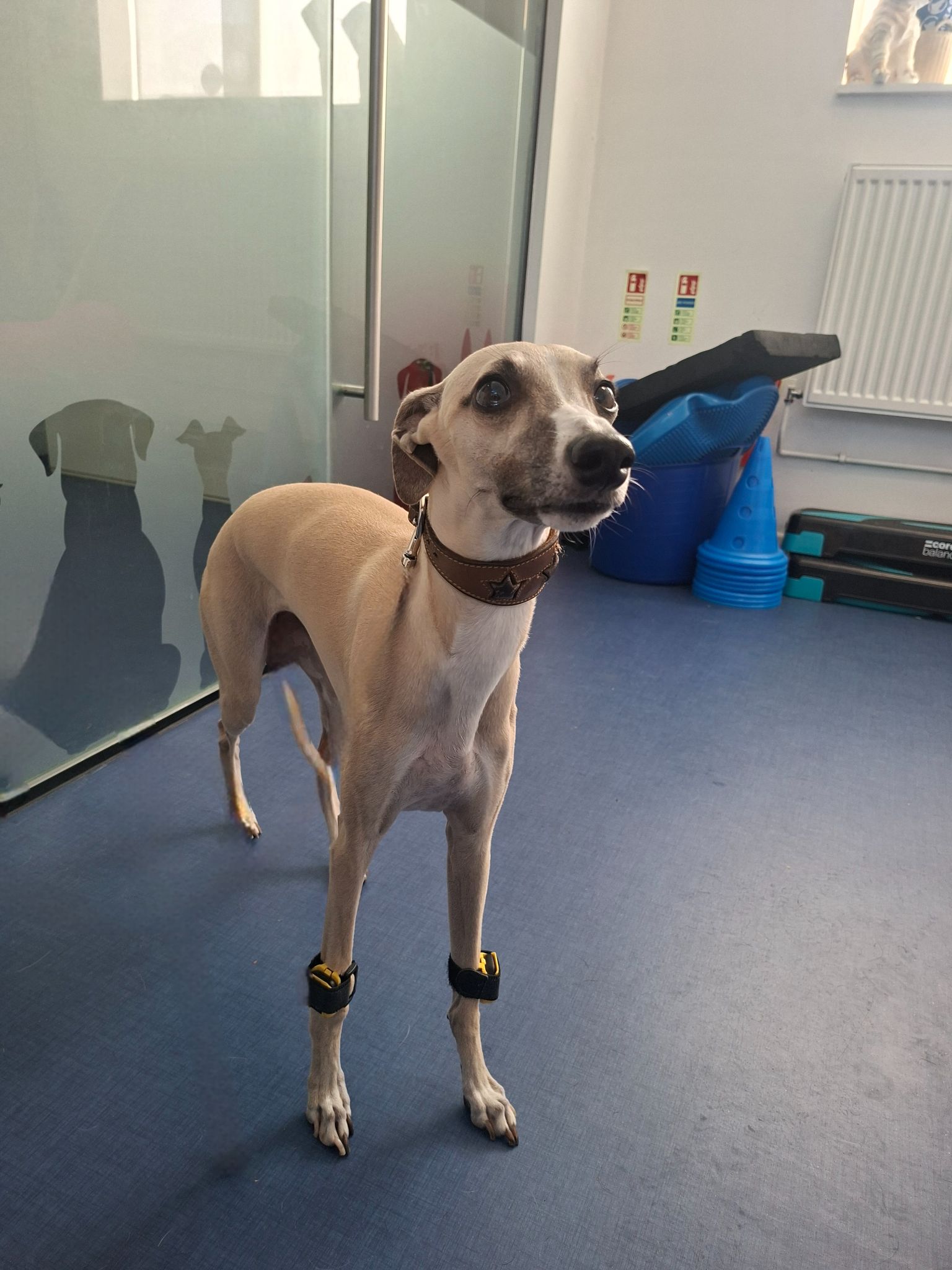
Jane Charman, founder of Pet Therapy Rooms, shares the case of Honey, a Whippet referred with a right carpal fracture that remained incompletely healed after eight weeks. Used alongside a rehabilitation programme, Tendiboots™ helped document changes in Honey’s gait between consultations.
Carpal fractures: the challenges of recovery
The carpus is the equivalent of the human wrist. A fracture in this area can affect weight-bearing and the use of the injured forelimb.
During recovery, several challenges may arise together: pain, reduced limb use, joint stiffness and muscle loss. Rehabilitation therefore aims to restore function while respecting the bone-healing process. These two aspects are complementary: improved weight-bearing alone does not confirm that a fracture has healed. Source: American College of Veterinary Surgeons.
Practitioners also need to understand how the dog adapts its gait and whether asymmetries persist throughout recovery.
Honey: incomplete fracture healing after eight weeks
When Honey first attended Pet Therapy Rooms, the right carpal fracture had not fully healed, eight weeks after the injury.
According to Jane, Honey’s activity up to that point had been limited to lead walks with the owner. The first Tendiboots™ recording was taken before any treatment at the centre, providing a baseline assessment of Honey’s gait.
This initial recording offered a reference for monitoring use of the right forelimb after treatment began.
Why combine TECAR therapy and hydrotherapy?
Jane selected a programme combining Winback TECAR therapy and hydrotherapy, with the aim of supporting Honey’s recovery and improving overall fitness.
What is TECAR therapy?
TECAR therapy is a non-invasive technique that uses a high-frequency electrical current delivered through electrodes in contact with the body. The name refers to capacitive and resistive energy transfer.
The transferred energy can generate heat within the tissues, with the intensity depending on the settings used. In rehabilitation, the technique is used with goals such as pain relief, muscle relaxation and improved mobility. The practitioner adjusts the application to the treatment area and the patient’s condition. Learn more about Winback technology.
For Honey, Jane explains that she chose TECAR therapy with the intention of supporting bone healing. This describes the treatment goal for this patient; gait measurements alone cannot demonstrate an effect on bone repair.
Hydrotherapy for controlled exercise
Hydrotherapy was selected to improve Honey’s fitness through controlled exercise.
Water supports the body during activity, allowing exercise intensity to be adapted to the patient’s abilities. This approach is used in rehabilitation following injuries and orthopaedic surgery. Source: Royal Veterinary College.
Together, the two treatment modalities formed part of a programme aimed at supporting recovery and restoring function.
What the Tendiboots™ measurements show
The report compares recordings taken on 26 June and 9 July 2026, thirteen days apart. The results presented cover both forelimbs.
Almost symmetrical loading
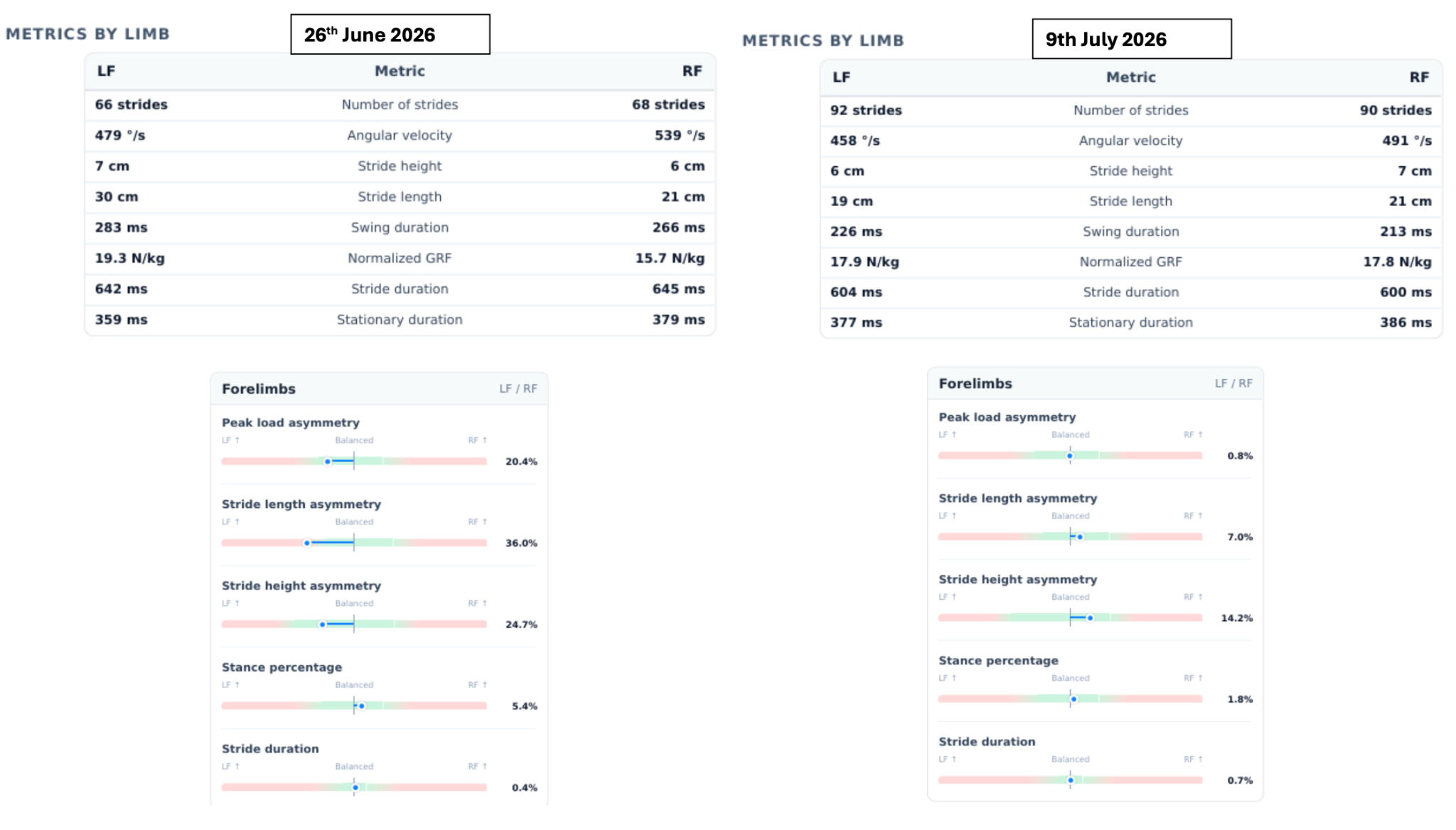
On 26 June, the recorded normalised ground reaction force was 15.7 N/kg on the right, compared with 19.3 N/kg on the left. This difference is consistent with reduced loading of the affected limb.
By 9 July, the values were much closer: 17.8 N/kg on the right and 17.9 N/kg on the left. Recorded loading had increased on the right forelimb and decreased on the left.
The software’s peak load asymmetry index fell from 20.4% to 0.8%. During the second recording, the two forelimbs therefore showed very similar loading values.
| Forelimb asymmetry indicator | 26 June | 9 July |
|---|---|---|
| Peak load | 20.4% | 0.8% |
| Stride length | 36.0% | 7.0% |
| Stride height | 24.7% | 14.2% |
| Stance percentage | 5.4% | 1.8% |
| Stride duration | 0.4% | 0.7% |
A clear improvement in stride length symmetry
Stride length asymmetry decreased from 36% to 7%, a reduction of 29 percentage points.
This change shows that the stride lengths of the two forelimbs were much more similar during the second recording. Alongside the more balanced loading, this is an encouraging finding in Honey’s functional recovery.
Interpreting the measurements together
Stride height asymmetry also decreased, from 24.7% to 14.2%, although a difference remained. The limb with the greater stride height changed between recordings.
Stance percentage became more symmetrical, while stride durations were already very similar at the initial assessment and remained so.
Taken together, the findings suggest a favourable change in forelimb symmetry, particularly in loading and stride length. As movement speed and recording conditions are not specified in the report, these changes should be interpreted alongside the clinical examination.
How Tendiboots™ supported the follow-up
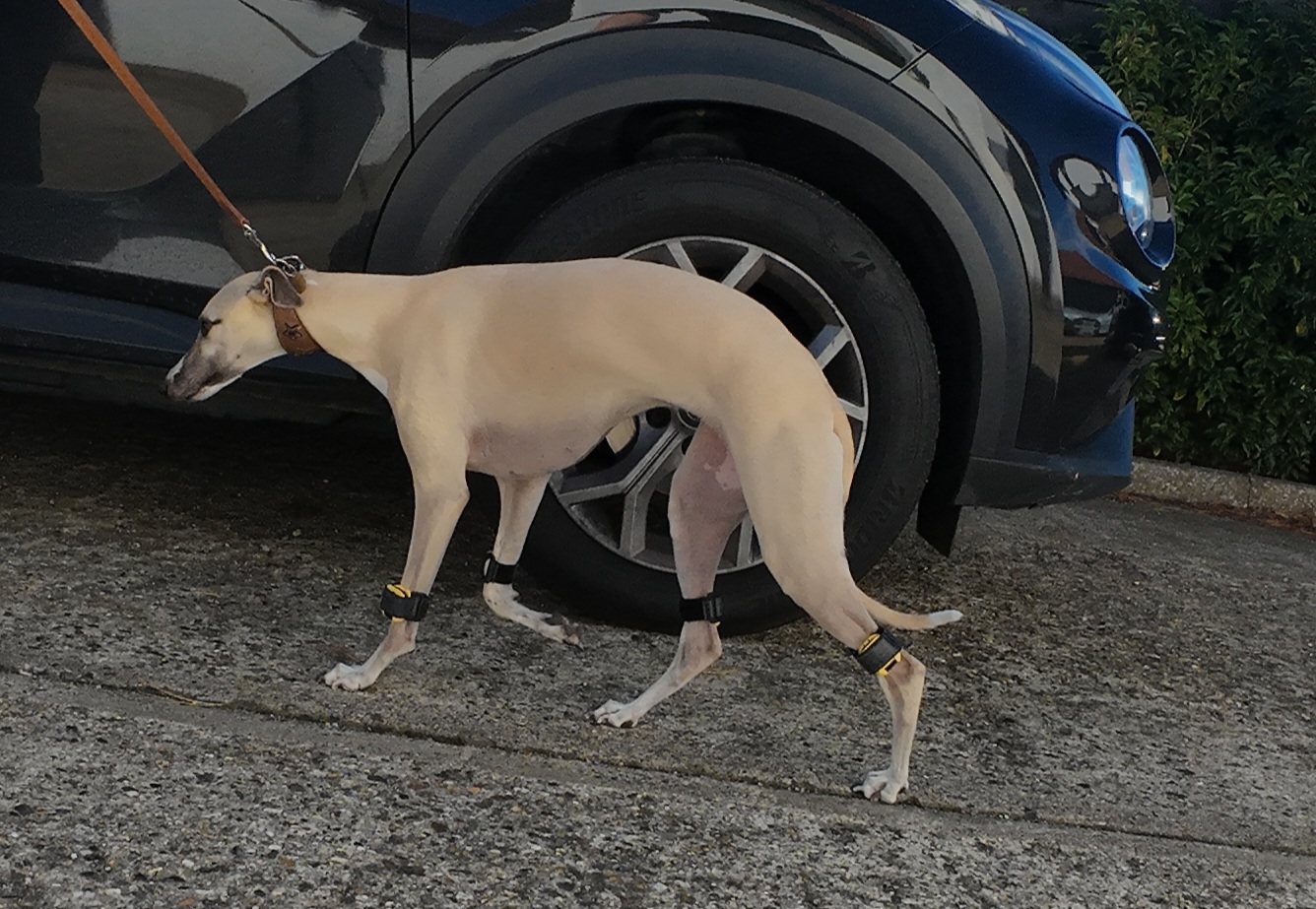
For Jane, Tendiboots™ helped assess changes in loading of the right forelimb and look for possible compensatory changes elsewhere in the body.
The shared report illustrates its practical value: comparing consultations, quantifying changes in loading symmetry and identifying parameters that remain asymmetrical. The measurements complement clinical observation and provide reference points for monitoring recovery.
As the supplied report covers only the forelimbs, it does not allow conclusions about changes in the hindlimbs or compensations throughout the body.
Jane also highlights the tool’s value in her practice:
A full recovery reported by Jane
At the time of her feedback, Jane reported that Honey had fully recovered.
The two recordings illustrate a positive stage in that recovery, with a clear improvement in loading symmetry between the forelimbs. However, they do not establish when full recovery occurred or independently confirm bone healing.
This case shows how gait monitoring can help practitioners document a patient’s progress and better understand how an injured limb is being used following a fracture.
About Jane Charman and Pet Therapy Rooms
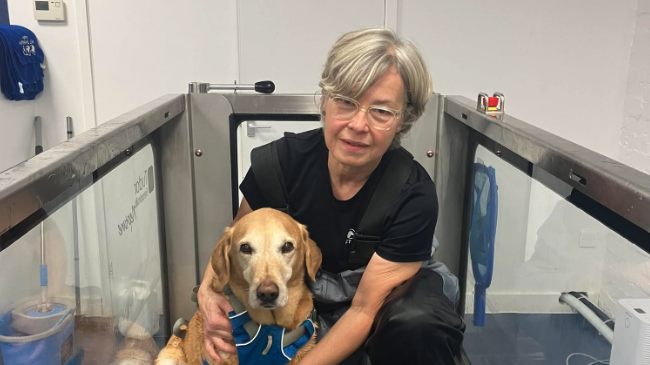
Jane Charman is a veterinary physiotherapist and the founder of Pet Therapy Rooms, based in Sawbridgeworth, United Kingdom. She graduated from Writtle in 2021 with a master’s degree in Veterinary Physiotherapy and is also a qualified canine hydrotherapist, with an advanced underwater treadmill qualification.
She has a particular interest in postoperative rehabilitation and develops individual treatment programmes in close collaboration with owners. Find out more about Jane and Pet Therapy Rooms.