🐾 From the Conference Stage to the Consultation Room: Discover How We Use Gait Analysis to Help Dogs Move Better.
Read Sarah Holmes’ story from Ease in Motion Canine Rehabilitation & Hydrotherapy Centre and learn how objective gait analysis supports clinical decision-making, rehabilitation, and long-term mobility.
Options for Animals in the United Kingdom 🇬🇧
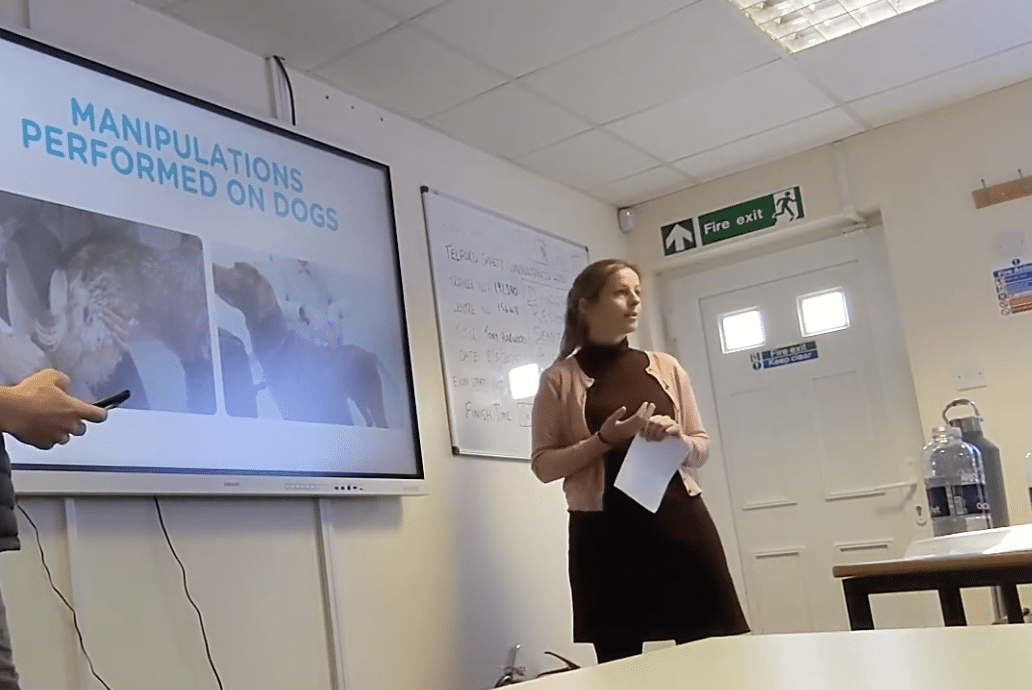
Earlier this year, I was invited to speak at the Annual Animal Chiropractic Conference—a fantastic event bringing together professionals with a shared goal: helping animals move more comfortably and live happier, pain-free lives.
I presented alongside Ekico, the innovative team behind the Tendiboots™ Canine Gait Analysis System—a wearable technology that is transforming the way we understand canine movement.
Together, we shared real-life case studies demonstrating how the combination of objective gait analysis and gentle McTimoney chiropractic techniques can make a real and measurable difference in a dog’s comfort, balance, and mobility.
What Is Gait Analysis?
Canine gait analysis is defined as the objective, sensor-based measurement of a dog’s movement patterns – including stride length, limb loading, speed, and symmetry – providing quantifiable data that visual assessment alone cannot capture
Gait analysis is a simple, non-invasive way to measure how your dog moves. At Ease In Motion, we use small, lightweight sensors attached to your dog’s legs while they walk or trot over a short distance. These sensors capture precise information about the movement of each limb, including stride length, speed, balance, and weight distribution.
The results are displayed instantly on a tablet or smartphone, providing clear, objective data that complements what we observe and feel during our hands-on assessment. For a deeper understanding of both static and dynamic measurements, see our comprehensive guide on dog gait analysis: static and dynamic data.
This allows us to detect even the slightest signs of imbalance long before they become visible to the naked eye.-
Why We Combine It with Gentle Chiropractic Care
During the conference, I presented a case study showing how a single gentle McTimoney chiropractic session transformed a dog’s movement pattern.
This lovely patient came to us with a slight pelvic imbalance and a shorter stride on one hind limb. After assessing the dog with Tendiboots™ sensors, the data clearly showed reduced power and a shorter stride on that side.
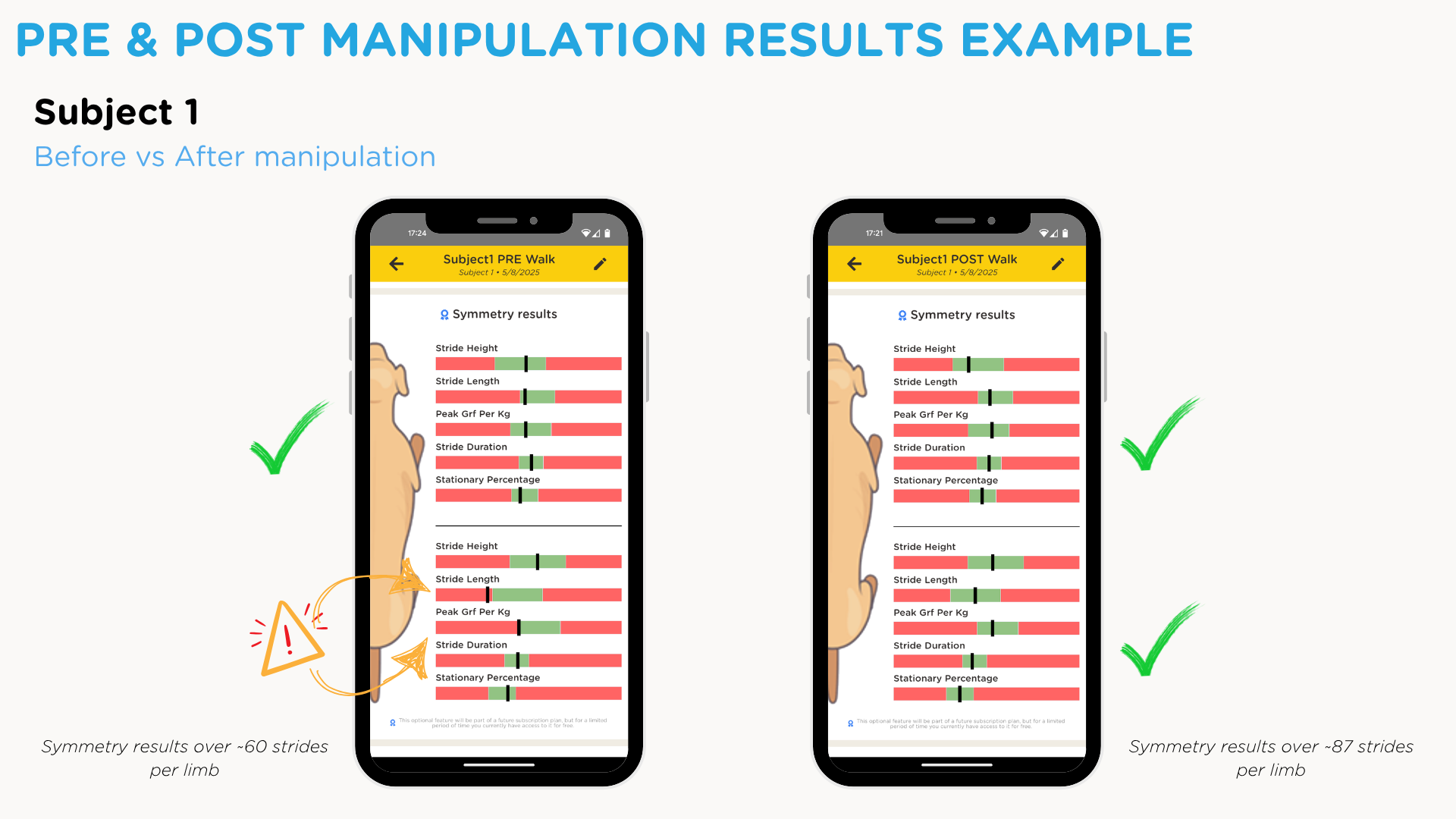
Following a gentle, low-force McTimoney adjustment to help rebalance the pelvis and spine, we repeated the gait assessment — and the improvement was immediate.
📊 Before treatment:
• Shorter stride length
• Reduced propulsion power
• Longer support time on one side
📊 After treatment:
• Stride length increased from 15 cm to 26 cm
• Improved power and symmetry across all four limbs
• Smoother and more coordinated movement
Within just a few minutes, the difference was both visible and measurable. The simple yet informative graphs clearly highlight the data collected and help visualise the changes in the dog’s movement pattern.
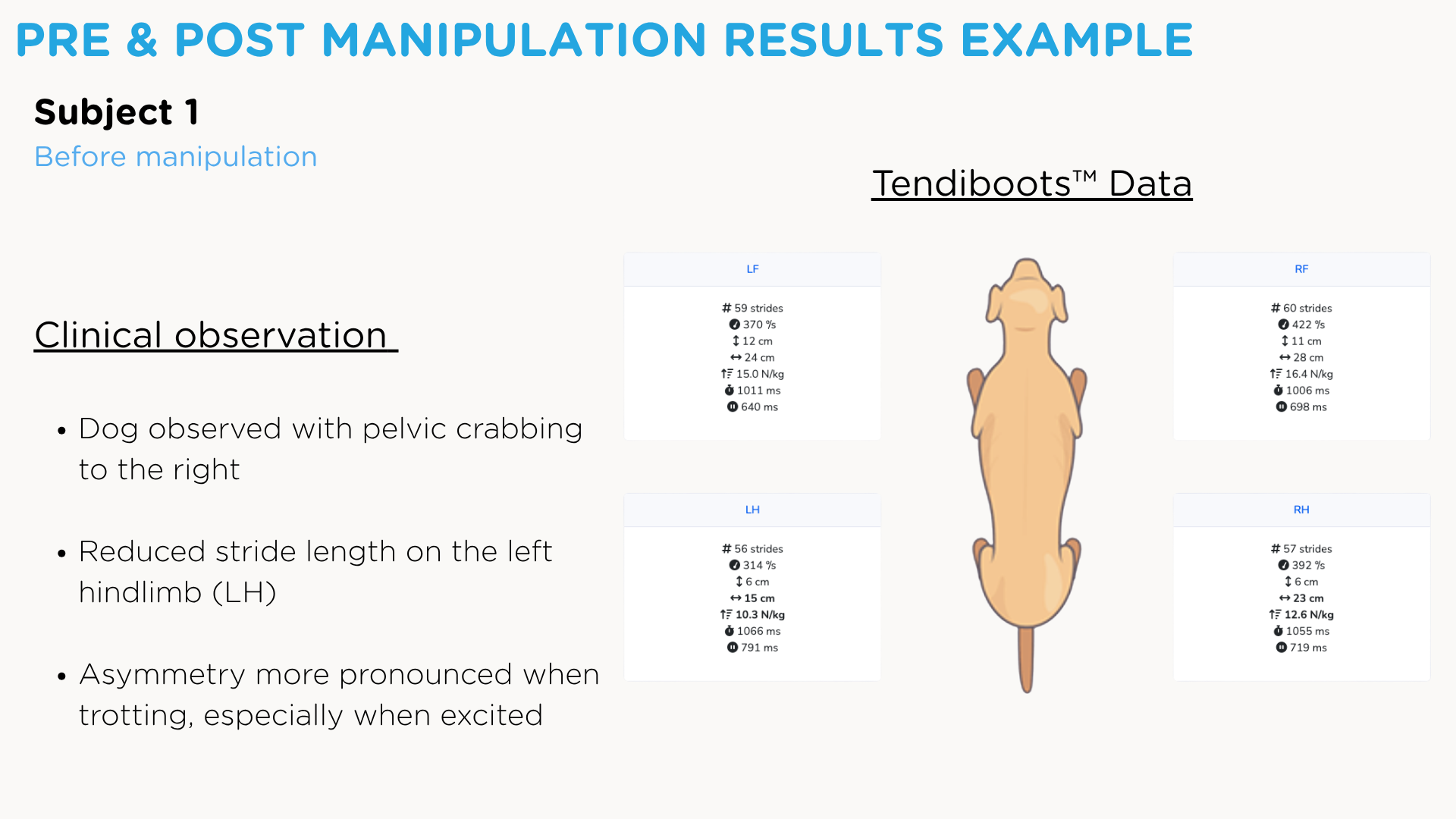
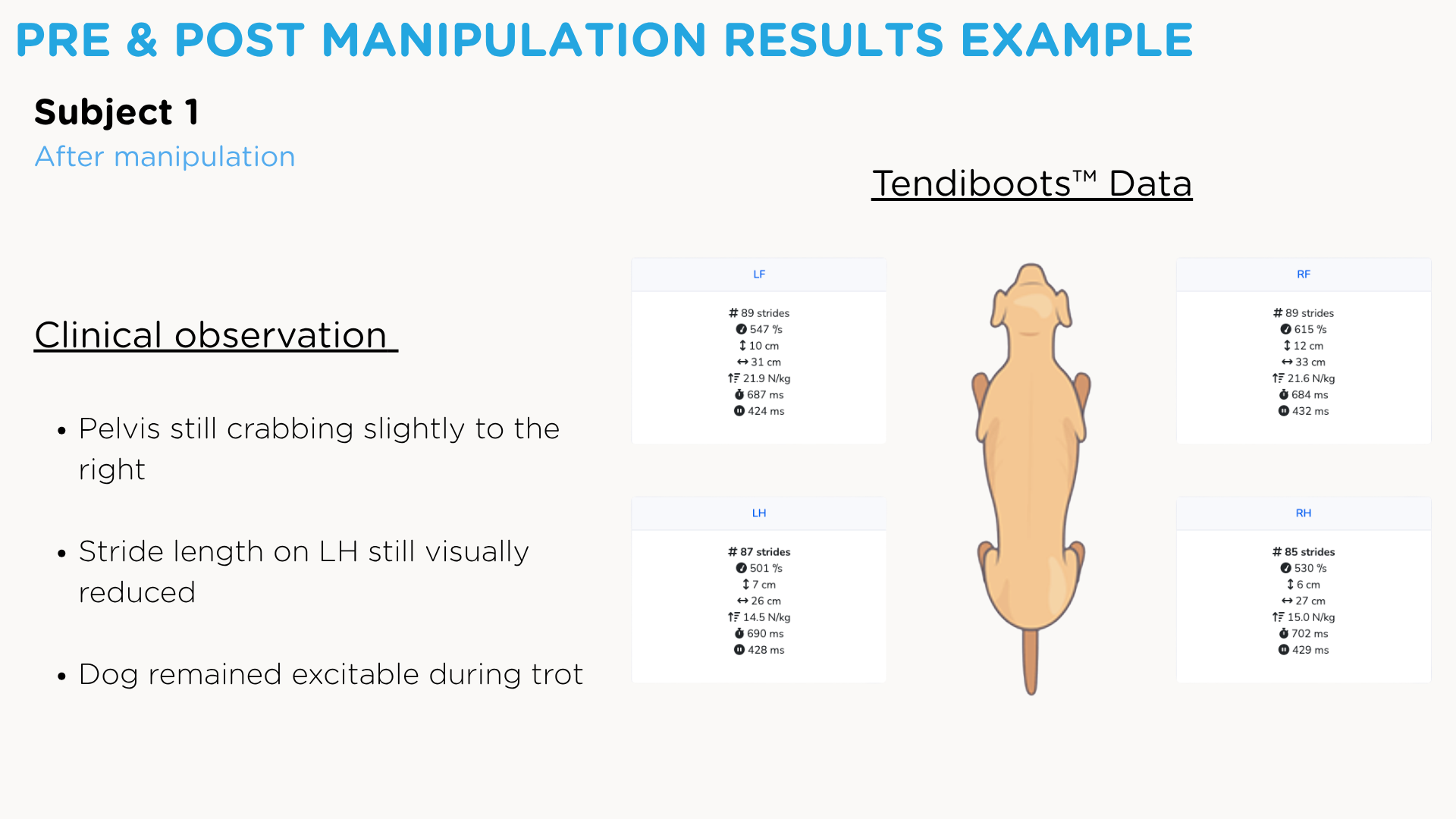
Having these visuals makes it even easier for owners to understand: they can see the results in real time, and we can monitor progress more effectively throughout the rehabilitation journey. This type of before/after data is equally valuable in complex cases — as illustrated in our clinical report on gait-dependent asymmetries detectable only at trot.
Here is another format; as you can see, the movement improved significantly after just one McTimoney chiropractic session:
What Makes McTimoney Chiropractic Special?
McTimoney chiropractic uses extremely gentle and precise movements to help restore alignment and mobility in the spine and pelvis.
Most dogs accept it very well — in fact, many become so relaxed that they start to doze off during the session. It is designed to complement veterinary care, physiotherapy, and hydrotherapy by helping the body move more freely and reducing tension on joints and muscles. Among other manual therapies, massage plays a key role in supporting athletic dogs by addressing soft tissue tension that contributes to gait asymmetries.
What This Means for Your Dog
By combining technology and hands-on care, we can:
* Detect even the smallest changes in gait before they lead to discomfort.
* Monitor progress throughout rehabilitation using objective data.
* Adapt each treatment plan based on evidence rather than assumptions.
* Share clear and visual results with you, so you can see your dog’s progress.
These benefits are well illustrated in our case study on intermittent lameness in an agility Border Collie, where objective gait data identified bilateral forelimb involvement that visual assessment alone had failed to detect.
All of this is part of our commitment to providing evidence-based and compassionate care, using every available tool to help achieve the best possible outcome for your dog.
Every movement tells a story 🐾
Whether your dog is recovering from surgery, managing arthritis, or simply slowing down with age, understanding how they move helps us make more informed, gentle, and effective care decisions.
At Ease In Motion Canine Rehab, we are proud to lead the way by integrating advanced gait analysis into everyday rehabilitation, across all treatment modalities.
Watch the full conference for Chiropractors & Veterinarians, organized by Options for Animals, in this video!👇