In this clinical case, Splash Paws Canine Hydrotherapy & Physiotherapy Centre ™ presents Willow, a dog referred for persistent right hindlimb lameness and bilateral hindlimb weakness despite unremarkable diagnostic imaging findings.
Using EKICO Tendiboots™ gait analysis, the rehabilitation team was able to identify subtle asymmetries and evolving compensatory patterns that were not consistently detectable during routine observation. This case highlights the value of objective locomotor assessment in dogs presenting with complex or inconsistent clinical signs.
Clinical Case Example: The Case of Willow
Willow initially presented to Splash Paws following episodes of stiffness and intermittent right hindlimb lameness. Prior diagnostic investigations included radiographs of the hips, stifles, hocks, and lumbar spine, all of which were considered unremarkable.
Despite the absence of significant imaging findings, Willow continued to demonstrate altered movement patterns and reduced comfort during activity, prompting referral for rehabilitation assessment and therapeutic management.
During the initial clinical assessment, Willow demonstrated mild right hindlimb lameness together with reduced stride length through the pelvic limbs. Palpation revealed global muscular hypertonicity affecting both the thoracic and pelvic limb musculature.
Orthopaedic and soft tissue findings included reduced right hip extension, discomfort during right hip range of motion assessment, bilateral reluctance to extend the stifles, hypertonicity through the right quadriceps and left hamstring/gracilis musculature, and fasciculations affecting the lumbar epaxial muscles during deeper palpation of the lumbosacral region.
Additional compensatory findings were also identified through the thoracic limbs, including reduced shoulder extension, mild restriction in elbow flexion, and increased tone through the caudal shoulder musculature bilaterally.
Collectively, these findings suggested a multifactorial compensatory locomotor pattern rather than an isolated focal orthopaedic presentation.
Rehabilitation Strategy
A rehabilitation programme combining massage therapy and hydrotherapy was initiated with the primary objectives of improving hindlimb engagement, reducing muscular hypertonicity, and restoring more efficient movement patterns.
Due to concurrent medical considerations, laser therapy was contraindicated in Willow’s case. Massage therapy was therefore selected as an alternative modality to address tissue tension, improve mobility, support circulation, and assist with overall comfort.
Hydrotherapy was incorporated to provide controlled low-impact exercise, facilitate progressive strengthening, and encourage more symmetrical hindlimb loading while minimising joint stress during movement.
As rehabilitation progressed, subtle changes in Willow’s movement pattern began to emerge. During hydrotherapy sessions, the rehabilitation team observed intermittent pelvic hike and altered loading patterns involving the left hindlimb, despite the right hindlimb remaining the primary historical concern.
These findings were not consistently reproducible during routine visual gait assessment, and the owner had not reported obvious deterioration at home. For this reason, objective gait analysis was undertaken to further investigate dynamic movement asymmetries.
Static Weight Distribution Assessment
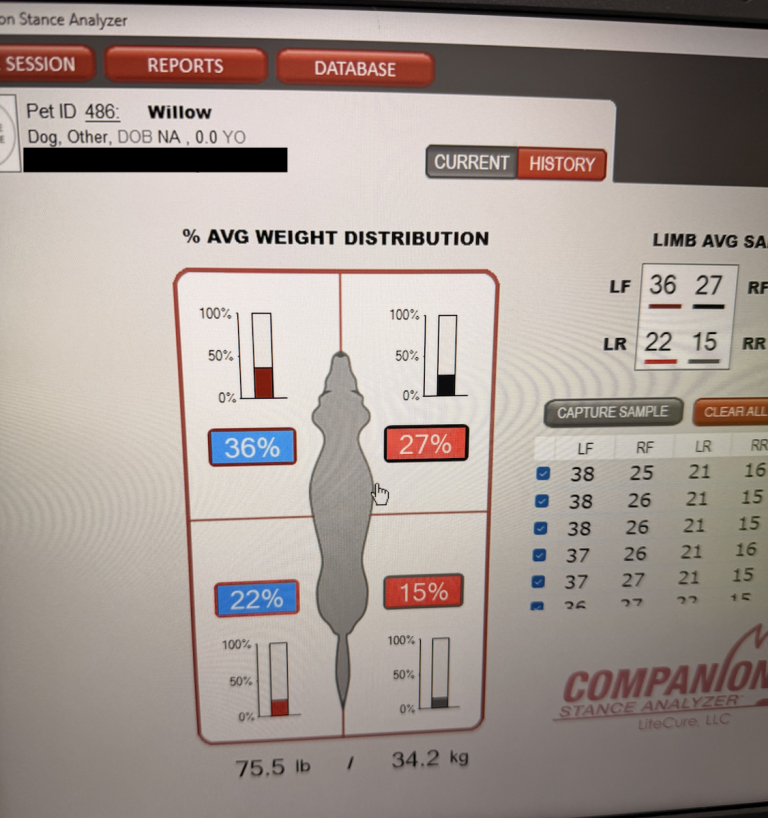
Static stance analysis demonstrated a clear asymmetry in weight distribution.
Ideally, symmetrical stance loading would be expected to approximate 30% through each forelimb and 20% through each hindlimb. Willow’s results demonstrated increased loading through the left forelimb (36%) together with reduced loading through the right hindlimb (15%).
This distribution was consistent with right hindlimb offloading and compensatory thoracic limb loading.
A mild increase in loading through the left hindlimb was also identified. Importantly, this correlated with the muscular tension and stiffness identified clinically during palpation of the left pelvic limb.
The static findings therefore supported the presence of bilateral compensatory involvement despite the initially suspected unilateral presentation.
Dynamic Gait Analysis Findings
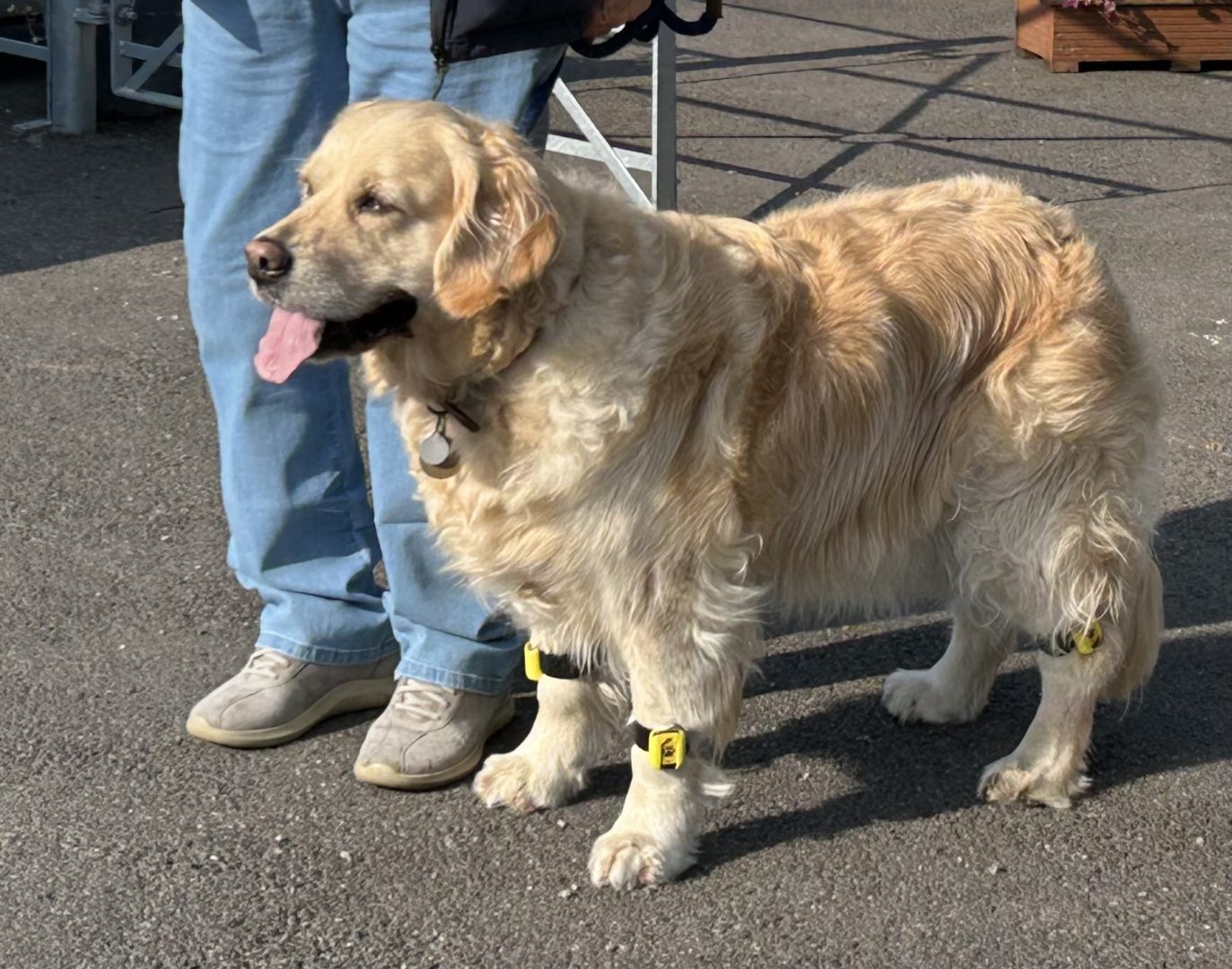
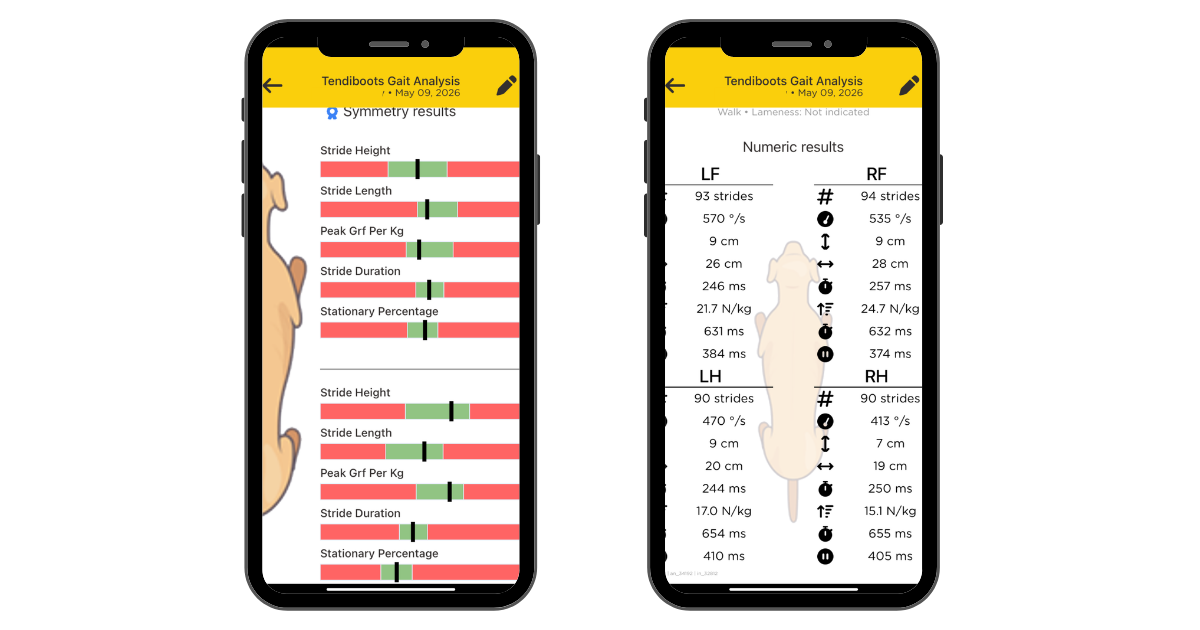
Dynamic gait analysis was performed at both walk and trot using EKICO Tendiboots™.
At walk, Willow’s gait pattern appeared relatively symmetrical overall. Forelimb parameters showed minimal variation bilaterally, with comparable stride height, stride duration, and stationary phase values. Hindlimb findings demonstrated only mild reductions in stride height, stride length, and peak ground reaction force through the right hindlimb.
These findings were consistent with the relatively subtle clinical presentation observed during low-demand movement.
In contrast, trot analysis revealed substantially greater asymmetry.
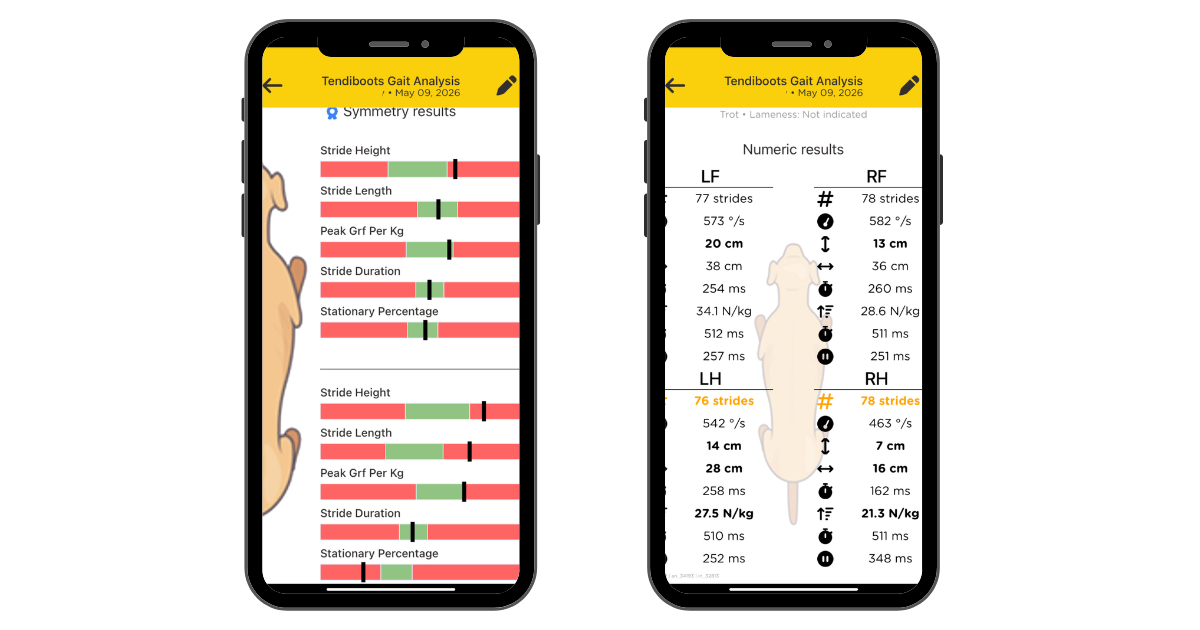
The most clinically relevant findings included marked reduction in stride height and stride length through the right hindlimb together with decreased peak ground reaction force, consistent with reduced propulsion and protective unloading of the limb.
These findings closely correlated with the discomfort and restriction previously identified during right hip extension assessment.
However, the analysis also identified unexpected temporal abnormalities affecting the left hindlimb. Willow demonstrated a marked increase in swing duration together with reduced stationary phase duration through the left pelvic limb.
This temporal asymmetry did not fully align with the mechanical unloading pattern observed through the right hindlimb and suggested the presence of a more complex bilateral compensatory strategy.
One possible interpretation is that Willow was prematurely placing the right hindlimb in an attempt to reduce loading demands through the left hindlimb during higher-demand gait activity. This may explain why left hindlimb dysfunction was not initially obvious during standard observational assessment.
The contrast between walk and trot findings was particularly relevant in this case. While walk assessment suggested relatively functional locomotion, trot analysis exposed clinically significant asymmetries and compensatory adaptations that became increasingly apparent under greater biomechanical demand.
Clinical Relevance of EKICO Tendiboots™
This case demonstrates the clinical value of objective gait analysis in dogs presenting with subtle, inconsistent, or compensatory locomotor dysfunction — as also illustrated in our longitudinal case on lumbosacral instability in a senior German Shepherd, where hindlimb deficits were similarly masked by compensation.
Without quantitative gait assessment, Willow’s bilateral compensatory strategy may have remained underestimated, particularly given the relatively symmetrical appearance of her gait during routine walk assessment and daily activity.
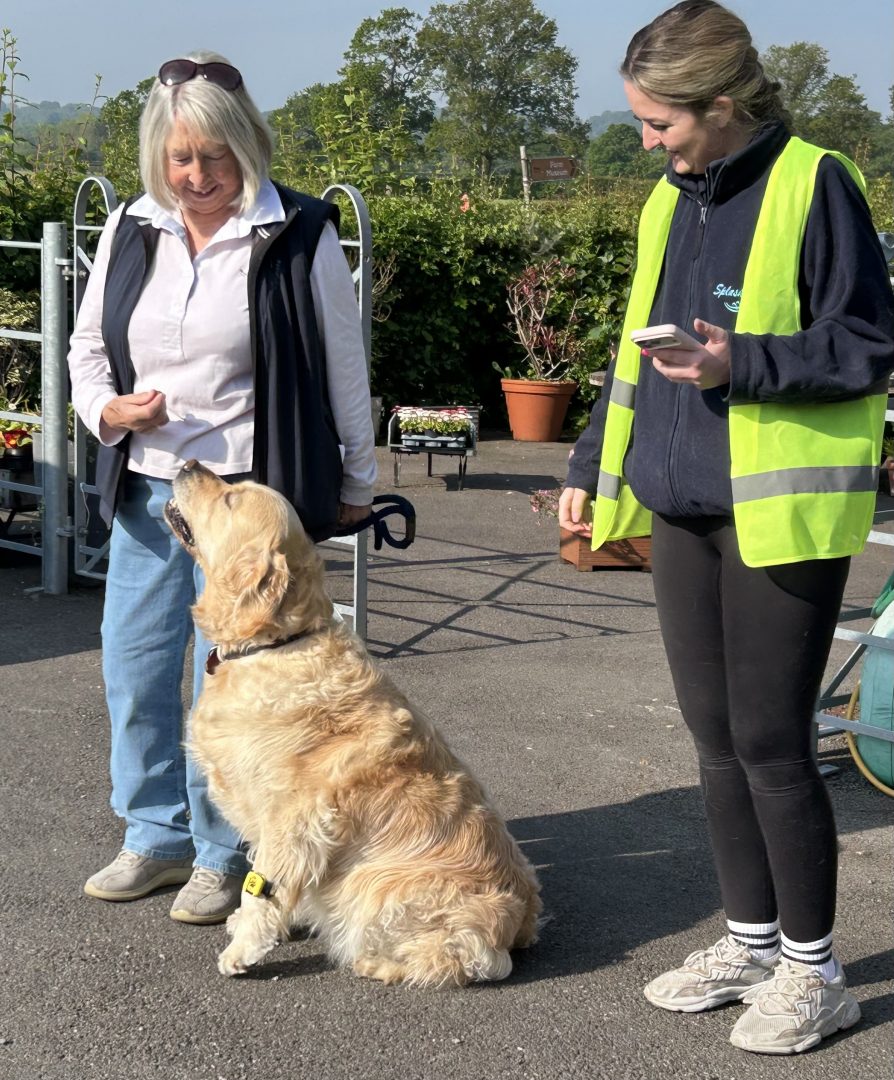
EKICO Tendiboots™ provided objective data that allowed the rehabilitation team to better characterise limb loading patterns, identify asymmetries not consistently visible during observation alone, and monitor how compensatory strategies changed under increased locomotor demand.
The findings also enabled refinement of Willow’s rehabilitation programme, with treatment focus expanded to address both pelvic limbs rather than concentrating exclusively on the originally affected right hindlimb.
Repeat gait analysis assessments will continue to be used throughout Willow’s rehabilitation process to monitor progression, evaluate treatment response, and guide ongoing clinical decision-making.
Splash Paws Rehabilitation Approach
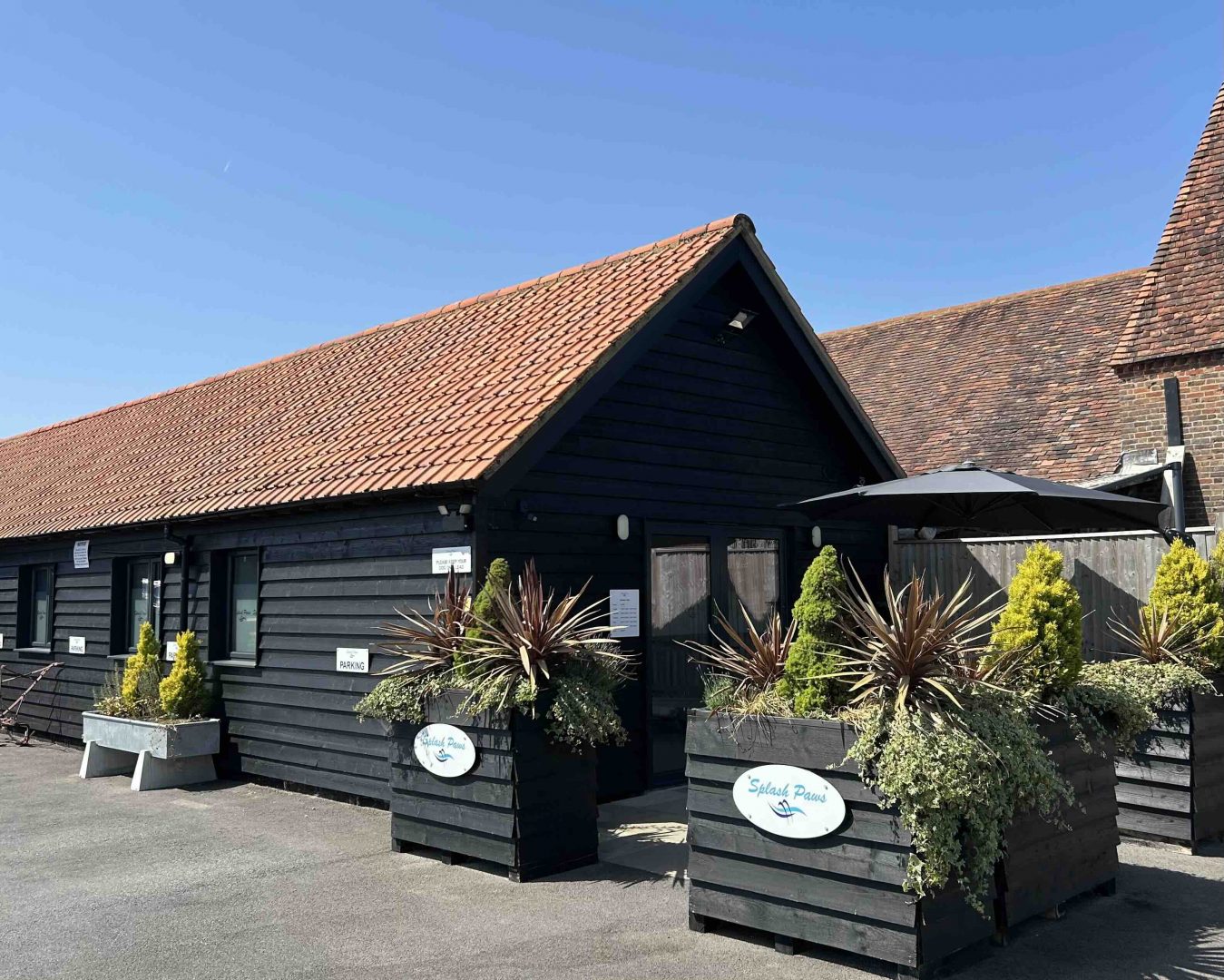
Splash Paws Canine Hydrotherapy & Physiotherapy Centre (Kent, UK) provides rehabilitation programmes for dogs presenting with orthopaedic, neurological, and performance-related dysfunction. The team — certified members of the Canine Hydrotherapy Association (CHA) and RAMP (Register of Animal Musculoskeletal Practitioners) — integrates manual therapy, hydrotherapy, strength and conditioning principles, and objective movement assessment to support evidence-based rehabilitation planning.
The use of EKICO Tendiboots™ within clinical practice allows the team to detect subtle locomotor asymmetries, monitor functional progression objectively, and adapt rehabilitation strategies according to measurable biomechanical changes over time.
Conclusion
Willow’s case highlights the diagnostic and clinical challenges associated with subtle bilateral compensatory dysfunction in dogs with unremarkable imaging findings and inconsistent observable lameness.
Objective gait analysis revealed clinically relevant asymmetries that became increasingly apparent under higher locomotor demand and provided important insight into the interaction between primary and compensatory movement patterns.
This case further demonstrates the value of integrating quantitative gait assessment into rehabilitation management, particularly in dogs where subjective observation alone may underestimate the complexity of functional impairment.
A Blog post written in association with Emmy Figg & Ellie Bridges
from Splash Paws Canine Hydrotherapy & Physiotherapy Centre™
🎥 Video testimonial: Splash Paws team on Tendiboots™ Gait Analysis (Graham Cooper & Emmy Figg)
📝 Explore another clinical case from Splash Paws Canine Hydrotherapy & Physiotherapy Centre™