When dealing with complex post-surgical orthopaedic and neurological cases, clinical observation alone is often not enough to fully capture the extent of dysfunction or recovery. Subtle compensations, neurological deficits, and load redistribution patterns can easily go unnoticed without objective measurement tools.
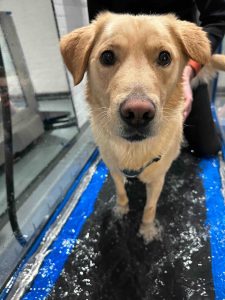
In this clinical case shared by The Suddy Dog Rehabilitation Centre NI Ltd owner and rehabilitation specialist Steven Graham demonstrates how Tendiboots™ Canine helped guide rehabilitation, track progression, and support decision-making in a highly complex orthopaedic case.
Patient Overview: A Complex Post-Surgical Presentation
The patient, Charlie, a 2-year-old Yellow Labrador Retriever, was referred following multiple orthopaedic interventions:
- Right femoral head and neck excision (FHO)
- Pelvic fracture repair with plate fixation
- Additional concerns regarding left hock instability
At initial presentation, Charlie demonstrated:
- Complete non-weight bearing on the right hind limb during walking
- Knuckling and tremor during attempted limb loading
- Strong compensatory reliance on the left hind limb
- Spinal discomfort and reduced confidence in movement
This presentation reflected a complex combination of orthopaedic and neuromuscular dysfunctions, including:
- Loss of joint integrity following FHO
- Muscle atrophy due to disuse
- Neuromuscular deficits affecting limb placement and stability
- Compensatory gait adaptations such as cranial weight shift and contralateral overload
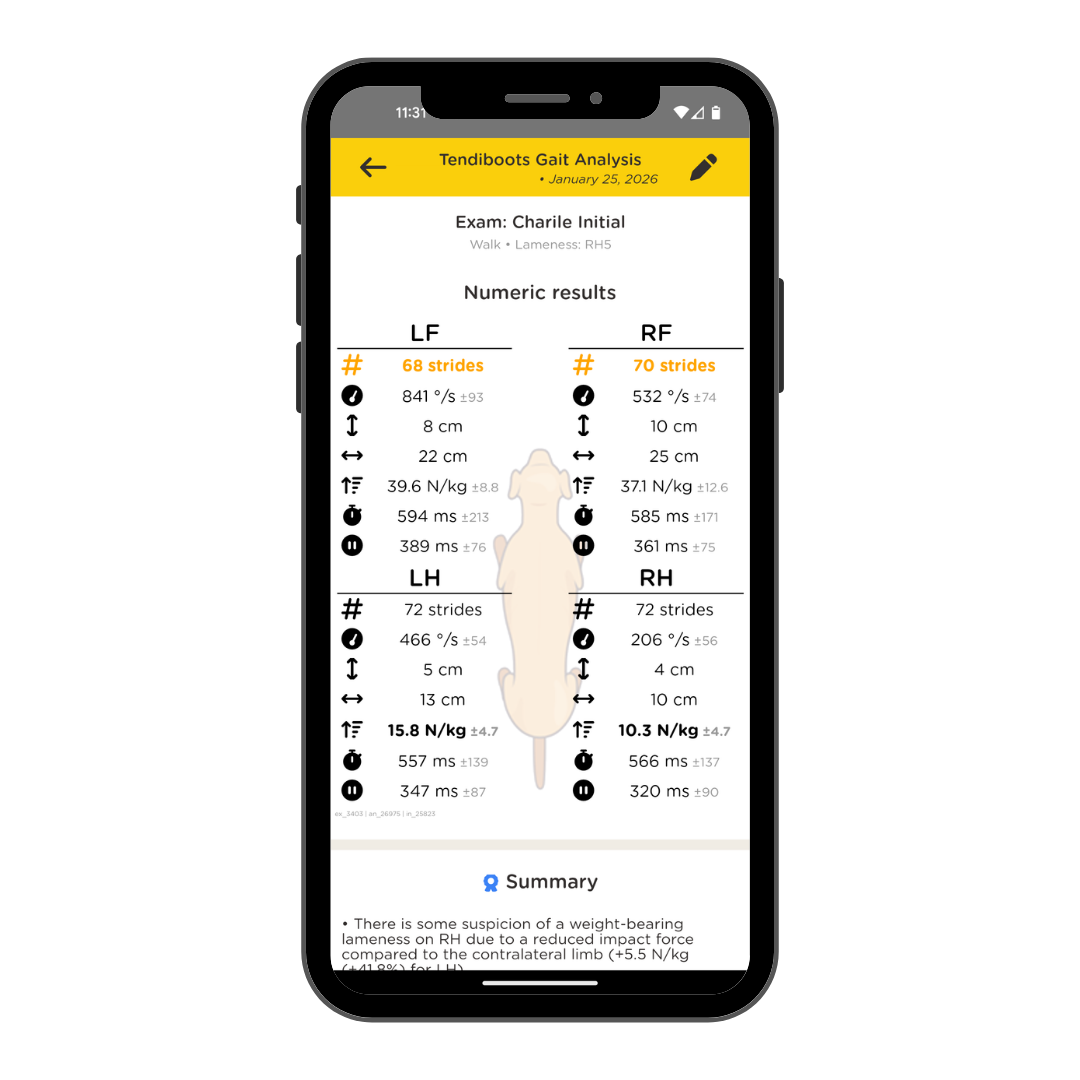
Objective gait assessment revealed a marked unloading pattern of the right hind limb, associated with reduced ground reaction forces and shortened stride mechanics.

Treatment Approach: Progressive Rehabilitation Strategy
Given the complexity of the case, rehabilitation was designed around progressive loading and neuromuscular re-education, balancing protection and functional recovery.
Early Stage (Initial Assessment Phase)
The initial rehabilitation phase included:
- Strict controlled exercise and load management
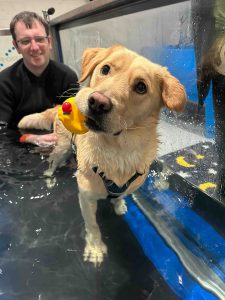
- High-water treadmill sessions to support body weight
- Short-duration intervals due to fatigue and neurological deficits
- Baseline Tendiboots™ gait analysis to quantify asymmetry
Key observations of the professional:
“During the first session, Charlie showed very limited ability to load the right hind limb. Knuckling appeared rapidly, especially as fatigue increased, and we also observed an external rotation of the limb during weight-bearing attempts. These early findings confirmed both the severity of the neuromuscular deficits and the importance of maintaining a very gradual progression throughout rehabilitation.”
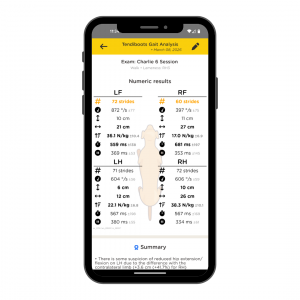
Mid Rehabilitation (Session 6) : Transition Phase
As rehabilitation progressed:
- Increased treadmill exposure
- Controlled loading to stimulate muscle activation
- Continued objective monitoring using Tendiboots™
Clinical Impovements observed
- Significant reduction in knuckling
- Improved confidence in limb use
- Better stride quality and propulsion
Objective Tendiboots™ findings:
- Increased weight bearing
- Increased stride height
- Increased stride length
This phase marked a critical transition from neurological limitation to functional engagement.
Late Rehabilitation (Session 12): Strength & Conditioning Phase
At this stage, the focus shifted toward performance and strength development:
- Treadmill speed increased up to 2.5 mph
- Incline introduced
- Gradual reduction of water support
- Integration of physiotherapy and strengthening exercises
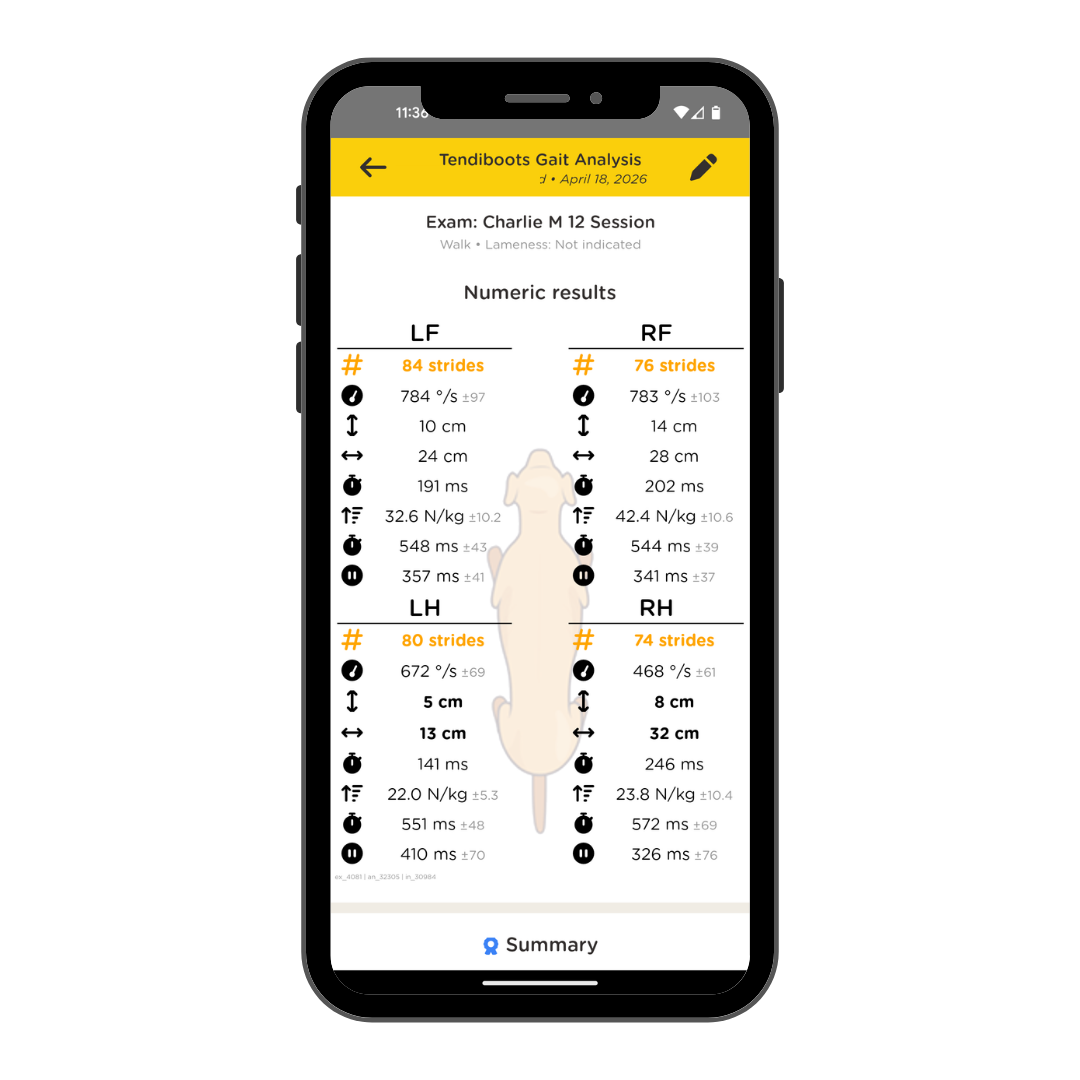
By Session 12, Charlie was showing clear functional improvements. Knuckling had fully resolved, coordination was significantly improved, and the right hind limb was engaging much more consistently during exercise. He also demonstrated a greater tolerance to load-bearing activities and increased overall confidence in movement.
That said, some limitations were still present. Mild residual asymmetry remained visible, muscle atrophy had not yet been fully resolved, and compensatory unloading patterns could still be observed at higher treadmill speeds. These findings highlighted the need for continued strengthening and progressive conditioning before full discharge from rehabilitation.
Why This Treatment Approach Was Chosen
This case required a carefully staged rehabilitation strategy:
- Early hydrotherapy to enable safe movement
- Progressive load introduction to stimulate adaptation
- Continuous objective monitoring to guide progression
- Avoidance of overload during neurological recovery
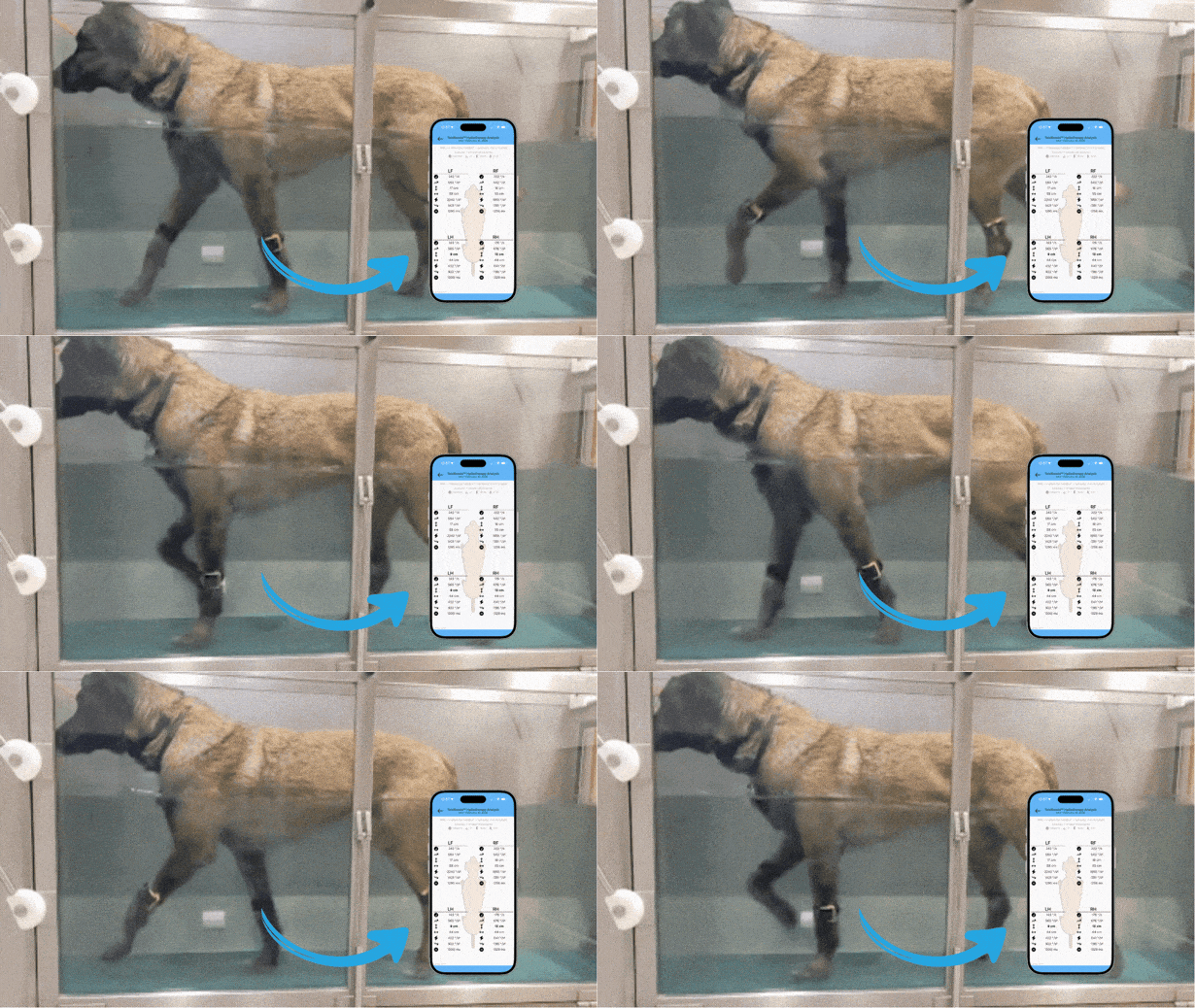
Hydrotherapy played a central role by:
- Supporting early limb activation
- Encouraging correct gait patterns
- Allowing safe progression toward functional loading
NEW : Use your Tendiboots™ on an underwater treadmill
How Tendiboots™ Assisted in This Case
Tendiboots™ was a key component of clinical decision-making throughout rehabilitation.
1. Objective Measurement of Progress
Instead of relying only on visual assessment, Tendiboots™ provided:
- Quantified ground reaction force
- Stride length and stride height metrics
- Limb symmetry comparison
This enabled tracking of real functional improvement, not just perceived progress.
2. Monitoring Rehabilitation Milestones
Tendiboots™ helped identify key transitions:
- From non-weight bearing → functional loading
- From neurological deficit → resolution of knuckling
- From marked asymmetry → progressive symmetry
It also highlighted compensatory forelimb loading patterns early in rehabilitation.
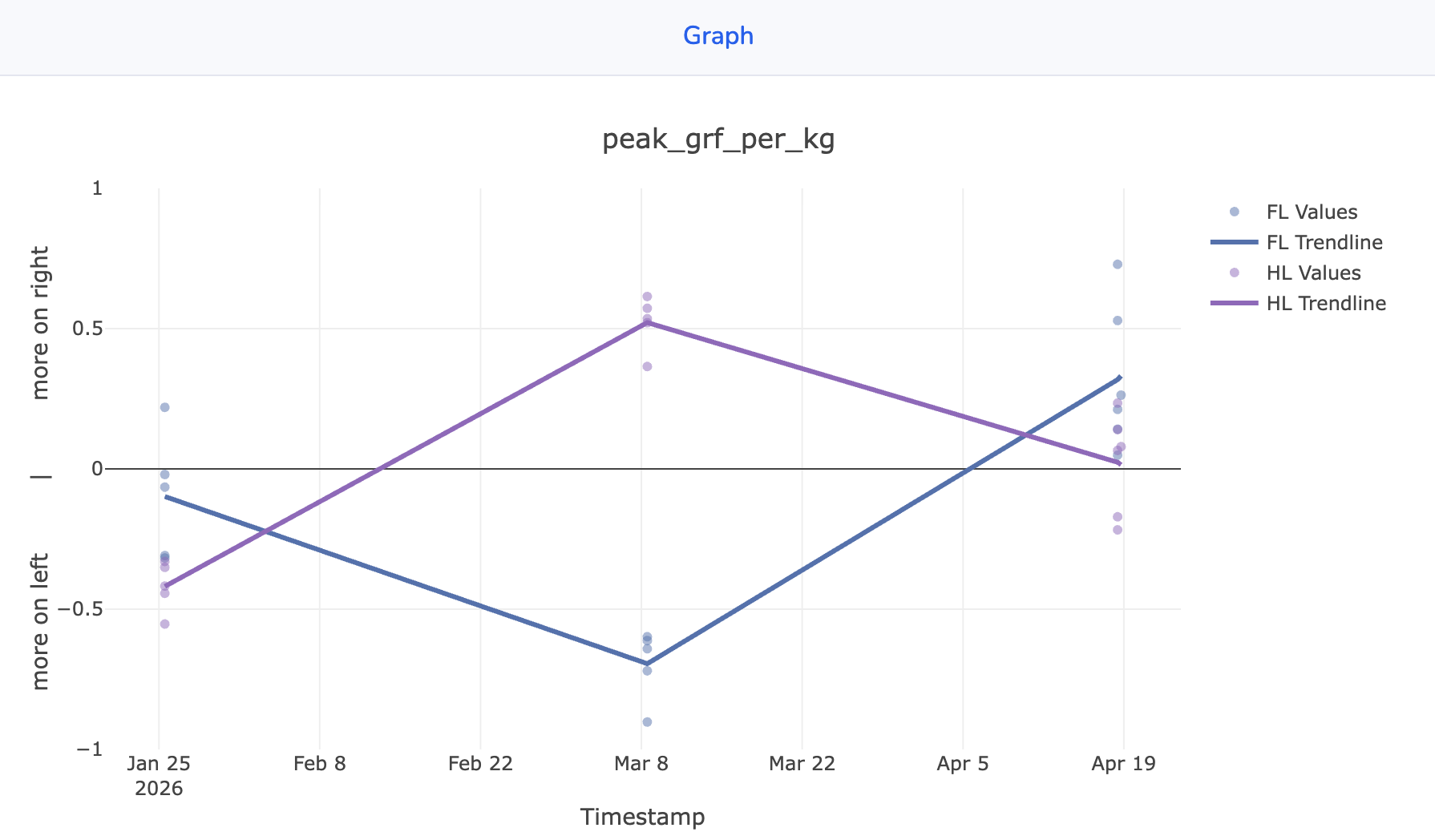
During the first assessment (January 2026), a marked asymmetry was observed in the right hind limb, indicating impaired weight-bearing on this limb. This finding was consistent with the neurological and functional deficits identified during the clinical examination.
At the second assessment (March 2026), the parameters showed a substantial reversal between limbs, affecting both the forelimbs and hind limbs. This reversal was accompanied by a marked increase in asymmetry, illustrated by the greater deviation of the curves from the central axis representing perfect symmetry. This evolution is consistent with a phase of motor reorganization. The dog progressively re-engaged its limbs during locomotion and began to recover a more functional gait pattern; however, movement remained substantially affected by persistent proprioceptive deficits and compensatory strategies.
By the third assessment (April 2026), the curves had moved noticeably closer to the central axis, reflecting an overall reduction in locomotor asymmetries. Although some residual asymmetries remained, movement organization appeared more stable and coherent, suggesting improved inter-limb coordination and a progressive recovery of motor control.
3. Supporting Clinical Decision-Making
The data enabled:
- Safe progression of treadmill speed and incline
- Accurate reduction of hydrotherapy support
- Confident transition into strengthening work
- Without objective data, progression would have relied heavily on subjective interpretation.
4. Enhancing Client Communication
The use of Tendiboots™ significantly improved owner understanding:
Clear visualization of progress over time
Objective proof of recovery
Stronger justification for continued rehabilitation sessions
This improved both engagement and compliance.
Outcome: From Severe Dysfunction to Functional Recovery
Charlie progressed from:
👉 Complete right hind limb non-weight bearing
to
👉 Consistent functional limb use with improving strength and coordination
By Session 12:
Knuckling resolved
Weight bearing significantly improved
Gait symmetry progressively restored
Confidence and activity levels increased
Overall, this represents a strong functional recovery following major orthopaedic and neurological compromise.
Next Steps in Recovery
Charlie is now entering an advanced strengthening phase focused on:
- Increasing muscle mass in the right hind limb
- Improving symmetry under higher physical demand
- Reducing 3-limb compensation at speed
- Enhancing pelvic stability and neuromuscular control
Ongoing plan includes:
- Progressive treadmill work (speed + incline)
- Strength and conditioning exercises
- Continued gait reassessment prior to discharge
“This case really highlighted for me how important it is to combine structured rehabilitation, hydrotherapy, and objective gait analysis throughout recovery. Charlie’s progression involved a lot of subtle changes that could easily have been underestimated if we had relied only on visual assessment.
Using Tendiboots™ allowed us to objectively track meaningful improvements over time, make more confident rehabilitation decisions, and adapt the program based on measurable data rather than perception alone. It also helped ensure that progression remained safe and appropriate at every stage of recovery.
Overall, integrating these different approaches played a key role in supporting Charlie’s gradual return to functional movement and improving both clinical confidence and owner understanding throughout the rehabilitation process.”