We met with Dr. Hélène Fugier, a veterinarian specialized in physiotherapy and rehabilitation of companion animals.
Along with her team of three veterinary assistants, she shared her feedback on using Tendiboots™ for neuropathy cases she encounters in her practice.
The importance of early detection of neurological disorders in dogs
The very first signs of neurological disorders can sometimes be difficult to detect, as Dr. Fugier experienced with a female dog referred to her clinic for osteoarthritis follow-up. However, the veterinarian’s investigations revealed that the animal was actually suffering from a completely different issue.
After her initial evaluation (auscultation, joint range-of-motion measurements, etc.), Dr. Fugier found no typical clinical signs of osteoarthritis, which she regularly manages. The dog, who had previously suffered a stroke, was in fact showing a different clinical picture.
This type of diagnostic refinement, separating orthopedic from neurological causes, is also illustrated in complex neurologic and orthopedic case management.
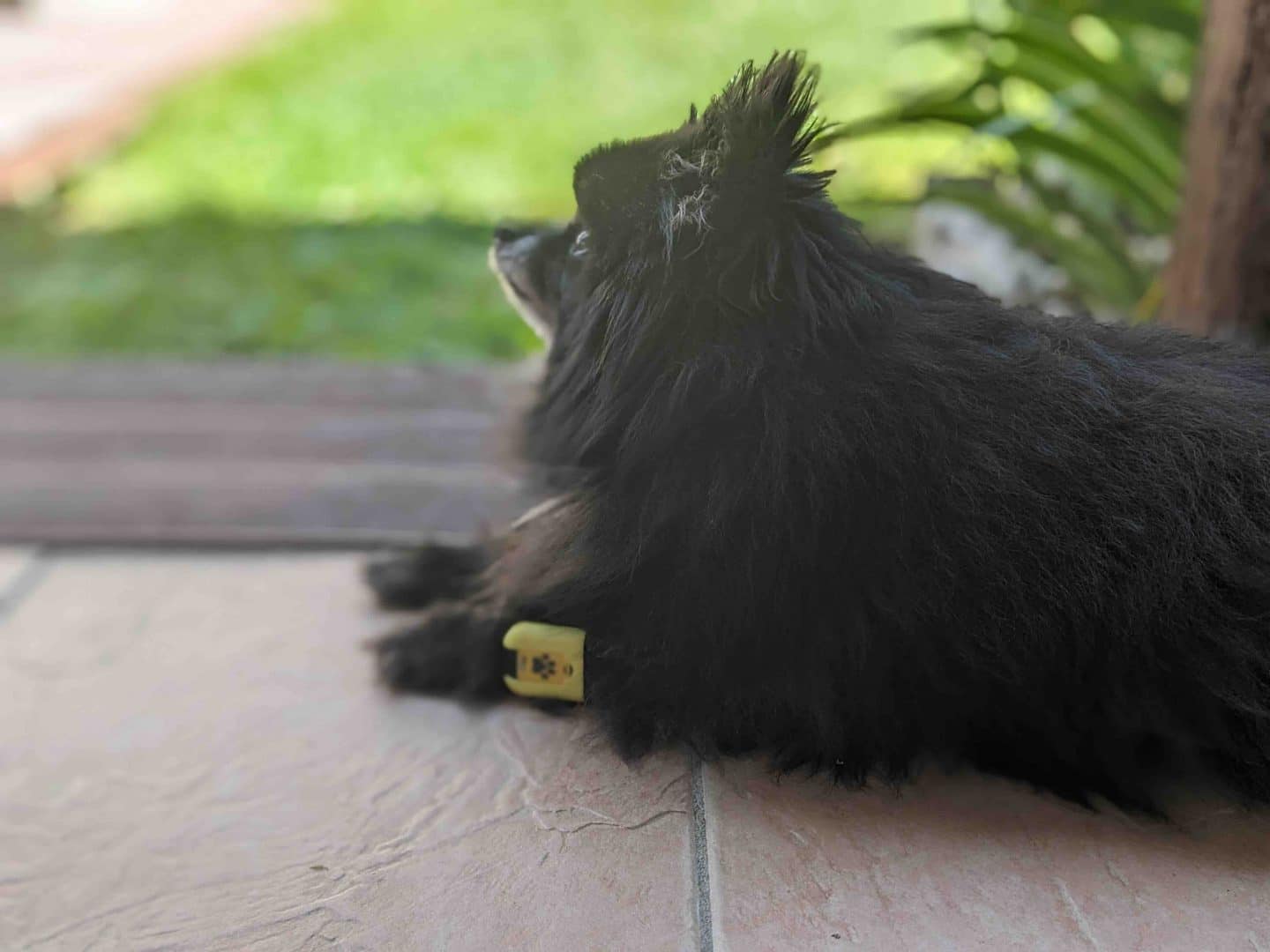
A further evaluation was then performed by Dr. Fugier to analyze the dog’s gait dynamically using the Tendiboots™ Canine system.
The results helped redirect the initial diagnosis and confirmed the veterinarian’s suspicions: the dog was actually showing ataxia.
“It is likely that this dog also suffers from spondyloarthritis, but her main problem remains ataxia,” explains Dr. Fugier.
By combining the clinical examination with objective, measurable data, it was possible to determine that this was a neurological disorder rather than an orthopedic issue.
Patterns recorded by Tendiboots™: distinguishing orthopedic from neurological disorders
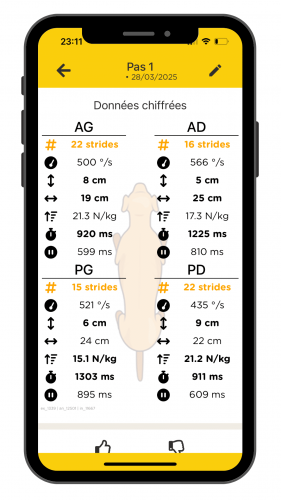
Case example presenting ataxia:
It was observed that the average stride duration for this dog ranged between 911 and 1303 ms, whereas in a healthy dog, it is around 730 ms.
The average difference in the number of strides between contralateral limbs is 0.8 in a healthy dog, compared to 6 to 7 in the dog presented here.
The values in healthy dogs were observed over more than 2,000 recordings, with a gait and weight category similar to the dog studied in this example.
Longer stride durations and stance phases:
An objective parameter frequently altered by neurological disorders is stride duration. Stance phases are generally longer in animals affected by ataxia.
“This phenomenon is even more noticeable during hydrotherapy, where delays are accentuated by the resistance of water.
On dry land, it can be less obvious to observe, making numerical data a valuable aid. For example, stride duration may be 800 ms on the forelimbs versus 1300 ms on the hindlimbs. This type of discrepancy between limbs is an additional sign suggesting a neurological disorder,” explains Dr. Hélène Fugier.
It has also been observed that the Tendiboots™ system allows objective differences in gait to be highlighted depending on the nature of the disorder. In the case of an orthopedic problem, the affected limb shows consistent reactions with each stride, such as a systematic reduction in weight-bearing. In contrast, with neurological disorders such as ataxia, the animal’s movements are unpredictable and non-repetitive from stride to stride, reflecting its constant imbalance.
The precision and reproducibility of Tendiboots™ measurements allow these variations to be detected, providing an objective tool to support distinctions between neurological and orthopedic disorders.
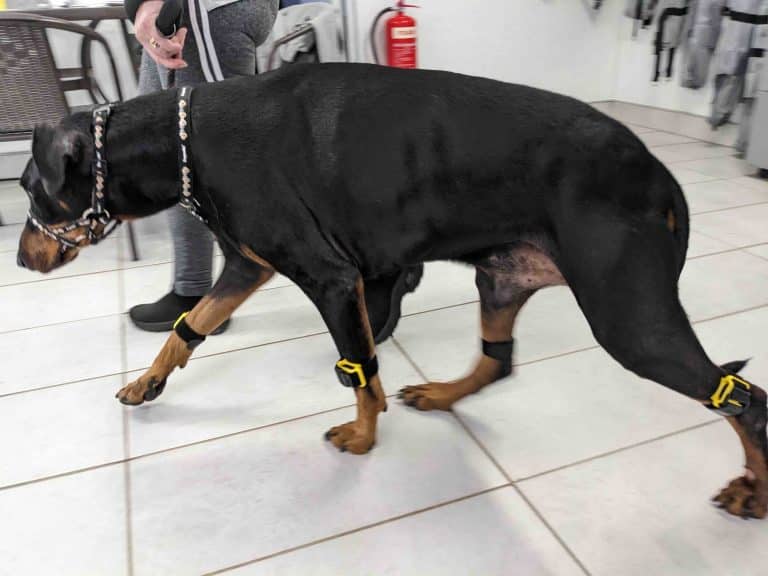
These observations are also reported by our users in equine veterinary medicine. Several studies show that stance phase duration is increased in horses presenting with neuropathies or other neurological conditions.
This was notably presented by Dr. Stefano Tassan at the 2023 Italian Equine Veterinary Congress (SIVE).
Find this case on our blog or in a video testimonial :
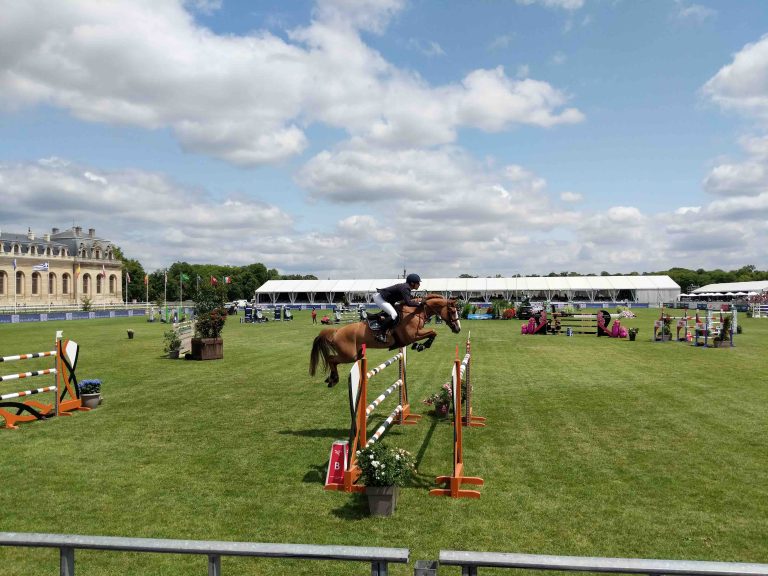
Stride count asymmetry between limbs:
Observed in several of our users in canine veterinary medicine, an increase in stride count discrepancies over the same duration has been reported.
For example, in a dog suffering from thoracolumbar intervertebral disc disease with neurological deficits in the hind limbs, it was observed that the hind limbs performed fewer strides than the forelimbs during a recording.
This kind of stride asymmetry is also documented in cases of discospondylitis and Wobbler syndrome in dogs, two spinal conditions that share overlapping neurological gait signatures.
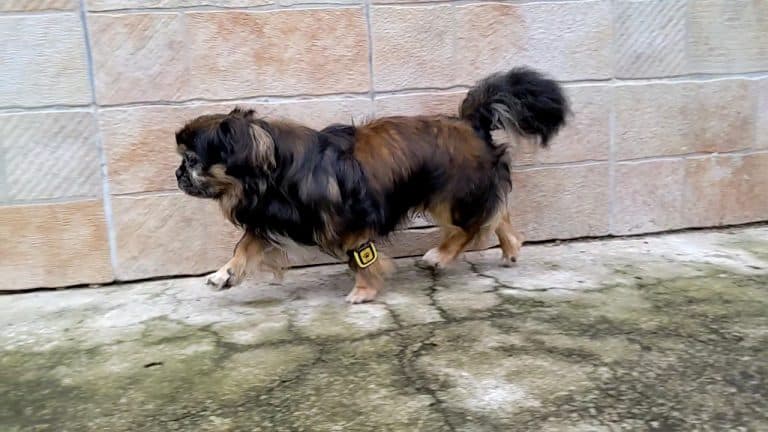
Quantitative assessment supporting qualitative evaluation
“Tendiboots™ is a great tool to objectively share the improvements observed in the dog with the owners. Some owners can see the improvements, while others cannot — in those cases, the graphical representations of the analyses are very helpful.” — Dr. Hélène Fugier
Find more information about Dr. Fugier’s Cat & Dog Rehabilitation Center directly on their website:
http://reeducation-veterinaire.fr

FAQ
Clinical examination alone can wrongly point to an orthopedic cause when the problem is neurological. The locomotor signature differs: with an orthopedic problem the affected limb reacts consistently at every stride (a systematic reduction in weight-bearing), whereas with a neurological disorder such as ataxia the movements are unpredictable and non-repetitive from stride to stride, reflecting constant imbalance. It is this regularity — or lack of it — that Tendiboots™ Canine dynamic analysis objectifies
Two signals are especially telling. Stride duration lengthens markedly: in the case described it ranged from 911 to 1303 ms, versus around 730 ms in a sound dog (a value established over more than 2,000 recordings of comparable gait and weight category). Inter-limb irregularity also rises sharply: the average difference in stride count between contralateral limbs reached 6 to 7, against 0.8 in a sound dog. Stance phases are also generally longer in ataxic animals.
Yes. A dog referred for osteoarthritis follow-up may in fact have an overlooked neurological condition, especially after an event such as a stroke. When the exam does not find the expected clinical signs of osteoarthritis, objective locomotion data provide the missing argument to reclassify the picture. In the case reported by Dr. Fugier, the analysis redirected the diagnosis towards ataxia and confirmed the clinical suspicion.
A marked discrepancy between limbs is an additional sign suggesting a neurological disorder. Dr. Fugier cites the example of an 800 ms stride duration on the forelimbs versus 1300 ms on the hindlimbs. This kind of mismatch is even more visible in hydrotherapy, where water resistance accentuates the delays. On dry land it can be subtler, which makes numerical data valuable for detecting it.
A single animal can have both a neurological condition and an orthopedic component, such as spondyloarthrosis. The challenge is to prioritize in order to guide management. The non-repetitive, unpredictable quality of the movement, the lengthened stride duration and the high inter-limb variability point to the neurological component, whereas a purely orthopedic issue produces a reproducible reaction at each stride and a localized load asymmetry.
The sound-dog reference values were observed over more than 2,000 recordings of comparable gait and weight category: an average stride duration of about 730 ms and an average difference in stride count between contralateral limbs of 0.8. These benchmarks act as a comparison baseline: a stride duration well above this, and inter-limb variability of several units, signal a loss of locomotor cycle regularity suggestive of a coordination disorder.
Reproducible quantitative data establish a baseline against which each reassessment can be compared, and allow progress to be tracked in the clinical record. As Dr. Fugier notes, some improvements are visible to the owner and some are not: in those cases, the graphical representations of the analyses help share progress objectively. They are also a useful basis for liaising with the referring veterinarian, since most rehabilitation dogs are referred cases.