Functional assessment and rehabilitation monitoring using EKICO Tendiboots™ following surgical management of Traumatic Fragmented Medial Coronoid Process (Jump-Down Syndrome), a clinical case presented by Fur Ability Animal Rehabilitation in collaboration with Dr Sherman Canapp.
Clinical presentation
Mersey is a 4-year-old female spayed terrier whippet sports mix presented for rehabilitation assessment due to performance-related dysfunction rather than a consistent orthopaedic lameness.
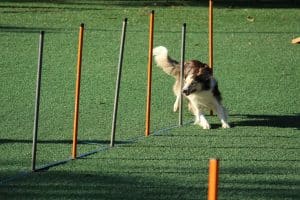
Initial concerns were primarily reported in the context of agility work, where the dog demonstrated episodes of behavioural disengagement, refusal of obstacles, and intermittent reduction in performance output. These episodes were described as “performance shutdown” behaviours occurring under higher physical and cognitive demand.
Alongside this, a mild and inconsistent forelimb lameness was observed. Clinical examination revealed intermittent bilateral forelimb discomfort worse on the right, only on the medial aspect of the elbow. Secondary muscular tightness was noted through the biceps brachii and shoulder region, consistent with compensatory loading patterns.
At rest and during low-demand activity, Mersey frequently appeared clinically normal, which significantly reduced the visibility of symptoms during routine examination. The functional impairment became primarily evident under sport-specific loading conditions, making the case difficult to categorise within a classical lameness framework.
Despite periods of structured rehabilitation, during which gait analysis returned to near-normal values on two separate occasions, clinical signs reappeared when the dog was reintroduced to agility work. At this stage, radiography, CT imaging, and musculoskeletal ultrasound were all considered unremarkable, and the recurrent nature of the presentation led to referral for specialist evaluation.
Specialist diagnosis and surgical intervention
Following repeated cycles of improvement and relapse, Mersey was referred for a sports medicine consultation with Dr. Sherman Canapp.
Advanced diagnostic work-up including needle arthroscopy was performed. During the procedure, an intra-articular fragment was identified within the medial compartment of the elbow and subsequently removed. The final diagnosis was confirmed as Traumatic Fragmented Medial Coronoid Process (Jump-Down Syndrome).
An intra-articular PRP injection was administered at the time of surgery to support joint recovery and modulate post-operative inflammation.
This intervention addressed the underlying intra-articular pathology that had not been detectable through conventional imaging modalities and had not fully responded to conservative management.
About Traumatic Fragmented Medial Coronoid Process (Jump-Down Syndrome)
Jump-Down Syndrome is a form of medial coronoid disease characterised by fragmentation of the medial coronoid process of the ulna. It is commonly associated with repetitive microtrauma in active or sporting dogs, particularly during high-impact loading such as jumping and rapid deceleration.
Clinical presentation is often subtle and intermittent in the early stages, with dogs showing performance-related dysfunction rather than consistent orthopaedic lameness. In many cases, standard imaging may not fully capture the extent of intra-articular pathology, and diagnosis may require advanced imaging techniques or arthroscopy.
The condition is a recognised cause of elbow pain and functional asymmetry in athletic dogs and can significantly impact performance before overt lameness becomes evident.
Post-surgical rehabilitation strategy
Following surgery, Mersey returned to Fur Ability Animal Rehabilitation for structured reconditioning and progressive return-to-sport planning.
Rehabilitation was centred around controlled mechanical loading and progressive strengthening of the forelimb and shoulder stabilising structures. Particular emphasis was placed on restoring symmetrical weight bearing, re-establishing proprioceptive control, and gradually reintroducing agility-specific movement patterns.
Throughout the rehabilitation process, close attention was given to the potential recurrence of compensatory tension patterns, particularly within the biceps and cranial limb musculature, which had previously been associated with functional decline during high-demand activity.
Given the subtle nature of the initial presentation and the history of relapse under sport conditions, objective monitoring was considered essential at every stage of progression.
Role of EKICO Tendiboots™ in functional monitoring
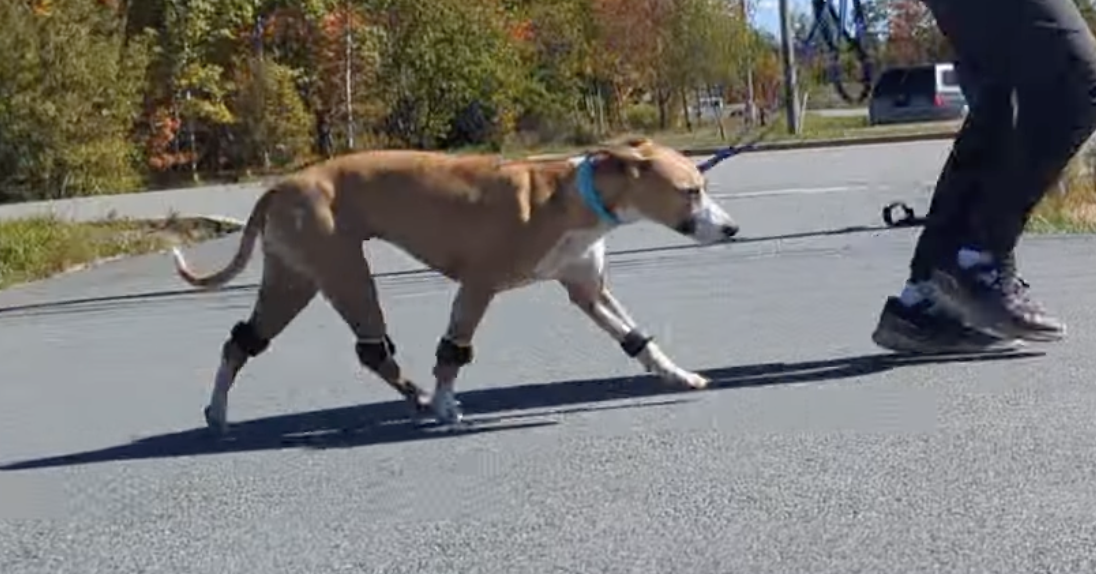
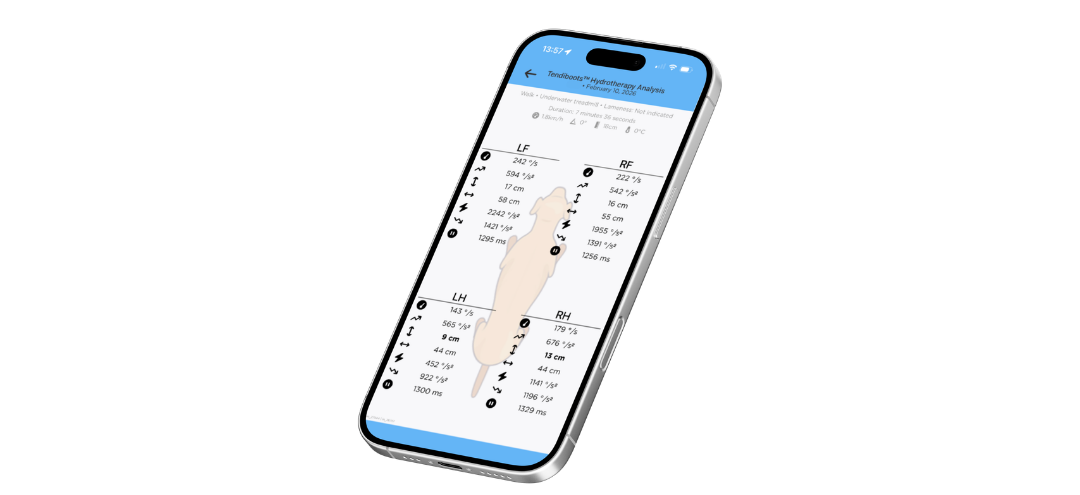
EKICO Tendiboots™ were used throughout the rehabilitation process to provide objective functional assessment across different stages of recovery and load progression.
Their primary value in this case was not limited to detecting overt lameness, but rather in identifying subtle asymmetries and changes in limb loading patterns that were not consistently visible during standard clinical observation.
The system was used to standardise functional assessment, compare movement patterns across rehabilitation milestones, and monitor response to incremental increases in physical workload. This was particularly relevant during the transition phases back to agility training, where small deviations in symmetry often preceded clinical recurrence.
EKICO Tendiboots™ data contributed to the initial referral and diagnostic work-up in collaboration with the specialist team, including Dr. Sherman Canapp. These objective functional insights supported the clinical decision-making process prior to surgical intervention. Post-surgically, rehabilitation and follow-up monitoring were conducted by the team at Fur Ability Animal Rehabilitation.
One of the key advantages in this case was the ability to generate quantitative functional data in the rehabilitation setting and share selected results with the referring specialist team when appropriate, in a context where in-person reassessment across different countries was not always feasible. This facilitated continuity of understanding between the diagnostic phase and the rehabilitation process, and helped align clinical observations with objective locomotor data.
This integration of objective gait data strengthened clinical decision-making across the overall case pathway, from diagnosis through to rehabilitation and return-to-sport progression.
Return to sport and outcome
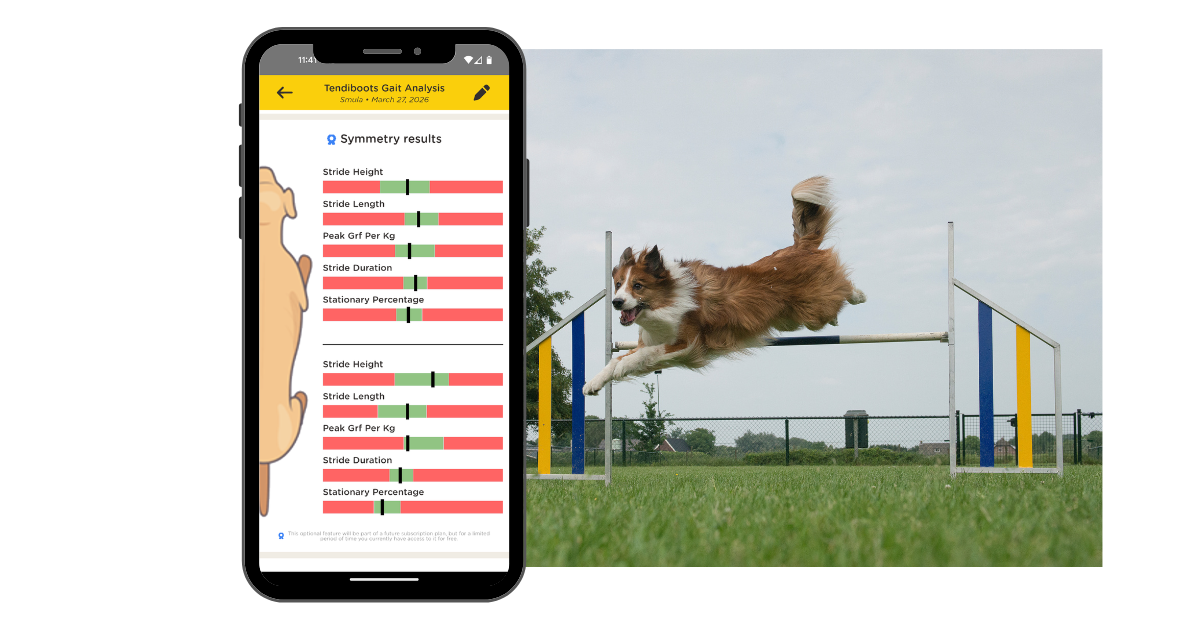
Following completion of the rehabilitation programme, Mersey successfully returned to agility and full sporting activity. She is currently able to participate in running, hiking, and daily activities without recurrence of clinical signs under normal conditions.
A long-term monitoring plan has been implemented at Fur Ability Animal Rehabilitation to ensure continued performance stability. This includes periodic gait analysis assessments and functional monitoring during training cycles in order to detect early signs of compensatory overload or asymmetry.
Current focus remains on maintaining symmetrical loading patterns, preserving strength and conditioning gains, and ensuring long-term functional consistency under variable workload demands.
Conclusion
This case highlights the complexity of diagnosing performance-related forelimb dysfunction in canine athletes, particularly when clinical signs are intermittent and only apparent under sport-specific conditions.
The combination of specialist sports medicine intervention, surgical confirmation via arthroscopy, and structured rehabilitation enabled full return to performance in a previously ambiguous case.
EKICO Tendiboots™ provided a valuable layer of objective functional assessment throughout the process, supporting clinical decision-making, cross-border collaboration, and return-to-sport evaluation in a highly dynamic athletic patient population.
Fur Ability Animal Rehabilitation
Fur Ability Animal Rehabilitation is a multidisciplinary rehabilitation practice dedicated to the functional recovery and performance optimisation of canine athletes and companion animals. The team works in close collaboration with veterinary specialists in all fields of veterinary medicine to ensure continuity of care from diagnosis through to return to activity.
The clinic covers the full spectrum of veterinary rehabilitation, including senior mobility, orthopedic and neurological recovery, as well as sports medicine and performance-related injury management.
Particular emphasis is placed on the early detection of subtle functional impairments and compensatory movement patterns in working and sporting dogs, supporting long-term musculoskeletal health and sustainable return-to-activity outcomes.