In the management of chronic pain in dogs, certain situations remain difficult to interpret. The dog appears to be improving, the lameness is mild or intermittent, but functional recovery is not always as clear as it seems.
This is the case presented in this article: a dog monitored for a partial rupture of the right cranial cruciate ligament, with management already well underway, but clinical progress still insufficient.
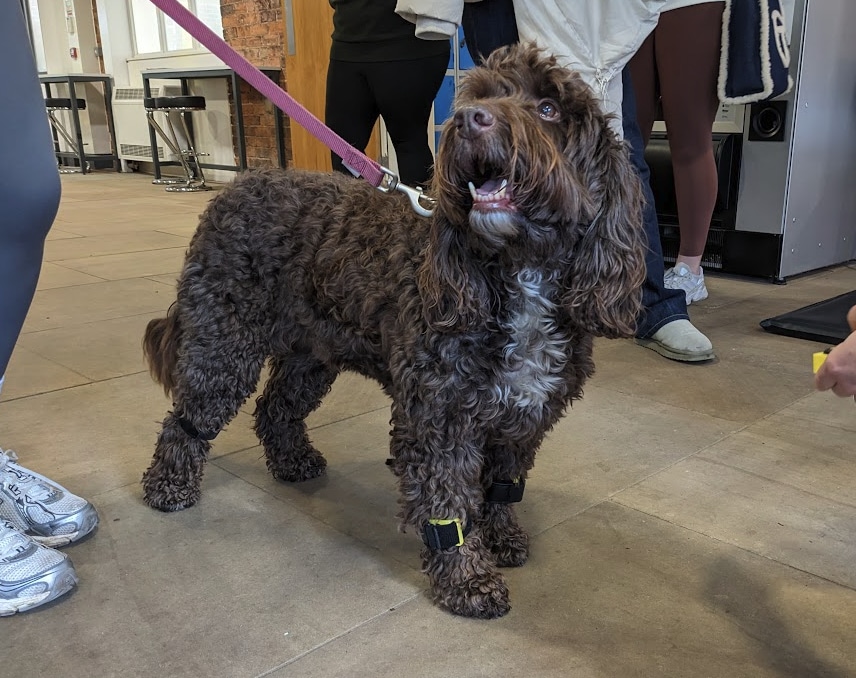
Thanks to repeated recordings with Tendiboots™ Canine, it was possible to monitor the evolution of his locomotion over the course of the visits, both at walk and trot, and to better visualize the functional changes over time.
This case illustrates the value of objective data in monitoring chronic pain: it allows for complementing clinical observation, comparing examinations with each other, and better understanding whether the dog is truly progressing in its recovery.
A subtle case of chronic pain management
The dog presented in this case was being monitored for a partial rupture of the right cranial cruciate ligament. At the first consultation, the lameness had been present for approximately one month.
A conservative management approach had already been implemented, including several sessions of laser therapy and hydrotherapy. The dog was therefore already engaged in a rehabilitation program, with regular monitoring of its progress.
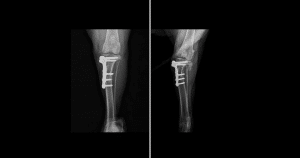
The dog presented with synovitis, joint effusion, and subtle arthritic changes.
Despite this, the visible lameness remained mild and intermittent. Over the course of the visits, the clinical grades noted a grade 1 right hind limb lameness, then no visible lameness, followed again by a grade 1 right hind limb lameness.
This type of situation is common in the follow-up of chronic pain: the dog does not necessarily show a marked lameness, but the question of its recovery remains essential.
Why a mild lameness does not always mean a minor issue
A slight limp does not always mean that the problem is minor. In chronic conditions, some dogs compensate significantly and continue to move despite persistent discomfort.
The owner may feel that the dog is improving, especially if it is walking more or resuming certain activities. However, some signs remain important to consider: stiffness, difficulty jumping into the car, weight shifting, or slower recovery than expected.
In this case, the dog showed improvement, but it was not sufficient to fully reassure the clinician. Function remained limited in daily life.
It is precisely in this type of follow-up that repeated locomotion data can provide valuable additional information.
What Tendiboots™ Canine has brought to follow-up
Tendiboots™ Canine allows recording the dog’s locomotion in motion and collecting several parameters such as stride length, stride height, impact force, stride duration, and ground support time.
This data is compared between the forelimbs and between the hindlimbs in order to highlight asymmetries and their progression.
In this case, the main interest came from the longitudinal follow-up. The dog was recorded during several visits, at walk and trot, which allowed comparison of its progression from one examination to another.
Tendiboots™ data thus made it possible to better visualize changes in locomotion, but also to show that the improvement was not the same depending on the gait observed.
First visit: subtle at the walk, more noticeable at the trot
During the initial assessment, asymmetry of the right hind limb was present but relatively subtle at the walk.
At the trot, however, the imbalance became more noticeable. This difference between gaits is important, as some locomotor disorders can be more difficult to detect at the walk alone.
As part of a follow-up, comparing several gaits thus allows for a more comprehensive view of the dog’s locomotion.
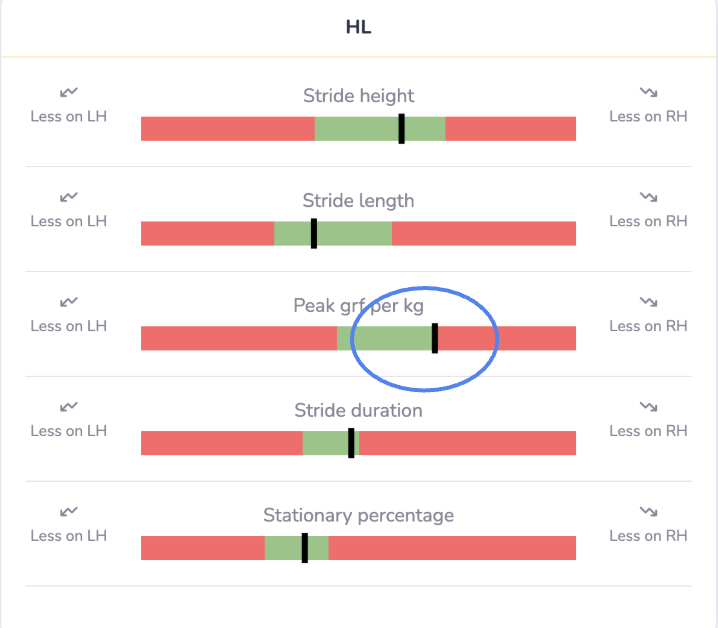
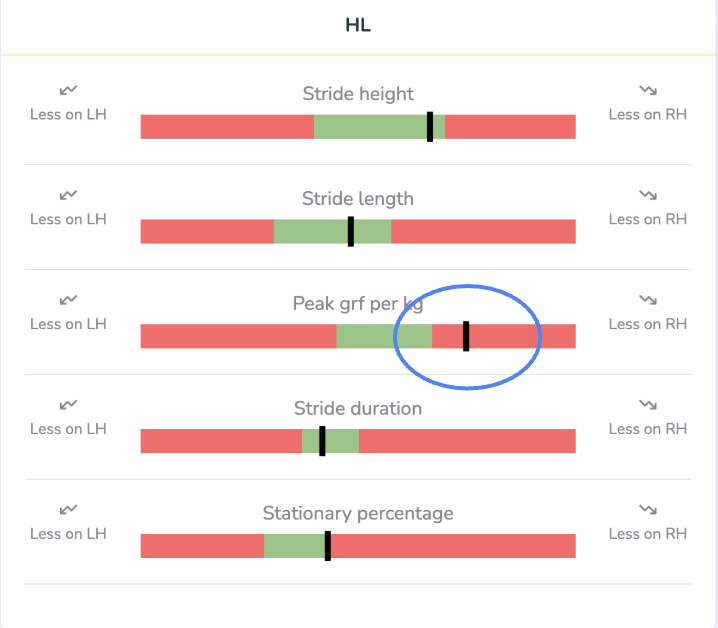
Comparison of walk (left) and trot (right) during the first visit.
This point is important in practice. In subtle cases, the gait chosen for evaluation can alter the visibility of functional asymmetry. A dog may appear minimally affected at a walk, while the same pattern becomes more evident at a trot.
For chronic pain management, this allows avoiding reliance on a single observation of the dog.
Follow-up: an improvement that is not perfectly linear
During the second visit, no lameness was clinically observed. At first glance, the progress could therefore seem reassuring.
Locomotion data, however, provided a more nuanced interpretation. Compared to the initial examination, the trot appeared to improve, while the walk remained more mixed.
This type of progression is common in rehabilitation: improvements are not always linear, nor consistent depending on the pace or the conditions of observation.
Repeated recordings then allow for a more precise monitoring of changes and avoid relying solely on a single impression.
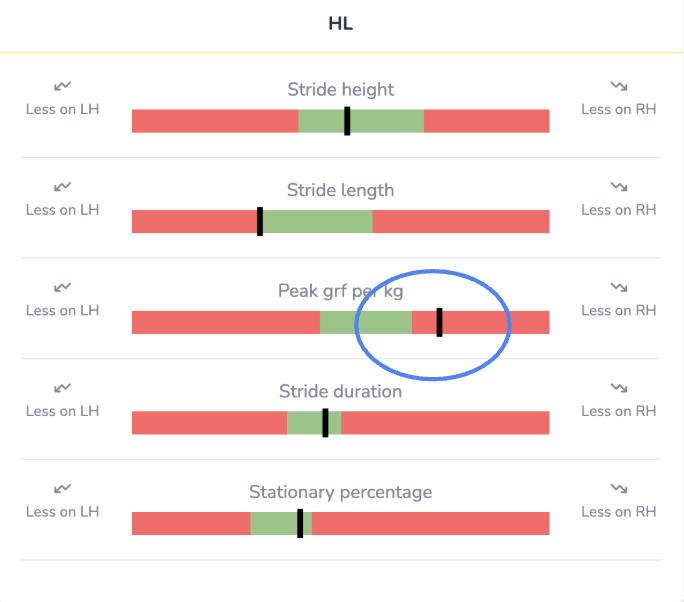
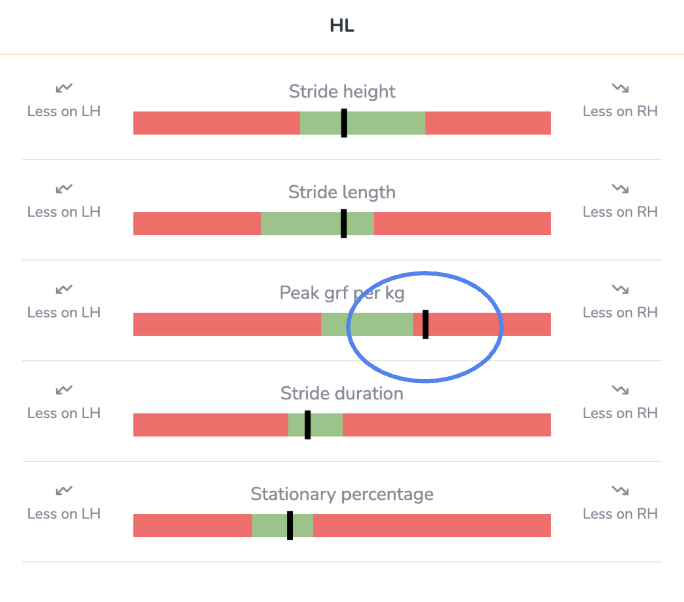
Comparison of walk (left) and trot (right) during the second visit.
Therapeutic context: hydrotherapy and rehabilitation
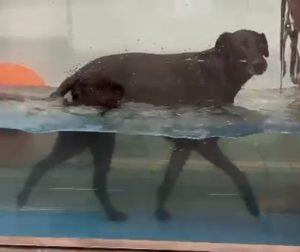
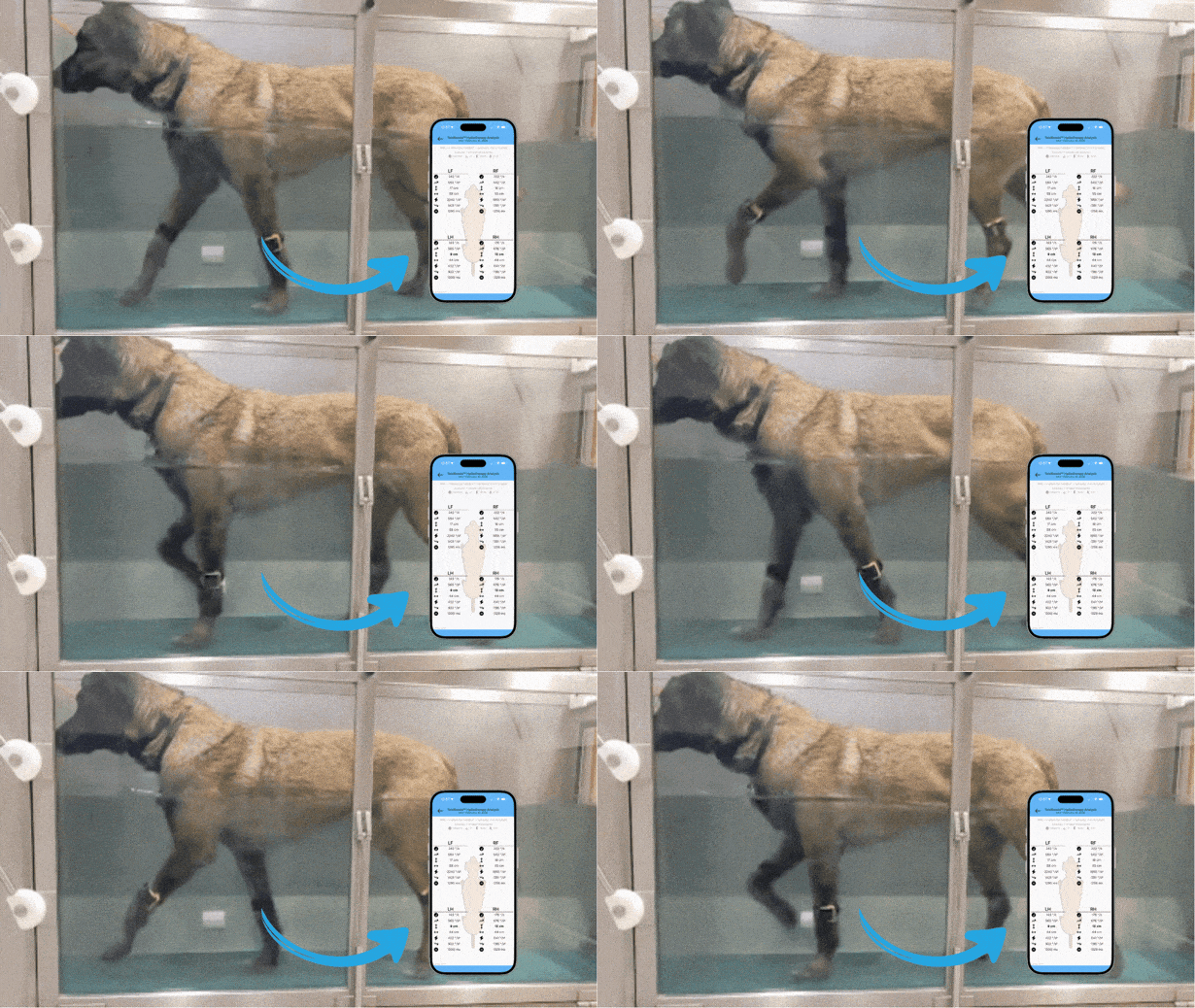
Hydrotherapy was part of the management of this dog. The sessions supported his rehabilitation process and allowed for the maintenance of progressive functional work.
However, the fact that a dog makes progress during a session does not always mean that its recovery is sufficient in daily life.
In this case, the hydrotherapy videos mainly help to understand the treatment context. They should not be interpreted as a strict before/after comparison, as the conditions were not identical.
The purpose is rather to integrate the Tendiboots™ data into a comprehensive follow-up, where multiple pieces of information — clinical, imaging, rehabilitation, and locomotion — are taken into account.
NEW : Use your Tendiboots™ on an underwater treadmill
An objective improvement, but persistent clinical concern
During the third visit, the Tendiboots™ data showed an improvement in locomotion. The dog exhibited a more balanced weight distribution than at the beginning of the follow-up.
This progress was positive, but it was not enough to explain the entire clinical situation. The dog remained stiff, did not fully regain its abilities in daily life, and still did not jump into the car.
The clinician therefore recommended a surgical consultation, as the recovery remained below what was expected despite the management already in place.
This case shows that a visible improvement in the data can be real, while still being insufficient in relation to the dog’s overall functional status.
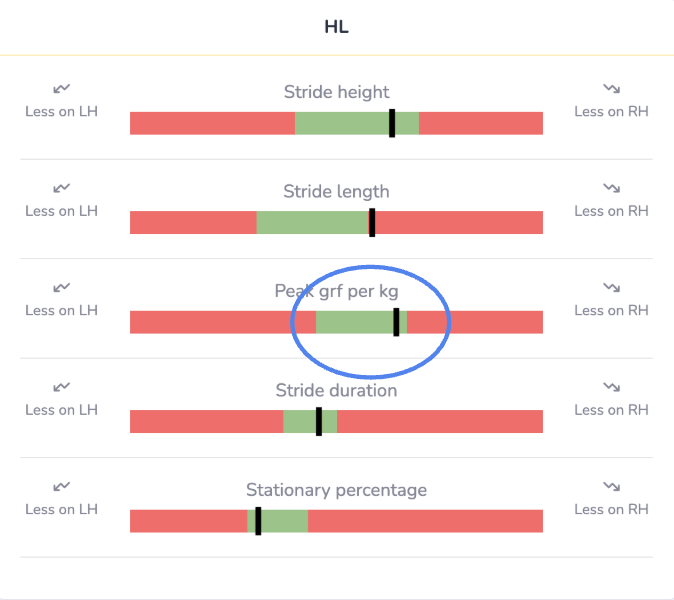
Follow-up at the trot from the first to the last visit.
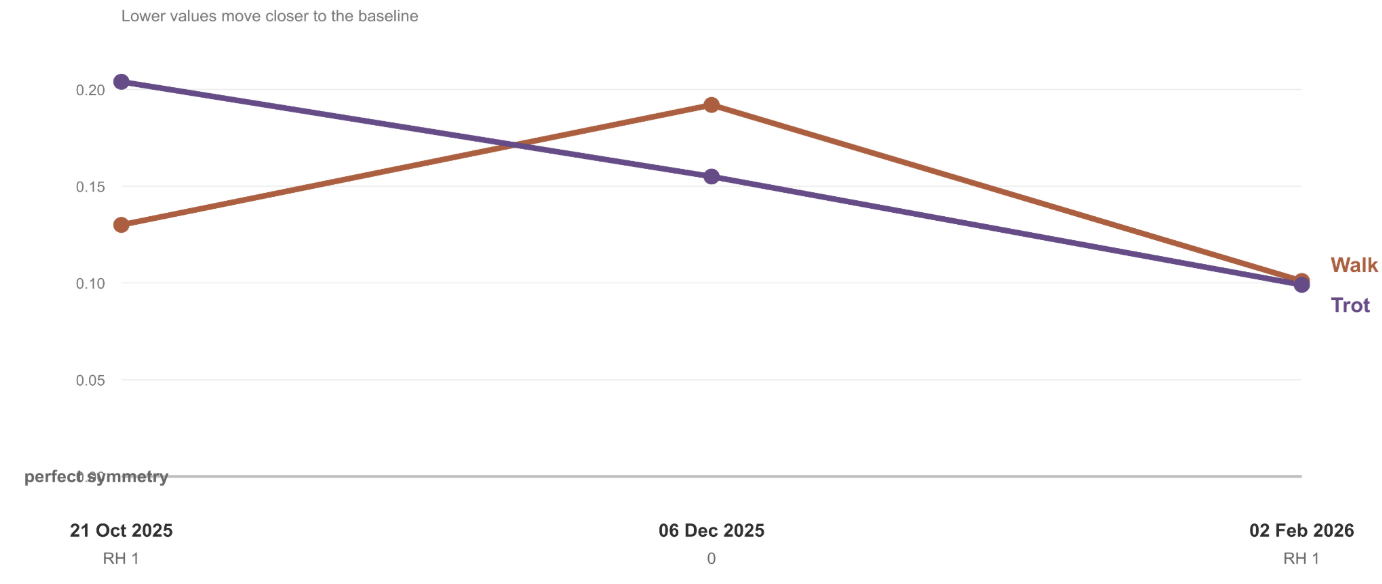
Monitoring the symmetry of the hind limbs from the first to the last visit.
The “perfect” symmetry being 0 on the Y axis.
This is not a contradiction. It is the reality of many chronic musculoskeletal cases: a dog can improve, without improving enough.
Three practical lessons for chronic pain follow-ups
This case highlights three important points for the follow-up of chronic pain.
1. An improvement does not always mean a complete recovery.
A dog may show improvement yet remain limited in certain daily activities.
2. Follow-up over time is essential.
A single recording provides useful information, but repeated examinations allow for a better understanding of the dog’s actual progression.
3. Objective data facilitates communication.
They allow visualization of progress, explanation of the evolution to the owner, and support for follow-up decisions with measurable elements.
In which cases is this type of follow-up useful?
Repeated gait analysis is particularly relevant when:
- lameness is mild or intermittent;
- the dog seems to be improving, but recovery remains uncertain;
- the clinician wishes to compare several visits;
- The rehabilitation follow-up must be explained to the owner;
- the question is whether the progress is sufficient.
In these situations, objective data provide visual and quantified support to more precisely monitor the dog’s functional progress.
See the full case in the webinar
This case is detailed in the webinar: When monitoring is subtle: tracking function in chronic pain assessments (presented at the Chronic Pain Symposium 2026).
We revisit the case chronology, the Tendiboots™ Canine recordings, the rehabilitation context, and the value of objective data in monitoring chronic pain.
Discover how repeated locomotion measurements can help better monitor the progression of a dog when clinical improvement remains difficult to interpret.
This follow-up was conducted in collaboration with Dr. Hélène Fugier from Functional Rehabilitation Center ReeduCat & Dog.
Thank you to her for sharing.