

When Static and Dynamic Gait Data Don’t Agree

Objective gait analysis is becoming an essential tool in canine physiotherapy and rehabilitation. Combining static and dynamic measurement tools often provides a richer picture, but sometimes the results appear contradictory.

Freddie’s case — a long-term rehab patient following a T13–L2 hemilaminectomy — is a perfect example of how static loading patterns and dynamic locomotion data can differ, and why these differences are not errors, but valuable clinical information.

In this article, we review Freddie’s evaluation at Splash Paws Canine Hydrotherapy & Physiotherapy Centre, and explain step-by-step why his static and dynamic data “tell different stories”… and why both are true.

Case Background: Why Freddie Was Assessed

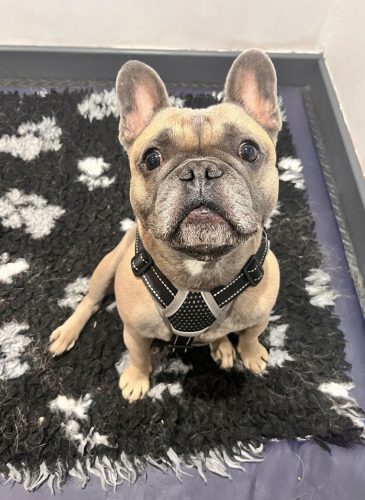
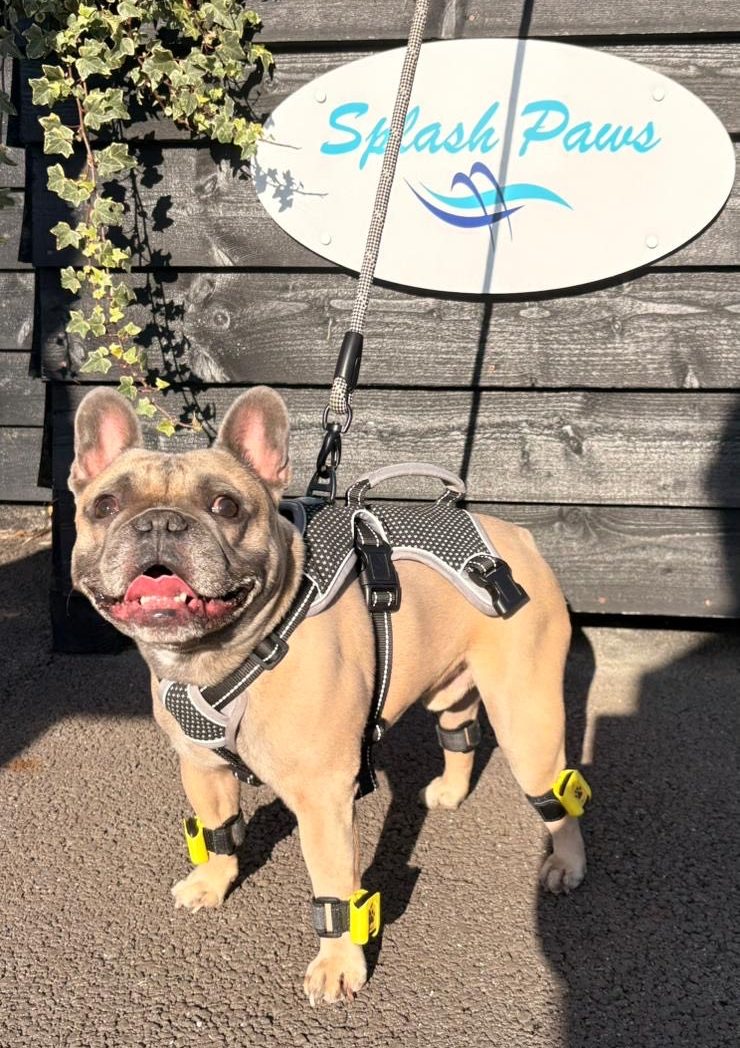
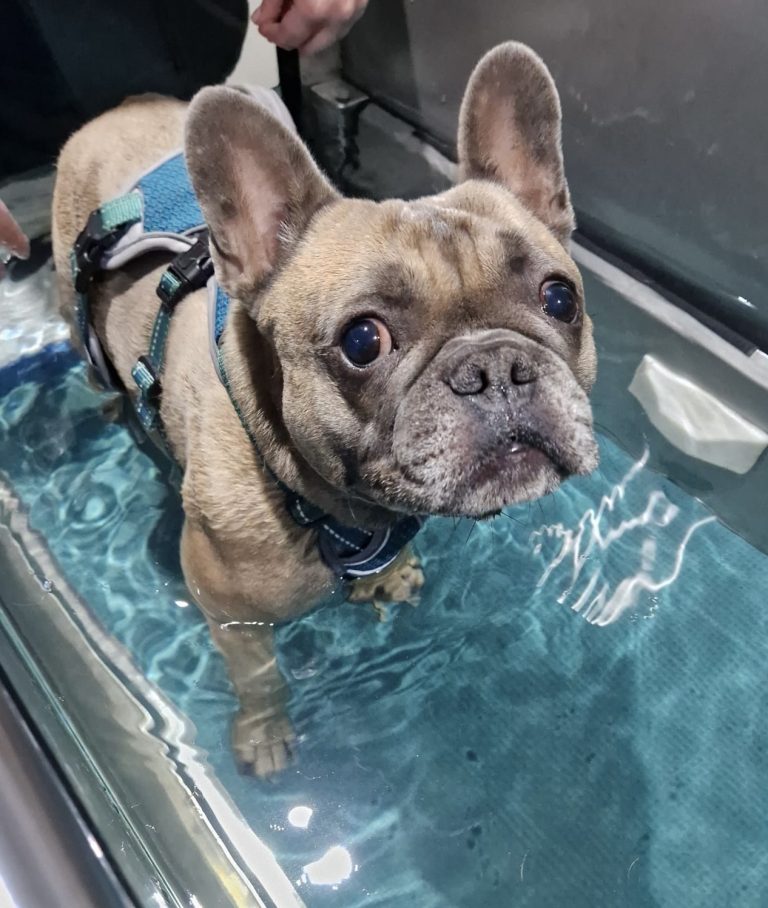
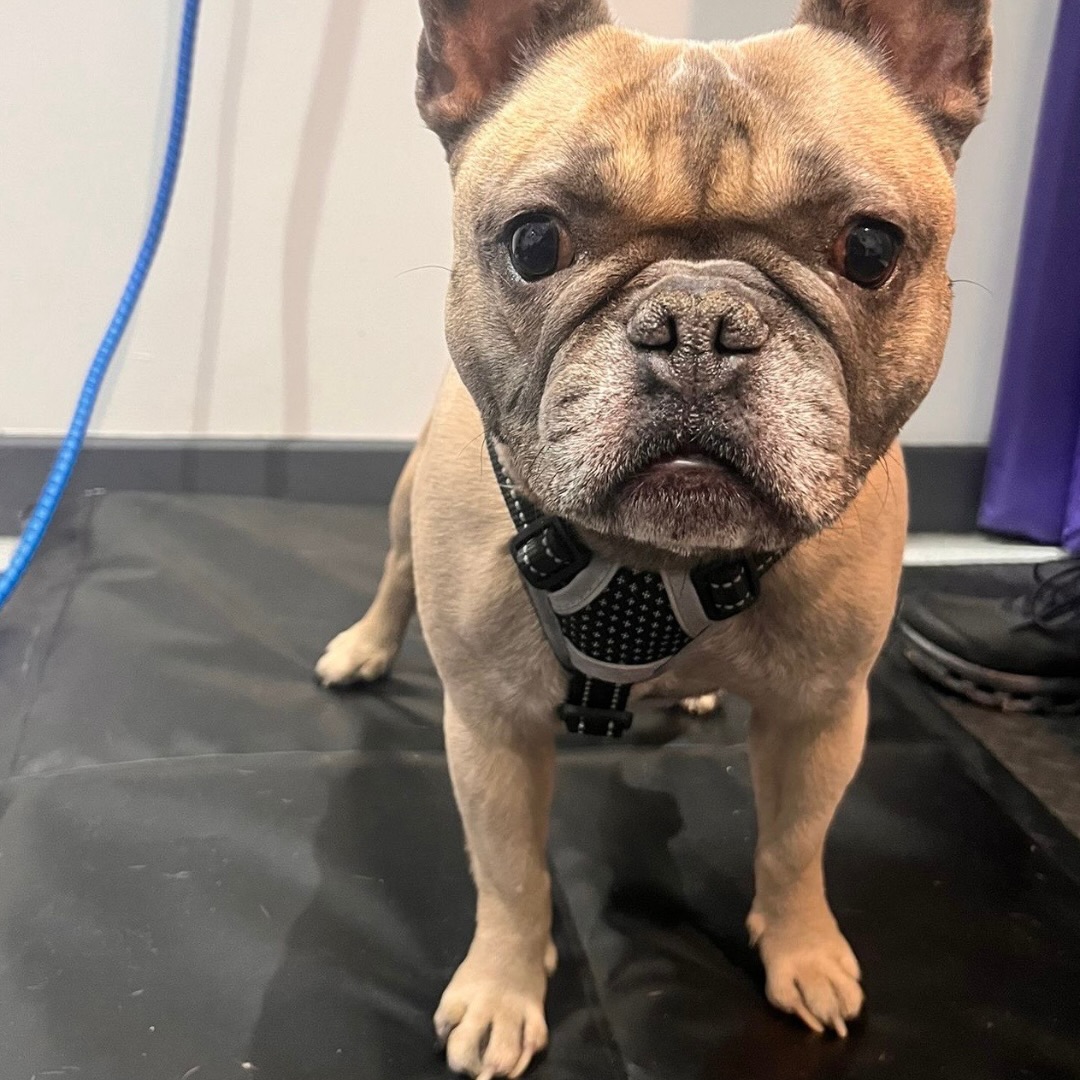
French bouledogue

Freddie has been followed at the centre since his spinal surgery in 2024. During a routine evaluation, the practitioner observed:

• New muscle loss on the right forelimb and hindlimb
• Progressive stiffness, mostly on the right side
• Hypertonicity along neck, thoracic, and lumbar muscles
• Proprioceptive delays in both hindlimbs

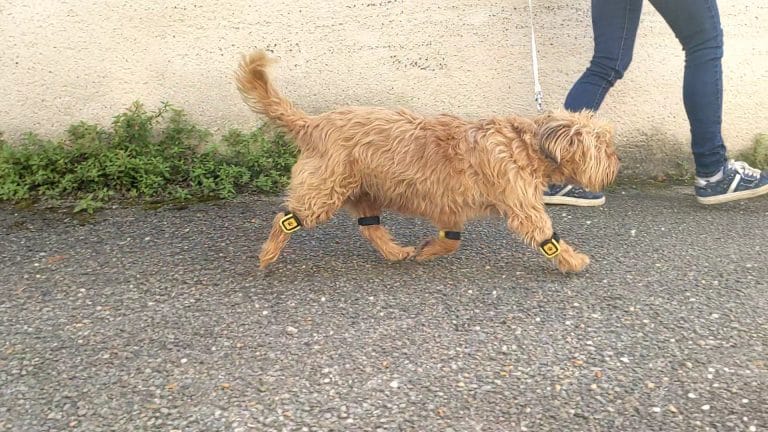
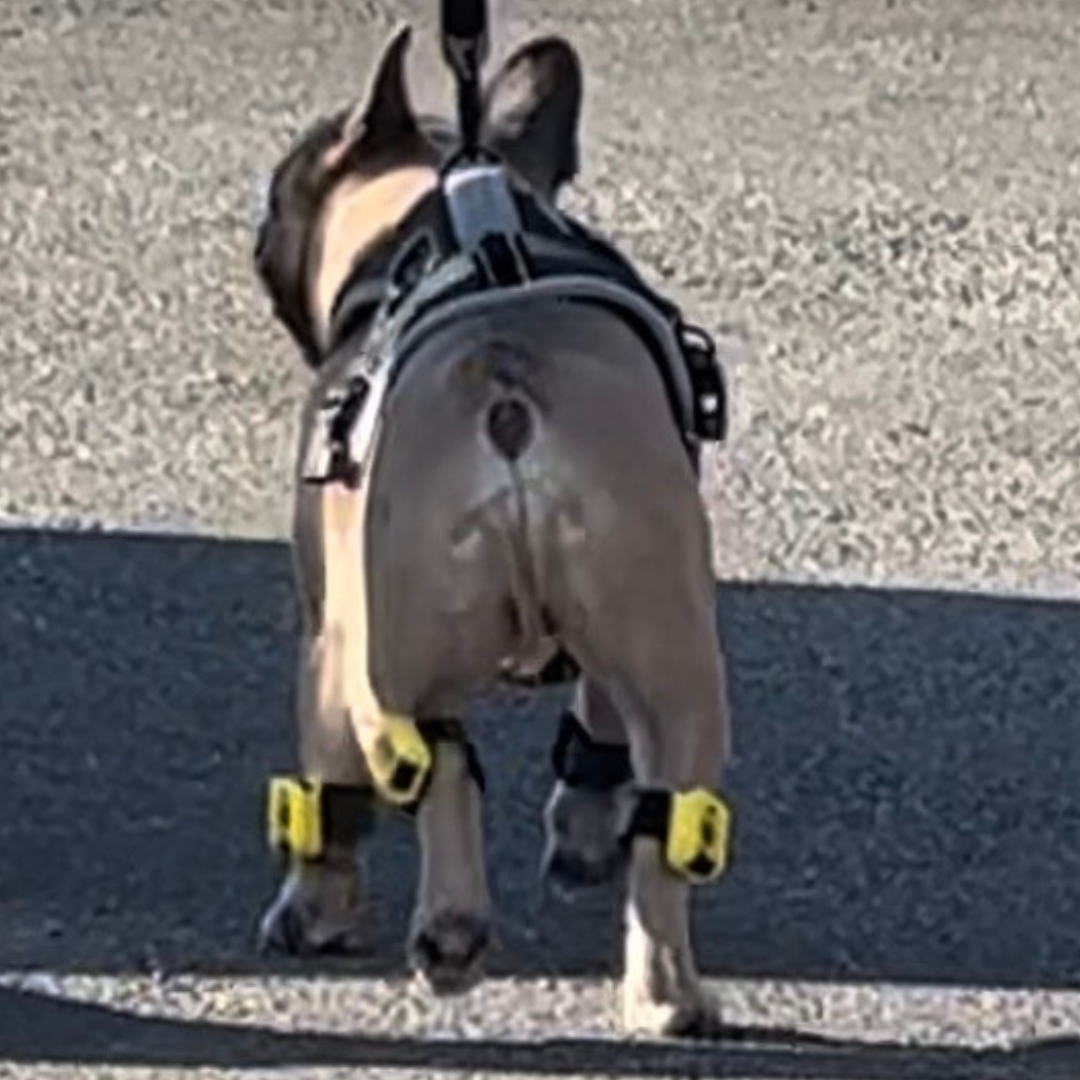
To better understand these changes, a combined static (Stance Analyzer) and dynamic (Tendiboots™) gait assessment was recommended.

Static Analysis (Stance Analyzer): What Freddie Shows at Rest

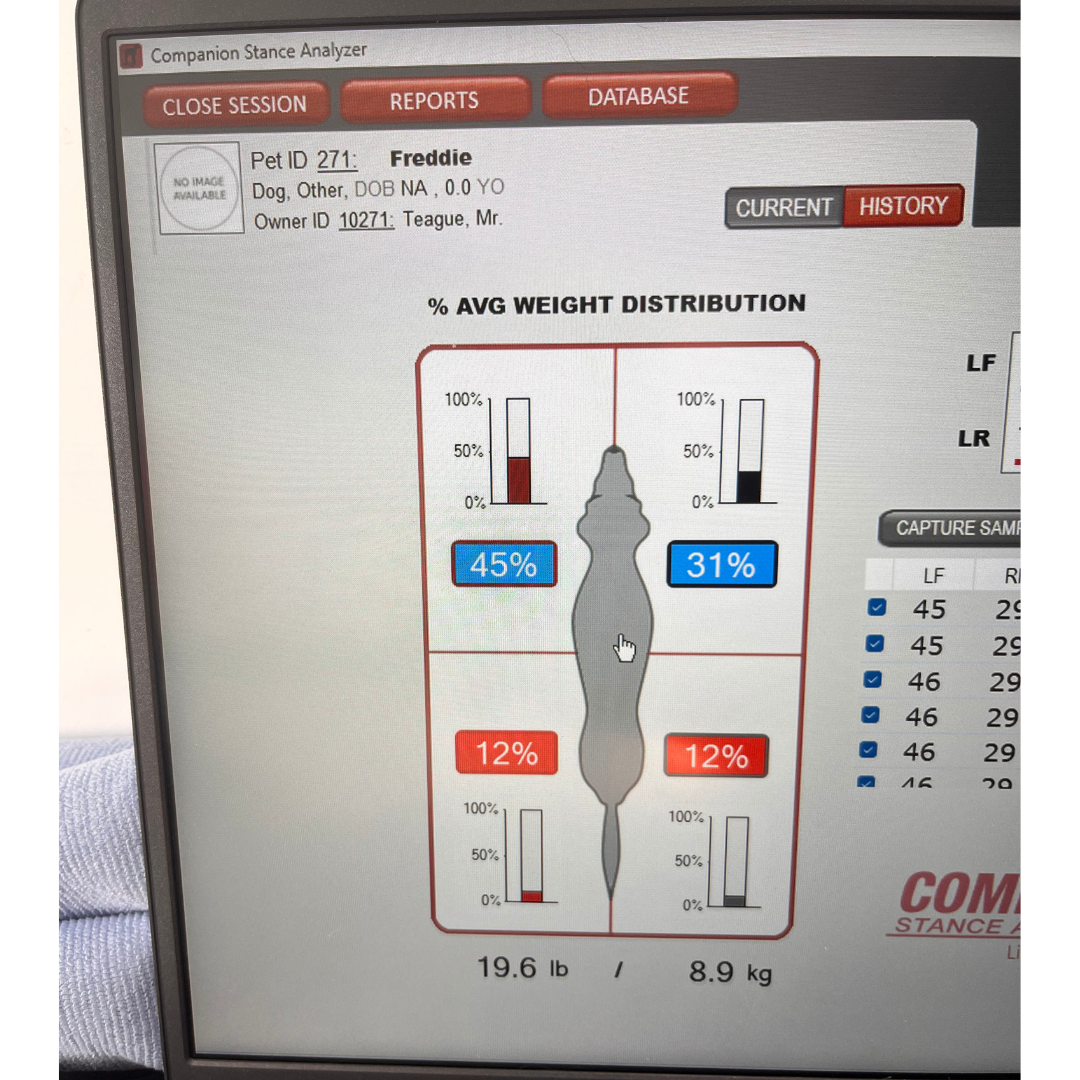
Weight distribution
• Left Forelimb (LF): 45% (very high)
• Right Forelimb (RF): 31%
• Left Hindlimb (LH): 12%
• Right Hindlimb (RH): 12%

The team’s interpretation of these data was that Freddie is overloading his left forelimb significantly, offloading both hindlimbs equally, and using his left forelimb as a “pillar limb” to stabilize the body.

At rest, this pattern suggests he finds the left forelimb more comfortable than the right side.

Based on these numbers alone, professionals may conclude that the left forelimb is strong and pain-free, and the right side is the problem.

However, this is exactly where relying solely on static analysis can be misleading.

Dynamic Analysis (Tendiboots™): What Freddie Shows in Motion

When Freddie begins to move, the picture changes dramatically.

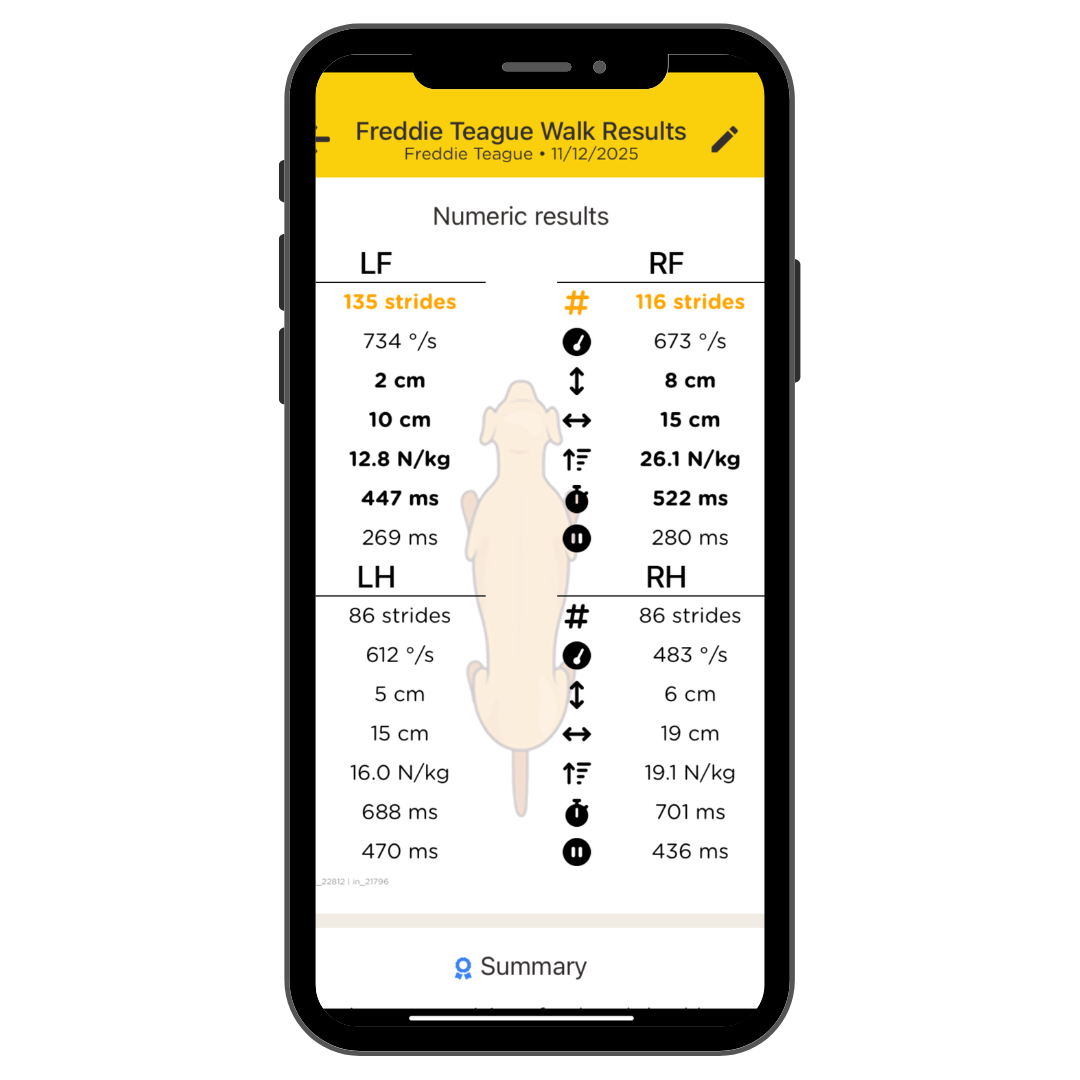
Forelimbs – Tendiboots™ Results

Left Forelimb (LFore) vs Right Forelimb (RFore)

• Stride height: 2 cm vs 8 cm
• Stride length: 10 cm vs 15 cm
• Peak load (N/kg): 12.8 vs 26.1
• Stride duration: 447 ms vs 522 ms

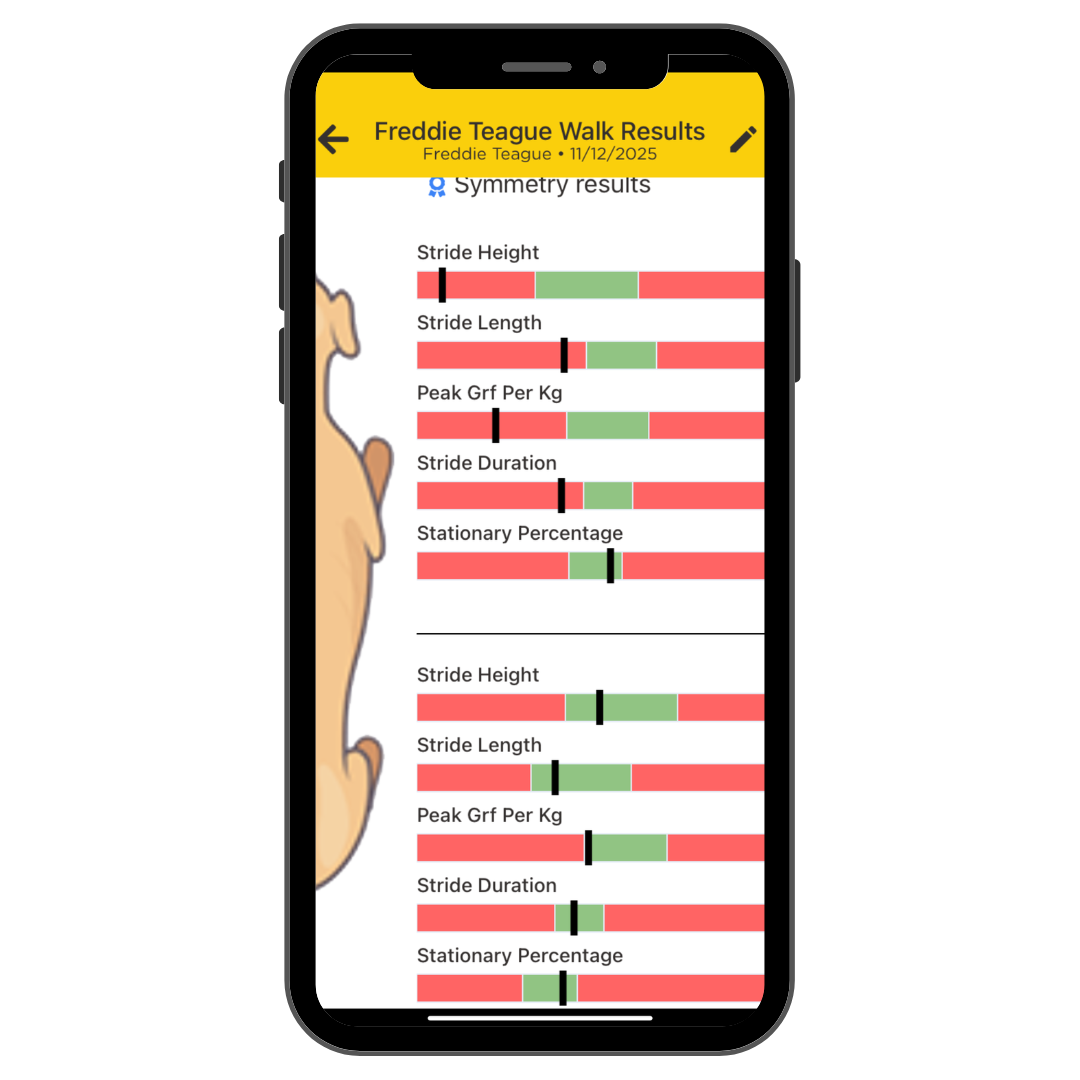
The interpretation of the data in dynamic is that the left forelimb shows a lower range of motion, shorter steps, a significantly reduced loading and an earlier placement (shorter stride duration).

These are classic patterns of dynamic avoidance due to discomfort or pain.

Dynamically, it looks like even though Freddie rests heavily on his left forelimb, he would not want to use it during movement.

Hindlimbs: Agreement Between Static and Dynamic Data

Interestingly, both Stance Analyzer and Tendiboots™ agree that Freddie’s hindlimbs are symmetrical, meaning that the left and right hindlimbs carry weight evenly relative to each other. In static analysis, the hindlimbs were globally underloaded (12% each instead of the expected 20%), yet both sides shared the load equally. Tendiboots™ dynamic measurements confirmed this symmetry in motion, with only minor differences in stride height, stride length, and peak load between left and right hindlimbs.

What can we conclude from this? Even though the hindlimbs are underloaded compared to normal, the symmetry indicates that Freddie is not favoring one hindlimb over the other. This underloading is likely a compensatory mechanism for the discomfort and dynamic avoidance observed in the forelimbs. In other words, while the hindlimbs are not carrying their full expected share of weight, both are functioning in a balanced way relative to each other, supporting overall stability and gait.

This alignment between static and dynamic data underscores an important point: apparent contradictions between stance and gait measurements are often clinically meaningful, reflecting postural compensation strategies rather than measurement errors. For Freddie, it shows that interventions should not only focus on the forelimb discomfort but also aim to gradually increase hindlimb engagement to restore a more natural weight distribution.

Why Static and Dynamic Data Can Oppose Each Other

A limb can be overloaded at rest and underloaded in movement.

This happens when:

1. The limb feels stable and comfortable in static posture
The dog can rest weight on it without triggering pain.

2. But movement of that same limb is uncomfortable or painful
Pain appears when:
• The joint flexes or extends
• Muscles contract
• Tendons glide
• The limb accepts dynamic load

Therefore:
• In static: the dog leans on that limb
• In dynamic: the dog avoids that limb

This is particularly common in:
• Shoulder tendinopathies
• Elbow arthritis
• Cervical pain radiating to the forelimb
• Myofascial trigger points
• Post-surgical compensations
• Chronic asymmetric movement habits

Freddie’s hypertonic cervical and thoracic muscles align with this pattern.

What Dynamic Reveals Compare to the Static Analysis

Static tools measure comfort at rest.

They are useful for:
• Postural compensations
• Preferred weight-bearing
• Chronic habits

Dynamic tools (like Tendiboots™) measure what the dog is willing or unwilling to do in motion.

They reveal:
• Pain triggered by movement
• Functional deficits
• Reduced range of motion
• Asymmetric loading during gait

Freddie’s case perfectly illustrates that static and dynamic measurements may tell different stories. Both are accurate, but they reflect different aspects of the dog’s gait and function.

Final Clinical Interpretation

Freddie seems to overload the left forelimb in static posture because it provides stability and feels comfortable at rest. However, he appears to underuse the left forelimb during dynamic movement, as motion triggers discomfort.

This pattern explains:
• The muscle changes noted previously
• The progressive stiffness
• The mismatch between visual gait and resting posture

It also highlights why objective gait analysis is essential, visual assessment alone cannot capture this duality.

The words of the professionals :

“During Freddie's stance analysis it reveals that he is overloading and overusing his left forelimb. This is contrary to what was observed during his dynamic movement where he showed a reduced load and underuse of this left forelimb. The increased weight bearing on this left forelimb during static posture is likely to make the limb uncomfortable resulting in this underuse.
The increased load will increase the pressure and cause strain through joints and surrounding soft tissue structures. Thus contributing to a reduced stride height, stride length, and stride duration on the limb as he will likely be experiencing discomfort when trying to use the limb correctly.”

Emma Figg & Ellie Bridges, Vet Hydrotherapist and Physiotherapist at Splash Paws, Canine Hydrotherapy & Physiotherapy Centre

Therapy Plan Derived from the Analysis

The care team decided to:
• Reduce overload on the left forelimb
• Improve engagement of the other limbs
• Introduce targeted physiotherapy (massage, laser, controlled exercises)
• Implement a home management plan (slow paced walks, warm-up, on-lead activity)

This combined approach directly addresses the functional deficit revealed by dynamic analysis.

Conclusion

Freddie’s case demonstrates why objective gait analysis must include both static and dynamic measurements.

What appears contradictory at first glance is, in reality:
• Clinically logical
• Physiologically expected
• Highly informative

Static data tells us how the dog distributes weight at rest.
Dynamic data tells us how and why the dog avoids using certain limbs in motion.

Together, these tools offer a complete picture and ultimately guide more accurate therapy planning and improved rehabilitation outcomes.

Tendiboots™ Canine
Tendiboots™ Canine
Stance Analyzer

Want to know more about Tendiboots™ Canine?

Discover all the information on our locomotion analysis tool.
New

Know more about Splash Paws Center, Tendiboots referral demo Center in the UK

The Ladder Shed
Brattle Farm
Five Oak Lane
Staplehurst
Kent
TN12 0HE
UK

Email : graham.splashpaws@gmail.com
Phone number : +44 7870 962850
Facebook : https://www.facebook.com/SplashPaws/
Instagram : https://www.instagram.com/splashpawshydro

Share:

Leave a Reply

Your email address will not be published. Required fields are marked *

You may use these HTML tags and attributes: <a href="" title=""> <abbr title=""> <acronym title=""> <b> <blockquote cite=""> <cite> <code> <del datetime=""> <em> <i> <q cite=""> <s> <strike> <strong>

On Key

Related Posts

Tendiboots™ Canine

VMX 2026

A must-attend event for veterinary professionals in the United States and more, VMX 2026 will take place on January 17-20 January, 2026 at Orange County Convention Center, Orlando, FL. Connecting

Read More »
Tendiboots™ Canine

Exclusive CPD Event: See Tendiboots™ in Action

A unique opportunity for professionals considering Tendiboots™ Canine Gait Analysis. Are you thinking about integrating objective gait analysis into your practice?Want to see real data, real dogs, and real clinical

Read More »
Tendiboots™ Canine

Everyday Accidents in Dogs

Everyday accidents can have unexpected consequences on our pets’ mobility. Fortunately, the combination of targeted physiotherapy and electronic gait analysis now makes it possible to detect and monitor these issues

Read More »