
Les recherches scientifiques d'Ekico
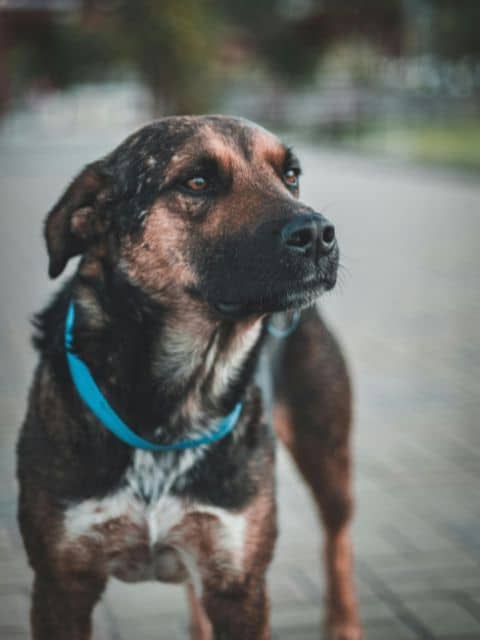
Tendinopathie de l’épaule : un suivi technologique avancé pour une rééducation efficace
CONTEXTE ET OBJECTIFS :
Rio, un Border Collie mâle entier de 2 ans, a développé une ténosynovite du biceps brachii avec micro-avulsion à l’insertion suite à un traumatisme. Le suivi a été réalisé à l’aide de capteurs inertiels (IMUs) afin de documenter l’évolution aux différentes étapes du traitement et de comparer ces tendances avec les résultats de l’échographie musculosquelettique.
CONCLUSIONS :
Tendiboots™ permet une approche complète pour l’évaluation des patients canins, en détectant les irrégularités subtiles, en suivant les progrès du traitement et en fournissant des données objectives utiles pour les interventions futures. L’utilisation d’un tapis roulant pendant la phase de collecte de données peut être utile pour réduire la variabilité associée à la marche libre.
Évaluation objective de l’asymétrie des membres à l’aide de capteurs IMU : une méthode basée sur les capteurs pour détecter les asymétries de force de réaction au sol chez plus de 1000 chiens
Ce e‑poster présente une approche objective, basée sur des capteurs, pour l’évaluation de l’asymétrie des membres chez le chien au trot, conçue pour un usage clinique courant.
Nous présentons une référence populationnelle de Grade 0, construite à partir d’une large cohorte en conditions réelles enregistrée par des vétérinaires et des professionnels de la rééducation, puis montrons comment cette référence est affichée dans l’application pour une interprétation rapide et un suivi longitudinal. La symétrie est calculée comme la différence en pourcentage absolue entre les membres appariés, résumée avec des percentiles pour définir une plage normale.
Alors que les figures illustrent la force de réaction au sol maximale par kg, le même calcul s’applique à d’autres paramètres de la démarche disponibles dans l’application. L’objectif de ce e‑poster se concentre sur les statistiques de Grade 0 pour plus de clarté, avec des captures d’écran cliniques illustrant des cas de grades supérieurs ; l’ensemble plus large de données multi-grades mentionné dans le résumé accepté inclut plus de 1000 chiens.
Cette référence est destinée au triage et au suivi, et non comme seuil diagnostique pour une seule visite.
Mots-clés : démarche canine, boiterie, asymétrie des membres, IMU, biomécanique, percentiles de référence, données réelles, support à la décision clinique.
Detection of lameness in dogs and identification of the affected limb using a feedforward neural network classifier: a preliminary study based on field data
This preliminary study examined the feasibility of using an automated classifier to diagnose lameness and determine the affected limb in dogs of various breeds, weighing between 7 and 65kg. Early and accurate detection of potentially multifaceted gait abnormality in dogs is as challenging as it is essential in the process of effective treatment and management strategies, especially in the case of low-grade lameness or in asymmetrical individuals.
This study developed and tested the performance of a feedforward neural network classifier, trained on field data collected by users of the dedicated app and connected sensor-based system. The aim is to provide an effective, easy-to-use tool to help veterinary clinicians determine the precise location of lameness in dogs.
Evaluation of Different Induced Lameness Grades in Dogs: A Preliminary Comparative Analysis Using a Novel Sensor-Based System
Canine lameness demands accurate assessment methods to guide clinicians in diagnosis, treatment planning, and rehabilitation. Recent technological advancements, such as sensor-based systems, have significantly improved the ability to objectively evaluate and quantify lameness.
This study presents an innovative approach to the evaluation of induced lameness grades, leveraging a novel analysis software using a sensor-based system and 3D printed semi-spheres of varying diameters.


